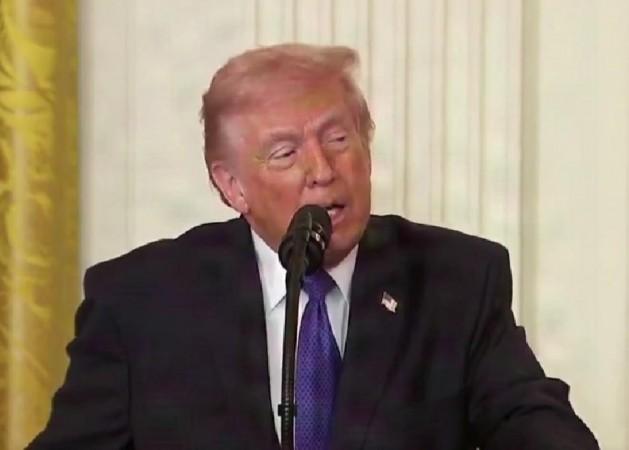
U.S. President Donald Trump has rejected a potential deal with Iran to end the ongoing conflict, saying the proposed terms were "not good enough yet." In a wide-ranging interview with NBC News, he confirmed that while Tehran had shown interest in negotiations, Washington would not rush into a ceasefire while the war continues. Trump indicated that any agreement would likely require Iran to abandon its nuclear ambitions, though he declined to elaborate on specifics.
At the same time, Trump called on countries around the world to deploy naval forces to secure the Strait of Hormuz and ensure the free flow of global oil shipments. In a post on Truth Social, he urged nations including China, France, Japan, South Korea, and the UK to send warships to protect the strategic waterway, which carries about a fifth of the world's oil exports. He emphasised that the United States would coordinate efforts while continuing military operations in the region.
Since February 28, the US, in coordination with Israel, has conducted strikes targeting Iran's military infrastructure, missile programs, and drone capabilities. Trump claimed that these operations had severely degraded Iran's armed forces, including its navy and air force, while sparking a broader alignment with Gulf states against Tehran. "We've knocked out most of their missiles, many of their drones, and manufacturing areas for both," Trump said, adding that missile attacks have now "declined to a trickle."

The conflict has already had human and material costs. Six American service members died in a US Air Force refueling aircraft crash in Iraq, bringing total US fatalities to at least 13. The US Embassy in Baghdad was also struck in an attack early Saturday, prompting security alerts. Iran-aligned militias have carried out multiple attacks across Iraq, while Iran continues missile and drone strikes across the Gulf region. Governments in the UAE, Saudi Arabia, and Bahrain reported intercepting numerous attacks during the latest wave.
Trump stressed that the US campaign is focused on Iran's missile and drone infrastructure rather than its uranium stockpiles, and that disruptions to oil shipping would be addressed if necessary. "We would escort tankers if needed," he said, while noting that multinational cooperation could prevent a blockade. He also suggested that the conflict could accelerate regional diplomacy, potentially expanding the Abraham Accords, and stressed that Gulf states are now more united with the US against Iran.
Despite rising tensions and surging oil prices, Trump dismissed concerns over domestic political impact, asserting that energy prices would eventually fall. He reiterated his goal of preventing Iran from dominating the Middle East, stating, "The only thing I want to do is make sure that Iran can never be the bully of the Middle East again."
The Strait of Hormuz, connecting the Persian Gulf to global shipping lanes, remains the central flashpoint. Any disruption to this narrow passage has significant implications for global energy markets and regional stability, especially for countries like South Korea that rely heavily on Middle Eastern oil imports.
(With inputs from IANS)