
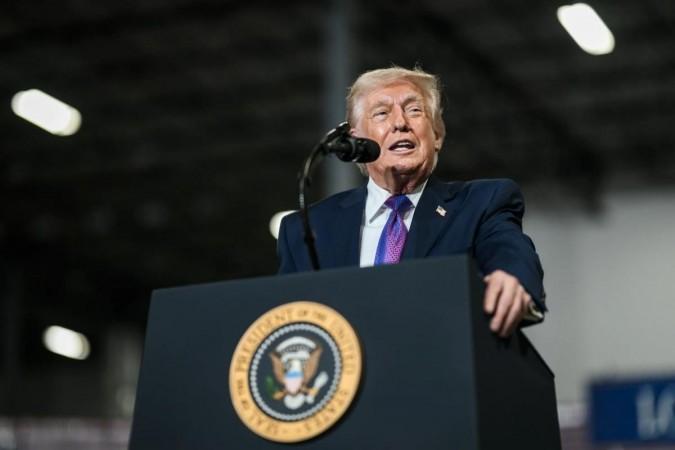
White House Press Secretary Karoline Leavitt on Wednesday issued a fresh warning to Iran, stating that President Donald Trump "does not bluff" and is fully prepared to "unleash hell" if Tehran refuses to accept a deal to end the ongoing war in the Middle East.
'Iran Should Not Miscalculate'
Warning that Tehran could face even heavier strikes, Leavitt said, "Iran should not miscalculate again. Their last miscalculation cost them their senior leadership, their Navy, their Air Force, and their air defence system."
She added, "Any violence beyond this point will be because the Iranian regime refuses to understand that it has already been defeated and refuses to come to a deal."
"If Iran fails to accept the reality of the current moment—if it fails to understand that it has been defeated militarily and will continue to be—President Trump will ensure it is hit harder than ever before," Leavitt said during a White House press briefing.
'Iran Wanted to Talk After Trump's Threat'
Leavitt also claimed that it was Iran that initiated ceasefire talks after Trump issued a warning on Saturday.
Trump had given Iran a 48-hour ultimatum to open the Strait of Hormuz, warning that if Tehran failed to comply, the United States would "hit and obliterate" its power plants.
'Iran Looking for an Exit Ramp'
Praising US military operations in the Middle East, Leavitt said Iran is being "crushed" and is now seeking an "exit ramp."
"You're beginning to see the regime look for an exit ramp. They recognise they are being crushed. Their ability to attack American and allied forces, as well as defend their own territory, is dwindling hour by hour," she said.
'US, Iran Had Strong Talks': Trump
Earlier in the day, Trump said the United States and Iran had "very, very strong talks," claiming there were "major points of agreement."
"I would say almost all points of agreement. Perhaps that hasn't been conveyed. Communication, as you know, has been disrupted. They're unable to talk to each other directly, but we've had very strong talks. Mr Witkoff and Mr Kushner led them, and they went, I would say, perfectly," Trump said.
He added that if progress continues, it could "substantially end the conflict."
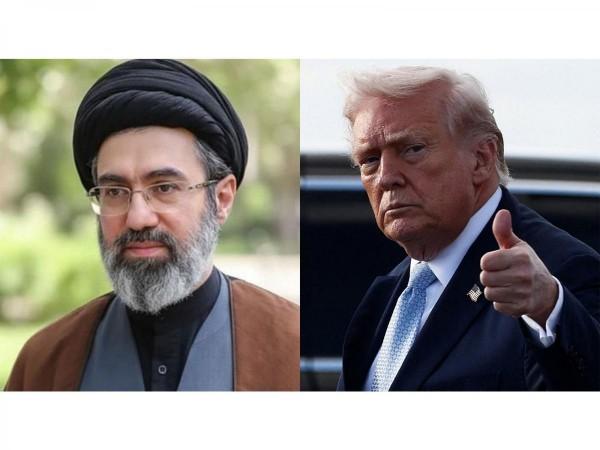
Iran's conditions for ending the war
Iran, however, rejected Trump's reported 15-point ceasefire proposal and instead outlined five conditions for ending the war, according to state media.
"Iran will end the war when it decides to do so and when its own conditions are met," Press TV quoted a senior Iranian official as saying.
The conditions include:
- A complete halt to "aggression and assassinations"
- Mechanisms to ensure the war is not reimposed
- Guaranteed payment of war damages and reparations
- An end to the conflict across all fronts and allied groups
- International recognition of Iran's sovereign authority over the Strait of Hormuz
Trump's 15-point proposal
According to reports, the Trump administration's proposal includes:
- Dismantling Iran's nuclear capabilities
- A commitment to never pursue nuclear weapons
- No uranium enrichment on Iranian soil
- Transfer of highly enriched uranium to international authorities
- Dismantling of key nuclear facilities, including Natanz, Isfahan, and Fordo
- Full access for the International Atomic Energy Agency (IAEA)
- Ending support for regional proxy groups
- Keeping the Strait of Hormuz open
- Limiting Iran's missile programme
The United States and Israel launched joint airstrikes on Iran on February 28 under 'Operation Epic Fury' (US) and 'Operation Roaring Lion' (Israel).
Iran retaliated by targeting US military bases across the Middle East, including in the UAE, Bahrain, Kuwait, Qatar, Jordan, and Saudi Arabia, under 'Operation True Promise IV'.
The Islamic Revolutionary Guard Corps (IRGC) said the operation targeted "American-Zionist terrorist positions" and US bases, describing it as a large-scale retaliatory strike.