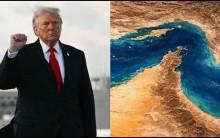
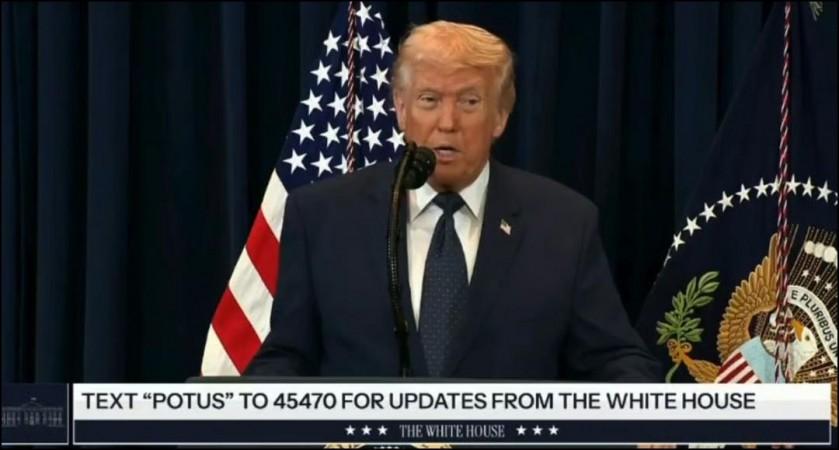
United States President Donald Trump, known for his controversial remarks, made another unusual claim while speaking at a Republican fundraiser in Washington. Trump said Iran had offered to make him its supreme leader, a claim for which there has been no official response from Tehran.
"There's never been a head of a country that wanted that job less than being the head of Iran," Trump said. "We hear them very clearly. They say, 'We'd like to make you the next supreme leader.' No, thank you. I don't want it," he added.
Despite Trump's remarks, Iran has denied that any negotiations are taking place to end the nearly month-long conflict.
Iran's top leadership has undergone major changes following US and Israeli airstrikes on Tehran on February 2. Among those killed was Supreme Leader Ali Khamenei. Days later, his son Mojtaba Khamenei was appointed as the new supreme leader.
Trump also claimed that Iranian negotiators are denying talks due to "fear of being killed by their own people" and asserted that the US is winning the war against Iran.
"They are negotiating, by the way. They want to make a deal so badly, but they are afraid to say it because they figure they will be killed by their own people. They are also afraid they will be killed by us," he said, as quoted by ANI, citing Reuters.

The US President further claimed that he had helped settle eight wars. "We settled eight wars. We are winning another one... Nobody has seen anything like what we are doing in the Middle East with Iran," Trump said.
President Trump on the idea of anyone taking over as Iran’s supreme leader:
— Open Source Intel (@Osint613) March 26, 2026
I’ve never been a head of a country who wanted that job less.”
“No thank you, I don’t want it.”
“We’d like to make you the next supreme leader”
“No, no thank you, I don’t want it.” pic.twitter.com/hKotbHg99k
Meanwhile, Iranian Foreign Minister Abbas Araghchi reiterated that exchanges through mediators do not amount to negotiations with Washington.
"There are no negotiations with Washington," Araghchi said, adding that messages conveyed via intermediaries should not be interpreted as formal talks.
The conflict in the Middle East entered its 27th day on Thursday.