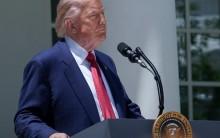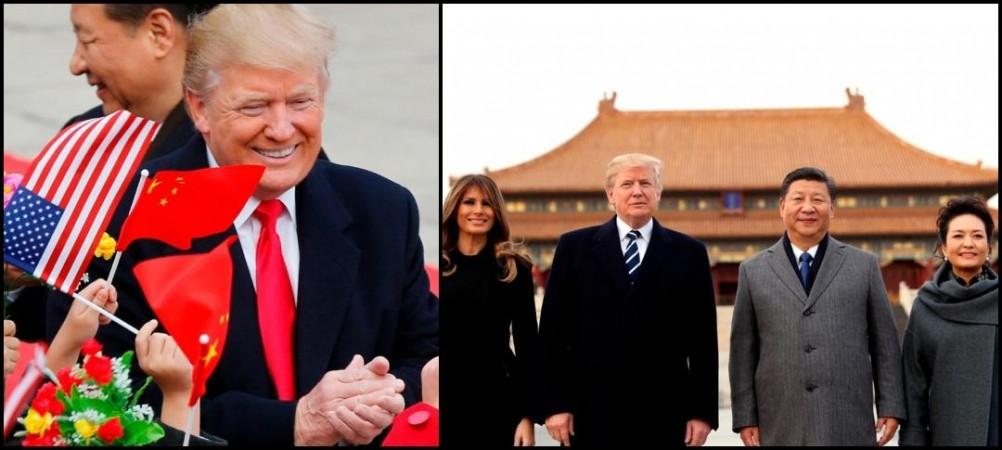
US President Donald Trump arrived in China on Wednesday for his first visit to the country in nearly nine years, with growing tensions in West Asia and the ongoing Russia-Ukraine war expected to dominate discussions with Chinese President Xi Jinping.
Ahead of the high-stakes meeting, Trump said he did not believe Washington needed Beijing's help in dealing with Iran despite speculation that China could act as a mediator.
"I don't think we need any help with Iran. We'll win it one way or the other, peacefully or otherwise," Trump told reporters before departing for Beijing.
Iran tensions and Strait of Hormuz crisis
The visit comes amid continuing tensions in the Strait of Hormuz, which has remained closed since the Iran conflict escalated on February 8. Trump claimed the US blockade of Iranian ports was "100% effective" and said the situation would eventually stabilise global oil markets.
"The blockade is very effective; it's been 100% effective," Trump said, adding that oil supplies would surge once tensions ease.
Iran, however, pushed back strongly against Trump's remarks. An adviser to Iran's Supreme Leader warned the US President not to interpret the current pause in direct fighting as a victory.
Meanwhile, Iranian Ambassador to China Rahmani Fazli reportedly described Beijing as a possible mediator between Tehran and Washington.
"My visit to China will be about trade more than anything else; we are the two strongest nations in the world."
— News Arena India (@NewsArenaIndia) May 13, 2026
- US President Trump pic.twitter.com/Z7YTI4sjey
Trump also dismissed Iran's latest response to a US proposal as "completely unacceptable" and called it "a piece of garbage," while Tehran insisted the US must end blockades, halt maritime actions and release frozen Iranian assets before talks can progress.
VIDEO | Washington DC: US President Donald Trump says, "We don't need China's help on Iran, we are going to win it peacefully or otherwise."
— Press Trust of India (@PTI_News) May 12, 2026
(Source: Third Party)
(Full video available on https://t.co/n147TvrpG7) pic.twitter.com/yYflhUV8rY
Israel worried over possible US-Iran deal
According to reports, Israel is concerned Trump could reach a partial agreement with Iran that leaves Tehran's nuclear programme and missile capabilities largely intact.
Israeli officials reportedly fear any deal that overlooks ballistic missiles or Iran-backed regional groups would leave the conflict unresolved.
Saudi Arabia allegedly carried out covert strikes
A Reuters report citing Western and Iranian officials claimed Saudi Arabia launched covert strikes on Iranian territory in late March in response to attacks inside the kingdom. If confirmed, it would mark the first known direct Saudi attack on Iranian soil.
US intelligence contradicts Trump's Iran claims
Despite Trump repeatedly claiming Iran's military capabilities were "decimated," a recent US intelligence assessment reportedly found that most of Iran's missile infrastructure remains operational.
According to the assessment cited by reports, Iran has restored access to 30 of its 33 missile sites along the Strait of Hormuz, while nearly 90% of its underground missile facilities are considered partially or fully operational.
The report also said Tehran still retains roughly 70% of its missile launchers and pre-war missile stockpile.
Trump also drew attention online after posting AI-generated images on Truth Social showing US aircraft attacking Iranian boats in the Strait of Hormuz.
Trump says Ukraine war settlement 'getting very close'
Speaking before leaving for China, Trump also expressed optimism about the Russia-Ukraine conflict, saying a settlement could be nearing.
"The end of the war in Ukraine, I really think it's getting very close," Trump said.
He added that negotiations were progressing and insisted there had been no agreement with Russian President Vladimir Putin regarding control of the Donbas region.
Trump further argued that easing global conflicts would help reduce oil prices and inflation worldwide.
His remarks come amid continuing diplomatic efforts to end the war between Russia and Ukraine, which has disrupted global energy and food markets for more than four years.
India, meanwhile, continues balancing ties with both Russia and Western nations while facing scrutiny over its continued purchases of discounted Russian crude oil.