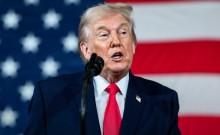
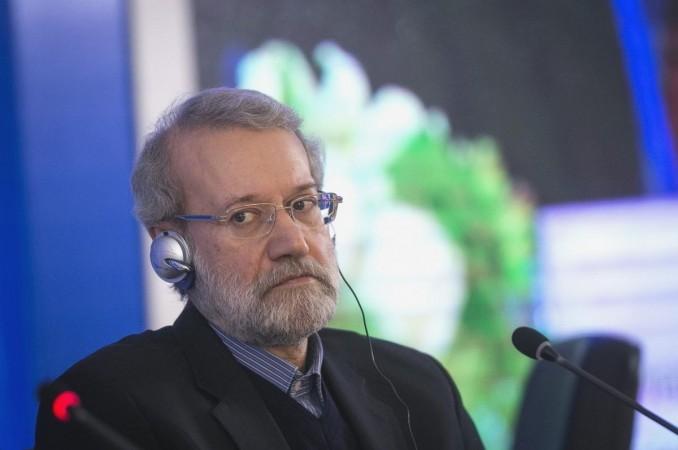
Ali Larijani, Secretary of Iran's Supreme National Security Council, on Monday accused US President Donald Trump of betraying his "America First" policy to adopt an "Israel First" approach, as tensions continue to escalate in the Middle East.
Taking to X, Larijani wrote, "Trump has betrayed 'America first' to adopt 'Israel first'." In another post, he said, "Trump's wishful thinking has dragged the whole region into an unnecessary war and now he is rightly worried about more American casualties. It is indeed very sad that he is sacrificing American treasure and blood to advance Netanyahu's illegitimate expansionist ambitions."
Larijani also dismissed reports that Tehran was seeking dialogue with Washington. "We will not negotiate with the United States," he said, rejecting a Wall Street Journal report that claimed he was pursuing diplomatic engagement through Omani intermediaries.
Meanwhile, Iran's Foreign Minister Abbas Araghchi condemned the US strikes that killed Supreme Leader Ayatollah Ali Khamenei, calling them unlawful aggression. Speaking to ABC News, Araghchi said, "What the United States is doing is an act of aggression. What we are doing is an act of self-defence."
The US and Israel conducted joint airstrikes on Iran on February 28 amid ongoing nuclear talks between Washington and Tehran. Khamenei was killed during the operation. In response, Iran launched missile and drone attacks targeting US military bases and multiple locations across the Gulf region.
The United States and six Gulf nations — Bahrain, Jordan, Kuwait, Qatar, Saudi Arabia and the United Arab Emirates — condemned what they described as Iran's "indiscriminate and reckless" missile and drone attacks, calling them a dangerous escalation that threatens regional stability.
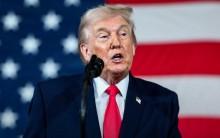
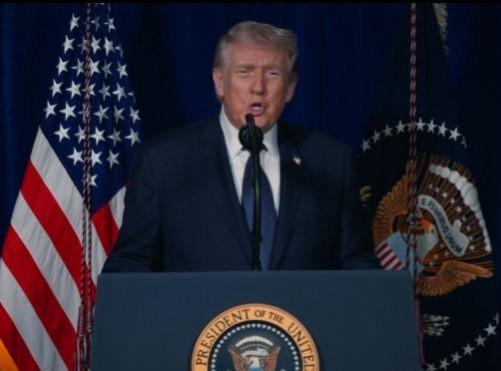
President Trump described the American assault on Iran as "one of the largest, most complex, most overwhelming military offensives the world has ever seen," declaring that Khamenei is dead and vowing that operations would continue "until all of our objectives are achieved."
In an interview with The New York Times, Trump said the US military could sustain its assault for "four to five weeks" if necessary. He suggested that a "Venezuela model" — removing only the top leader while keeping much of the state intact — could shape a post-conflict transition in Iran.
"What we did in Venezuela, I think, is the perfect scenario," Trump said, adding, "Everybody's kept their job except for two people."
He acknowledged the risk of American casualties, saying, "Three is three too many as far as I'm concerned," while noting that projections could be higher. "We expect casualties," he added.
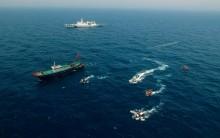
Trump claimed that joint US-Israeli strikes had "knocked out a big portion" of the Iranian navy, including nine ships and the navy headquarters. He also suggested that Iran's elite forces could surrender power to the people, saying, "They would really surrender to the people, if you think about it."
When asked who should lead Iran after Khamenei's death, Trump said, "I have three very good choices," but declined to name them. He added that any political transition would ultimately depend on the Iranian people.
While indicating he might consider lifting sanctions if new leaders proved pragmatic, Trump stopped short of committing US support in the event of an internal uprising. "I don't make a commitment one way or the other; it's too early," he said.
The latest escalation marks one of the most serious confrontations between Washington and Tehran in decades, unfolding against the backdrop of longstanding tensions over Iran's military capabilities and nuclear programme.