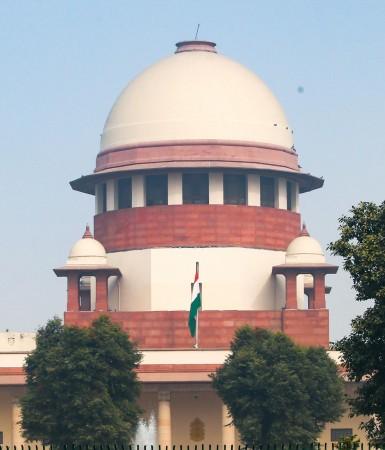
The Supreme Court on Monday took suo motu cognisance of a series of recent rape and sexual assault cases reported across Delhi-NCR, including the alleged gang rape of a 17-year-old girl at a park near Kalkaji Mandir and the alleged sexual assault of a minor inside a moving sleeper bus.
A Bench comprising Justices J.B. Pardiwala and K. Vinod Chandran expressed concern over recurring incidents of sexual violence in the National Capital Region and said the cases raised serious questions about the functioning of law-enforcement and public administrative authorities.
Supreme Court draws parallel with 2012 Nirbhaya case
While hearing the matter, Justice Pardiwala observed that the recent incidents had "painful parallels" with the 2012 Nirbhaya case, in which a 23-year-old woman was gang-raped on a moving bus in Delhi and later died from her injuries.
The court said the repeated reports of sexual offences in Delhi-NCR highlighted concerns over public safety and the effectiveness of law-enforcement mechanisms. It stressed that merely expressing solidarity with victims was not enough and that accountability needed to be fixed.
'Public spaces cannot become high-risk zones'
The Supreme Court said public places such as parks, roads, buses, Metro stations, subways and footbridges cannot be allowed to become high-risk zones because of inadequate lighting, surveillance or patrolling.
The Bench emphasised that the right to live with dignity and without fear of violence is part of the fundamental right to life and personal liberty guaranteed under Article 21 of the Constitution.
The court also called for a measurable response from authorities and stressed the need to establish responsibility among officials entrusted with preventing crime, maintaining public order and protecting vulnerable people.
17-year-old allegedly gang-raped near Kalkaji Mandir
One of the cases before the court involves a 17-year-old girl who was allegedly gang-raped at Aastha Kunj Park near Kalkaji Mandir in south Delhi.
According to police, the teenager had visited Kalkaji Mandir with a male friend before entering the park. Three men allegedly approached them while posing as police personnel and separated the girl from her friend before taking her to an isolated part of the park.
The accused allegedly threatened the girl with weapons and sexually assaulted her. Police subsequently arrested the accused, including one man who was apprehended after an exchange of fire.
Minor allegedly assaulted inside moving sleeper bus
The Supreme Court also took note of an alleged sexual assault involving a minor inside a moving sleeper bus travelling towards Delhi.
The incident, reported in August, involved a girl travelling from Uttar Pradesh's Mainpuri towards Noida. After missing her stop, she allegedly boarded a sleeper bus, where the driver and conductor are accused of sexually assaulting her before abandoning her near Kashmere Gate in Delhi.
The bus was seized for forensic examination, while investigators examined CCTV footage and the vehicle's route as part of the probe. The National Human Rights Commission had also taken suo motu cognisance of the case and sought reports from the concerned police authorities.

Court seeks accountability over public safety
The Supreme Court's intervention comes amid multiple reports of sexual offences across Delhi and neighbouring NCR districts in recent weeks. A report published earlier this month noted at least 13 alleged rape and sexual assault cases across the region since the beginning of September
The court's suo motu proceedings will examine the broader public-safety concerns arising from these incidents, including the role of policing, surveillance, lighting and other preventive measures in public spaces.