
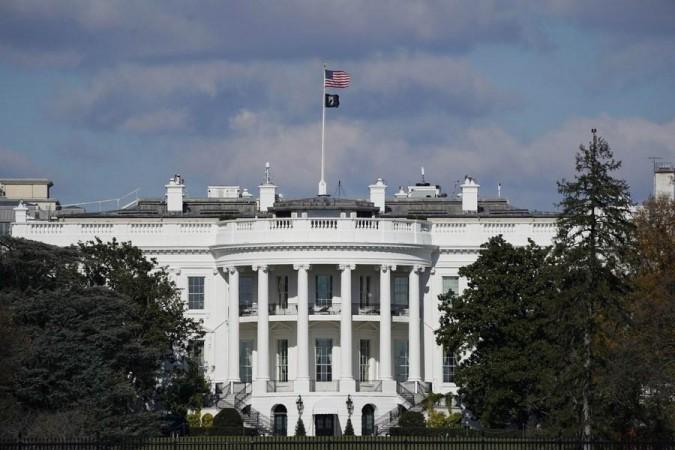
History's most consequential shifts rarely announce themselves through dramatic collapse. More often, they unfold quietly, through absence rather than defeat. The reported decision by the United States to withdraw from a large number of global and multilateral organisations must therefore be understood not as a discrete policy choice or a transient political posture, but as a structural act with system-wide implications. It marks not the retreat of American power in the conventional sense, but the repositioning of that power away from the institutional mechanisms through which twenty-first-century order is increasingly shaped.
In an earlier era, power was measured by territory, fleets, and armies. In the contemporary world, power is exercised through rules, standards, financing architectures, norms of legitimacy, and the ability to define the future before it arrives. Institutions are no longer peripheral instruments of diplomacy; they are the operating system of global order. To step away from them is not to escape constraint, but to relinquish authorship.
The central argument of this essay is therefore simple but unsettling: when a hegemon withdraws from institutions, it does not create a vacuum it creates an opportunity for others to redesign the system in its absence. The consequences of such a shift unfold slowly, unevenly, and often invisibly, but once embedded, they are extraordinarily difficult to reverse.
Historical Continuity: Withdrawal as the Precursor to Systemic Displacement
Strategic history offers repeated warnings against confusing material strength with systemic influence. Britain after the Second World War retained formidable military capabilities, global reach, and financial depth, yet its gradual disengagement from imperial and post-imperial governance structures ensured that it would no longer define the rules of the emerging order. The Soviet Union, for all its coercive power, marginalised itself by rejecting participation in global economic and financial institutions, locking in inefficiencies that ultimately proved fatal. Even Japan's post-Cold War experience demonstrates how economic power without institutional assertiveness limits strategic autonomy over time.
The United States once understood this lesson more clearly than any power before it. The post-1945 order was not sustained by American force alone, but by the embedding of American preferences into institutions that appeared universal, technical, and neutral. Voting structures, reporting standards, funding rules, and compliance mechanisms quietly extended U.S. influence across decades and continents, often without the need for overt pressure.
What is unfolding now is not the abandonment of global leadership in the dramatic sense, but something subtler and potentially more consequential: a selective disengagement from the very mechanisms that translate power into enduring systemic advantage.
Institutions as Power: The Shift from Presence to Absence
To grasp the magnitude of this shift, one must first abandon the outdated notion that institutions primarily constrain states. In reality, institutions allocate influence, distribute legitimacy, and shape future pathways. They decide which technologies scale, which financial flows are prioritised, which standards become mandatory, and which narratives of responsibility and compliance gain moral authority.
By withdrawing from a large number of such bodies, the United States does not halt their functioning. These organisations continue to meet, deliberate, issue guidelines, certify practices, and channel resources. What changes is who sits at the table when definitions are fixed and precedents are established. Over time, absence becomes structural disadvantage, not because the absent power is weak, but because systems adapt to those who remain engaged.
This is the critical distinction that is often missed in surface-level analysis. The cost of withdrawal is not immediate loss of influence, but the slow re-engineering of the global operating environment.
Geostrategic Consequences: Power Without Anchors
At the geostrategic level, institutional disengagement produces a paradoxical condition. The United States retains unparalleled military capabilities and alliance networks, yet its ability to convert that strength into stable, legitimate outcomes becomes increasingly expensive and contested. Institutions act as anchors that stabilise power by embedding it within shared expectations and procedural norms. Without them, coercive capabilities must work harder to achieve the same effect.
Over time, allies begin to hedge. Not because they distrust American intentions, but because they require predictability in an increasingly rule-dense environment. Adversaries, meanwhile, do not need to challenge American power directly; they can simply shape alternative institutional pathways, gradually normalising different standards of behaviour, governance, and legitimacy.
The result is not a sudden collapse of deterrence, but a thinning of strategic influence. Power remains formidable, but less adhesive.
Geopolitical Reordering: From Agenda-Setter to Reactive Participant
Geopolitics in the twenty-first century is increasingly about agenda control rather than territorial control. Institutions decide which issues are prioritised, how problems are framed, and what constitutes acceptable solutions. When a major power disengages, it forfeits the quiet privilege of deciding not just answers, but questions themselves.
As other states and coalitions fill the space, the global agenda begins to reflect different priorities, different tolerances for risk, and different conceptions of sovereignty and responsibility. This does not necessarily produce overt confrontation. Instead, it generates a gradual misalignment between power and legitimacy, where the ability to act remains, but the authority to define diminishes.
In such an environment, diplomacy becomes more transactional, less normative, and increasingly episodic. Influence shifts from being structural to situational.
Geo-Economic Transformation: Standards as Strategic Instruments
In the modern global economy, standards are more decisive than tariffs. They determine which products are market-ready, which supply chains are compliant, and which technologies become scalable platforms rather than niche solutions. Environmental benchmarks, digital protocols, data governance rules, and financial disclosure norms now function as instruments of geo-economic power.
Institutional withdrawal does not remove these standards from the system; it simply alters their authorship. Over time, firms, investors, and governments adapt to the standards that exist, not those that might have existed. Supply chains reconfigure around compliance regimes, and industrial competitiveness increasingly reflects alignment with dominant rule-sets rather than intrinsic efficiency alone.
The strategic implication is profound: economic leadership shifts not through confrontation, but through codification.
Security Implications: Global, Regional, and the Indian Perspective
At the global level, institutional disengagement weakens collective mechanisms for managing non-traditional security risks cyber escalation, space governance, artificial intelligence, pandemics, and climate-linked instability. These domains cannot be stabilised by unilateral action alone; they require shared frameworks that reduce uncertainty and miscalculation. Absence from such frameworks increases the probability of coordination failure rather than deliberate aggression.
Regionally, the effects are uneven but significant. In parts of Africa, West Asia, and Southeast Asia, institutional presence often substitutes for formal alliances. As traditional anchors weaken, these regions become arenas of competing governance models, each offering different combinations of finance, standards, and political expectations.
For India, the consequences are particularly complex. India is neither a beneficiary of institutional erosion nor a natural hegemonic replacement. Instead, it emerges as a hinge power, increasingly expected to uphold system stability without full authorship of the system itself. This expands India's diplomatic burden, raises expectations of leadership, and exposes it to pressures that outpace its formal authority within global institutions. Opportunity and risk grow simultaneously.
Trade, Industry, and Capital: The Long Repricing of Uncertainty
Trade and industrial ecosystems thrive on predictability. Institutions provide the quiet assurance that rules will not change arbitrarily, that compliance today will remain valid tomorrow. As institutional coherence weakens, uncertainty becomes embedded in cross-border activity.
Multinational firms respond not by withdrawing, but by diversifying exposure. Capital reallocates toward jurisdictions perceived as rule-stable. Over time, this leads to a repricing of risk, where markets demand higher returns to compensate for regulatory fragmentation. Stock markets may remain buoyant in the short term, but long-term valuations increasingly reflect institutional confidence rather than headline growth alone.
This is not a crisis dynamic; it is a slow recalibration.
Human Capital, Environment, Energy, and Technology: The Invisible Frontiers
Perhaps the least visible but most enduring cost of institutional withdrawal lies in the domain of human capital and future-shaping sectors. Institutions attract talent, shape intellectual agendas, and define what constitutes responsible innovation. When a major power steps back, it loses not only influence, but also narrative centrality.
In environmental and energy governance, absence does not slow transition; it reshapes it. Metrics, financing pathways, and technological priorities evolve under different assumptions, locking in trajectories that persist for decades. In emerging technologies AI, quantum computing, biotechnology, space the writing of protocols and ethical frameworks today determines strategic advantage tomorrow.
Those who write the rules of the future rarely need to dominate its markets by force.
The Cost of Not Being Present
The deepest strategic truth of the contemporary era is this: power that disengages from institutions does not liberate itself; it merely transfers system-design authority to others. Institutions are not the opposite of sovereignty; they are its long-term extension.
The United States remains a central actor in global affairs, but the long-term consequences of institutional withdrawal will be measured not in headlines, but in the quiet normalisation of alternative rules, standards, and expectations. Once embedded, these systems acquire their own inertia, shaping behaviour even in the absence of consensus.
The lesson for all major powers not only the United States is stark. In a world where the future is increasingly governed rather than conquered, absence is not neutrality. It is a strategic choice with irreversible consequences.
Power may leave the room.
The system, however, will be redesigned by those who stay.
[Major General Dr. Dilawar Singh, IAV, is a distinguished strategist having held senior positions in technology, defence, and corporate governance. He serves on global boards and advises on leadership, emerging technologies, and strategic affairs, with a focus on aligning India's interests in the evolving global technological order.]