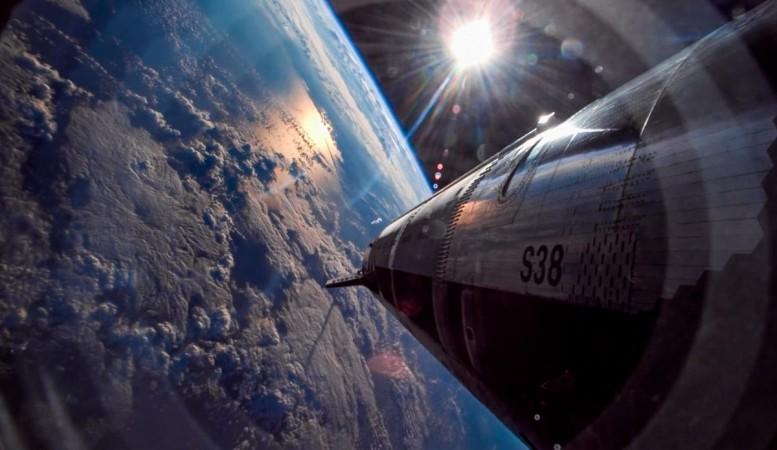
US-based entrepreneur Elon Musk said that his aerospace firm SpaceX has acquired his AI startup, xAI, and shared plans to scale AI compute in space by launching large constellations of satellites that act as orbital data centres.
"Launching a million tonnes per year of satellites generating kilowatts (kW) of compute power per tonne would add 100 gigawatts of AI compute capacity annually, with no ongoing operational or maintenance needs. Ultimately, there is a path to launching 1 TW/year from Earth," said Elon Musk in a statement.
The SpaceX founder said that space‑based AI is the only viable long‑term path to meet the vast power needs of advanced AI, arguing that near‑constant solar power in orbit can deliver compute at far lower cost than terrestrial data centres.
The cost-efficiency alone will enable companies to advance training their AI models and processing data at unprecedented speeds and scales, the tech leader said.
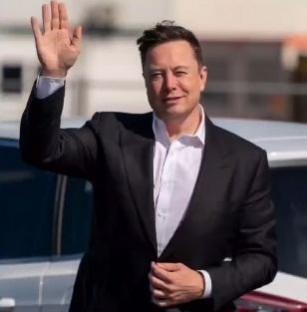
"To harness even a millionth of our Sun's energy would require over a million times more energy than our civilisation currently uses! The only logical solution, therefore, is to transport these resource-intensive efforts to a location with vast power and space," he said.
Current advances in AI are dependent on large terrestrial data centers, which require immense amounts of power and cooling, he said.
Musk warned that global electricity demand for AI cannot be met with terrestrial solutions, even in the near term, without imposing hardship on communities and the environment.
SpaceX's Starship will begin delivering the much more powerful V3 Starlink satellites to orbit in 2026, with each launch adding more than 20 times the capacity to the constellation as the current Falcon launches of the V2 Starlink satellites.
It will enable launches "every hour carrying 200 tons per flight" and ultimately lifting millions of tons to orbit and beyond, he shared his plan.
Starship will also launch the next generation of direct-to-mobile satellites, which will deliver full cellular coverage everywhere on Earth, he added.
(With inputs from IANS)