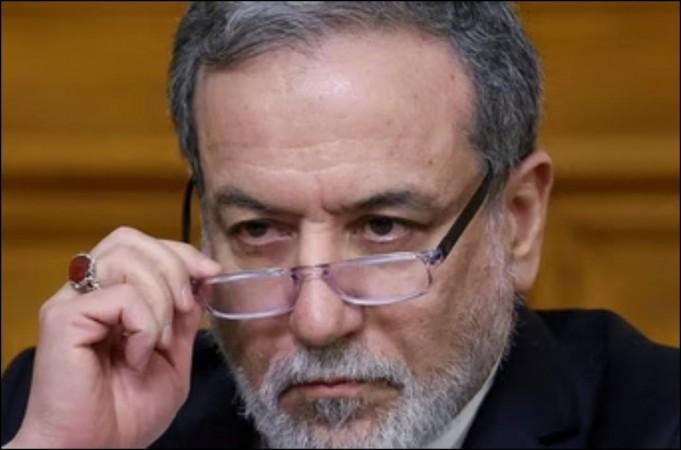
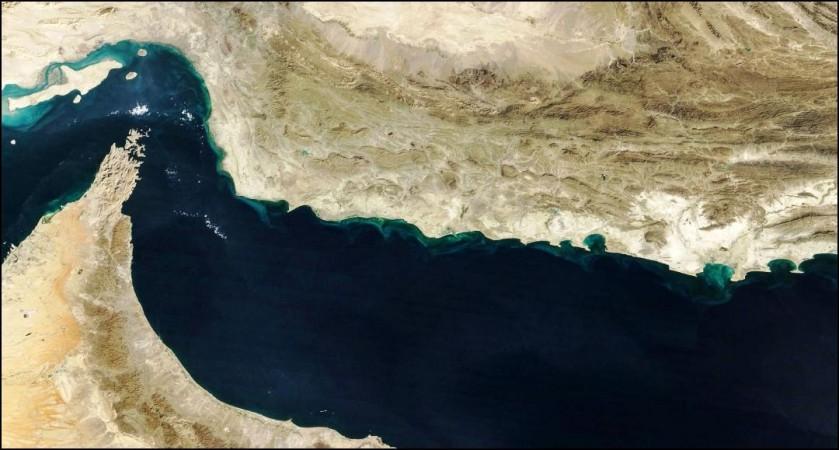
Iranian Foreign Minister Abbas Araghchi on Thursday said Iran has allowed "friendly nations" such as India, Pakistan, Iraq, China and Russia to use the Strait of Hormuz, a key Gulf waterway that has taken centre stage amid the ongoing Iran-US war.
The Consulate General of Iran in Mumbai said in a post, "Iran FM Abbas Araghchi: We permitted passage through the Strait of Hormuz for friendly nations, including China, Russia, India, Iraq, and Pakistan."
The closure of the Strait of Hormuz by Iran threatens to create a global energy crisis, with oil prices already soaring and shortages being reported in several countries. As the Strait of Hormuz becomes a key point of contention between the US and Iran, it has also figured in Tehran's demands to end hostilities. These demands were made in response to US President Donald Trump's 15-point peace plan.
Among several demands, Tehran has sought international recognition and guarantees of its right to exercise sovereignty over the Strait of Hormuz. Earlier, Trump had claimed that he and the "Ayatollah" would jointly control the strait, a claim rejected by Iran.
The Ministry of Shipping on Tuesday assured that all Indian ships and sailors in the Gulf region are safe amid global concerns over energy supply disruptions.
The prolonged closure of the Strait of Hormuz is choking the movement of oil, gas & fertilizer at a critical moment in the global planting season.
— António Guterres (@antonioguterres) March 25, 2026
Across the region & beyond, civilians are enduring serious harm & living under profound insecurity.
The @UN is working to minimize…
Speaking at a joint inter-ministerial briefing, Special Secretary Rajesh Sinha said two Indian-flagged LPG carriers — Pine Gas and Jag Vasant — have safely crossed the Strait of Hormuz and are en route to India.
"All Indian ships and sailors in the Gulf region are safe. No maritime incidents have been reported in the last 24 hours. Late last evening, two Indian-flagged LPG carriers, Pine Gas and Jag Vasant, both loaded with LPG, safely crossed the Strait of Hormuz and are headed towards India," Sinha said.
Calls to open Strait of Hormuz
Global bodies, including the United Nations, have called for keeping the Strait of Hormuz open as fuel prices surge worldwide.
UN Secretary-General Antonio Guterres said the prolonged disruption is choking the movement of oil, gas and fertilisers at a "critical moment in the global planting season."
"Across the region and beyond, civilians are enduring serious harm and living under profound insecurity. The UN is working to minimise the consequences of the war. And the best way to do so is clear: end the war immediately," he said on X.
Earlier on March 25, the Iranian mission in New York said "non-hostile vessels" would be allowed passage through the Strait of Hormuz, provided they comply with safety regulations and coordinate with Iranian authorities.
The Iranian Defence Council has also said that transit of such vessels is now strictly dependent on prior coordination with Iranian officials.
Iran's plan to impose toll
Iran is preparing legislation to impose toll charges on vessels passing through the Strait of Hormuz, according to reports citing Fars and Tasnim news agencies.
The proposed law would allow authorities to collect fees from ships transiting the crucial waterway. Officials said the plan aims to ensure the security of vessels while formalising Iran's control over the strait and generating revenue.
"According to this plan, Iran must collect fees to ensure the security of ships passing through the Strait of Hormuz," an official said, adding that such charges are "natural" as the strait functions like a transit corridor.
The plan is likely to be finalised next week, with lawmakers also seeking formal legal recognition of Iran's sovereignty, control and oversight over the waterway.
Global impact
The Strait of Hormuz remains a critical conduit for global energy flows, carrying nearly one-fifth of the world's oil and liquefied natural gas shipments.
Disruptions linked to the ongoing conflict in West Asia have triggered a severe energy shock, with fuel shortages reported worldwide and supply chains under strain. Businesses, including airlines and retailers, are grappling with rising costs and logistical challenges.
Farmers are also facing difficulties sourcing diesel, while the World Food Programme estimates tens of millions more people could face acute hunger if the conflict continues into June.
US-Iran messages exchanged through intermediaries
Diplomatic positions between Washington and Tehran remain unclear. While Trump has said Iran is seeking a deal, Iranian officials have denied any direct negotiations.
Araghchi said that although messages have been exchanged through intermediaries, formal talks have not taken place.
"Messages being conveyed through friendly countries and our responses do not constitute negotiation or dialogue. It is simply an exchange of messages," he said.
Trump, however, claimed that Iranian leaders want a deal but are reluctant to say so publicly.
A 15-point US proposal conveyed through intermediaries includes provisions related to Iran's uranium enrichment programme, ballistic missile activity and regional alliances.
Military activity continues across the Gulf, with missile and drone strikes reported in the region. US Central Command chief Admiral Brad Cooper said more than 10,000 targets inside Iran have been struck, according to Reuters.