At least seven Baloch civilians were allegedly extrajudicially killed by Pakistani forces in Balochistan, according to leading human rights organisations.
Paank, the Human Rights Department of the Baloch National Movement, strongly condemned the extrajudicial killings of two brothers, Nadil Baloch and Sher Jan, from Awaran district after they were subjected to enforced disappearance by Pakistani security forces.
The rights body said the bullet-riddled body of Nadil Baloch was dumped in the Kotu area of Jahoo in Awaran on March 8 after he had been held in "illegal detention" for approximately four months. On the same day, the mutilated body of Sher Jan was discovered in the Teertage area of Awaran. Sher Jan had been forcibly disappeared on November 21, 2025, from Hub Chowki Main Bazaar by Pakistani law enforcement agencies.
Expressing grave concern, Paank said the killing of the two brothers reflects the alarming continuation of the "kill and dump" policy widely reported in Balochistan, where individuals are forcibly disappeared and later found dead after prolonged periods of unlawful detention.
Highlighting further atrocities against civilians, Paank stated that two young drivers were targeted and killed by a Pakistan-backed death squad in the Paroom region of Panjgur district on March 5. The deceased were identified as 20-year-old Niaz Baloch and 20-year-old Zakir Baloch.
The rights body called for an independent and transparent investigation into the killings of Niaz and Zakir and demanded accountability for those responsible.
Paank also revealed that the mutilated body of Haleem Baloch was recovered on March 6 from the Sarikuran area of Panjgur after he had been subjected to enforced disappearance. According to the rights body, Haleem Baloch, a shopkeeper and resident of Khudabadan in Panjgur, was forcibly disappeared from his home on February 20 by individuals linked to a death squad.
Meanwhile, the human rights body Baloch Yakjehti Committee (BYC) said that Hammal Hassani, a lawyer, was killed by personnel of Pakistan's Frontier Corps on March 6 in the Koh Sabz Palantak area of Panjgur district.
"The killing of Hammal Hassani follows a pattern human rights defenders have documented for over two decades. A Baloch civilian is seized, taken to a remote area, home or checkpoint, and returned to his family dead, with authorities either labelling him a militant killed in a staged encounter or offering no explanation at all," the BYC stated.
In another incident in Panjgur, 19-year-old driver Umar Jan was fatally shot on March 5 by a Pakistan-backed death squad in the Paroom region.
Condemning the killing, the BYC said such incidents had increased over the past year without consequences.
"Human rights organisations must ask the Pakistani state about the current situation in Balochistan. The life of everyone matters. Balochistan deserves justice. Without immediate intervention, the killing of the young and innocent will continue, and the world will have chosen silence over humanity," the organisation said.
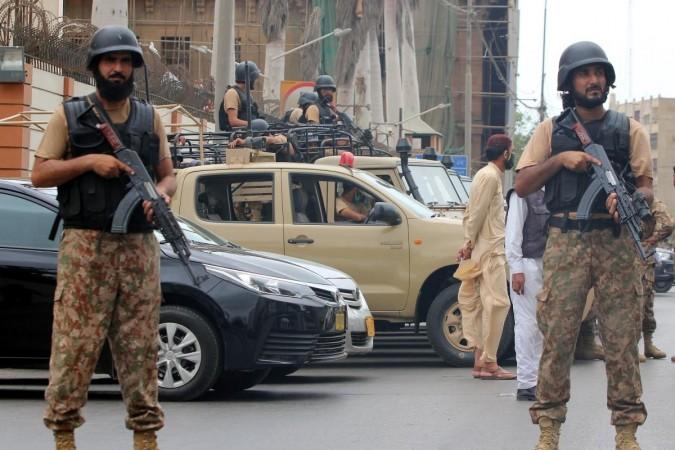
Meanwhile, local authorities have imposed Section 144 in Dera Ismail Khan city of Pakistan's Khyber Pakhtunkhwa province due to the deteriorating law and order situation.
According to an official notification cited by local media, the restrictions will remain in force from 6 a.m. to 6 p.m. (local time). During this period, the movement of passenger vehicles, cargo transport and motorcycles will be prohibited in designated areas, Pakistan's leading daily Dawn reported.
Dera Ismail Khan Deputy Commissioner Abdul Nasir Khan said several roads would remain closed during the restrictions. These include Dera-Tank Road from Tariq Shaheed to Bhugowal, Kulachi-Hathala Road, Kot Attal Road and Garah Abdullah Road.
Authorities also said a number of link roads — including Tikwarah-Hathala Road, Pota Badh, Kanori-Garah Mohabbat, Chehkan village to Darbari and the Pota–Kot Isa Khan link road — will remain shut. Pota Hathala Bazaar will also remain closed from 6 a.m. to 6 p.m.
Emergency services, including law enforcement agencies, ambulances and fire brigade vehicles, have been exempted from the restrictions. Limited movement in emergency situations may be allowed with permission from police or security personnel.
Residents have been asked to carry identification documents while travelling and follow instructions issued by law enforcement officials.
Authorities said the restrictions were imposed to maintain law and order and ensure public safety in the district.
Earlier, on February 28, Section 144 had been imposed in several parts of Dera Ismail Khan following rising tensions between Pakistan and Afghanistan.
The latest tensions began after Taliban-led Afghan forces launched retaliatory operations against Pakistani military installations on February 27 in response to Pakistan's actions targeting locations inside Afghan territory on February 21. Following the Afghan attacks, Pakistan launched Operation Ghazab lil-Haq (Righteous Fury).



![Comedian Harsh Gujral touches Yogi Adityanath's feet, cracks crime joke at UP event [watch]](https://data1.ibtimes.co.in/en/full/840360/comedian-harsh-gujral-touches-yogi-adityanaths-feet-cracks-crime-joke-event-watch.jpg?w=220&h=138)