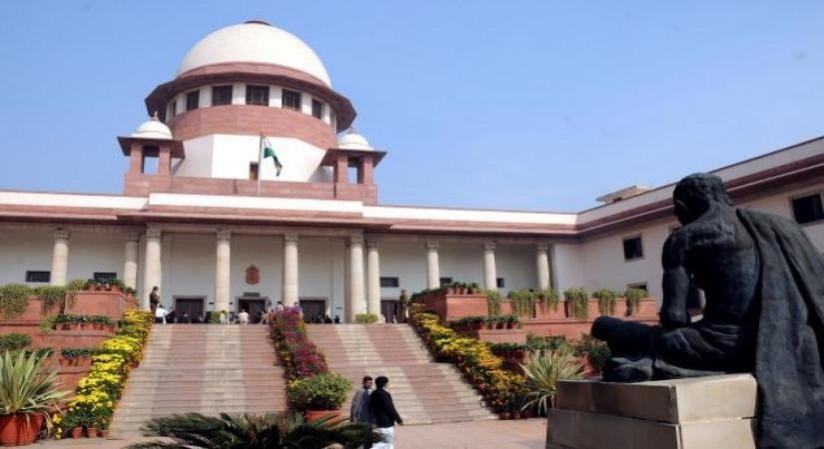
The Supreme Court on Monday issued notice on a petition challenging the constitutional validity of anti-conversion laws enacted by multiple states.
A Bench of Chief Justice of India (CJI) Surya Kant and Justice Joymalya Bagchi sought responses within four weeks from the Union government and the states concerned, and said the petitions would be heard along with similar pleas already pending before the top court.
The petition, filed by the National Council of Churches in India (NCCI), has assailed the Freedom of Religion Acts enacted by Rajasthan, Uttar Pradesh, Haryana, Uttarakhand, Madhya Pradesh, Gujarat, Himachal Pradesh, Karnataka, Jharkhand, Chhattisgarh, Arunachal Pradesh, and Odisha.
The CJI Surya Kant-led Bench observed that the matter involves questions of constitutional importance and would be heard by a three-judge Bench.
The petition, filed through advocate Niharika Ahluwalia, has contended that the impugned laws violate fundamental rights guaranteed under Articles 14, 15, 19, 21, 25, 26 and 30 of the Constitution, and sought a declaration that the statutes are unconstitutional.
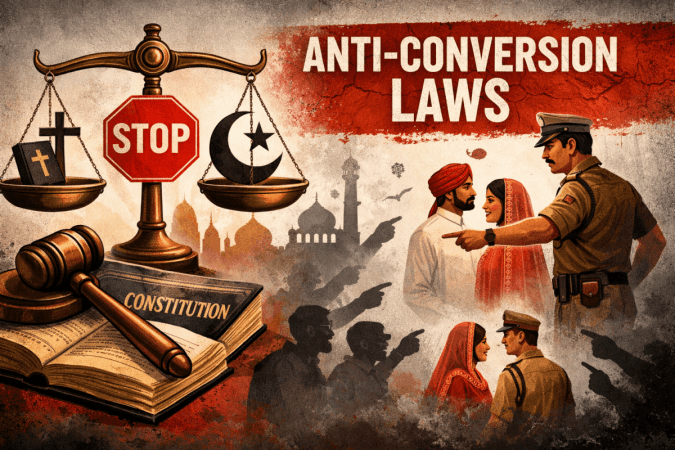
As an interim relief, the plea urged the apex court to restrain state police authorities from taking coercive action under the challenged laws. It submitted that the impugned Acts proceed on an "unconstitutional presumption" that religious conversions involving adults are inherently coerced or fraudulent, thereby subjecting deeply personal decisions of conscience to prior government approval.
The plea argued that provisions mandating prior intimation, inquiry and permission from district authorities invert the citizen–state relationship, subordinate individual autonomy to bureaucratic oversight, and violate decisional privacy, dignity, and freedom of religion.
It further contended that statutory definitions of terms such as "conversion", "allurement", "inducement:, and "undue influence" are vague and overbroad, granting uncanalised discretion to authorities and resulting in discriminatory and arbitrary enforcement.
The petition also flagged the expansion of the class of complainants to unrelated third parties, alleging that this has enabled vigilante groups to invoke criminal law in the absence of any complaint by the allegedly aggrieved individual, leading to arrests, prolonged incarceration, denial of bail, and social stigma.
Referring to provisions reversing the burden of proof, the plea said the laws undermine core principles of criminal jurisprudence, including the presumption of innocence and procedural fairness. Certain provisions, it added, rest on "paternalistic and gendered assumptions", particularly those treating women as inherently vulnerable to unlawful conversion.
The pleas also referred to international human rights obligations, submitting that state control over religious conversion is incompatible with India's commitments under the International Covenant on Civil and Political Rights. The respondents arrayed in the case include the Centre and the twelve states that have enacted the impugned legislation.