
In the verdant fields of Punjab or the rain-fed expanses of Maharashtra, a silent crisis unfolds beneath our feet. India's soils, once the cradle of the Green Revolution that fed a billion, are now gasping for breath. As we stand on February 22, 2026, mere weeks after the landmark India-US interim trade framework was unveiled on February 6, the stakes have never been higher. This is not merely an environmental alarm; it is an existential call for economic reinvention. Healthy soil is not a luxury. It is the multiplier that can transform India's agriculture from a 14.5-18% GDP contributor employing 42-45% of the workforce into a resilient engine of inclusive growth, export prowess, and climate resilience.
Recent assessments paint a sobering portrait. According to the FAO's State of Food and Agriculture (SOFA) 2025 report, nearly 32% of India's land, approximately 105-120 million hectares, is degraded, with 25% facing desertification. Soil organic carbon (SOC) has plummeted to 0.4-0.7% in vast swathes, down from historical levels of 2-3%, while 44% of soils suffer organic carbon deficiency. A comprehensive ICAR analysis of 242,827 samples (2025) reveals over 90% deficiency in available nitrogen and phosphorus, 50% in potassium, 41% in sulphur, and 36.5% in zinc. Erosion claims 5.3 billion tonnes of topsoil annually, 20 tonnes per hectare per year, eight times the global average of 2.4 tonnes, as Prof. Biswapati Mandal of Bidhan Chandra Krishi Vishwavidyalaya warned at the Anil Agarwal Dialogue 2025. Fertilizer response efficiency has collapsed from 1:10 in the 1970s to roughly 1:2.7 today.
The FAO SOFA 2025 starkly notes: "Land degradation is not just an environmental issue. It impacts agricultural productivity, rural livelihoods and food security." With 1.7 billion people globally facing 10% yield losses from human-induced degradation (India among the hardest hit in Asia), the human toll includes stunting in millions of children. Long-term experiments confirm the rice-wheat cropping system's (RWCS) toll: persistent monoculture in the Indo-Gangetic Plains has induced compaction, nutrient mining, and groundwater depletion, with traditional practices lowering soil quality indices compared to conservation agriculture (CA). Yet studies in Scientific Reports (2025) show CA practised for 8-12 years reduces bulk density by 9.8-11.3%, boosts microbial biomass carbon by 32-42.7%, and elevates soil quality indices significantly. Proving diversification with legumes, cover crops, or systems like soybean-wheat can restore SOC fractions by 8-43% while sustaining or enhancing yields.
Government initiatives have laid vital groundwork, but implementation gaps persist. The Soil Health Card (SHC) Scheme, launched in 2015 and integrated into Rashtriya Krishi Vikas Yojana, has distributed over 25 crore cards by July 2025 (some reports cite 30 crore), drawn from 8+ crore samples tested across 8,272+ labs (including 1,068 static, 163 mobile, 6,376 mini, and 665 village-level). Village-level fertility maps now cover 1,987 sites in 21 states, with mapping at 1:10,000 scale on 290 lakh hectares in 40 aspirational districts. Impacts are tangible: 8-10% reduction in chemical fertilizer use and 5-6% productivity gains in adopting areas, per Ministry evaluations (2020-2021). Funding reached ₹1,706 crore by February 2025.
Complementing this is PM-PRANAM (2023), which in 2023-24 saw 14 states reduce chemical fertilizer consumption by 15.14 lakh metric tonnes versus the prior three-year average. Karnataka alone contributed 30%. The scheme rewards states with 50% of subsidy savings for alternative fertilizers and awareness, targeting ₹20,000 crore in eventual savings. Nutrient-Based Subsidy (NBS), neem-coated urea, Paramparagat Krishi Vikas Yojana (PKVY), and GOBARdhan further promote integrated nutrient management. Yet urea subsidy distortions linger, awareness reaches only ~30-40% of smallholders effectively, and delays in card issuance persist.
Cropping patterns exacerbate vulnerabilities. The dominant RWCS, spanning ~10 million hectares and delivering 75% of cereals, drives "soil fatigue" through puddling-induced compaction and residue burning. FAO and ICAR reports highlight how input-intensive monocultures accelerate salinity, micronutrient depletion, and a 23% SOC decline over two decades in key zones. Diversification, replacing portions of rice with pulses, millets, or horticulture, offers redemption: studies show legume rotations enhance microbial activity, water retention, and resilience to erratic monsoons worsened by climate change.
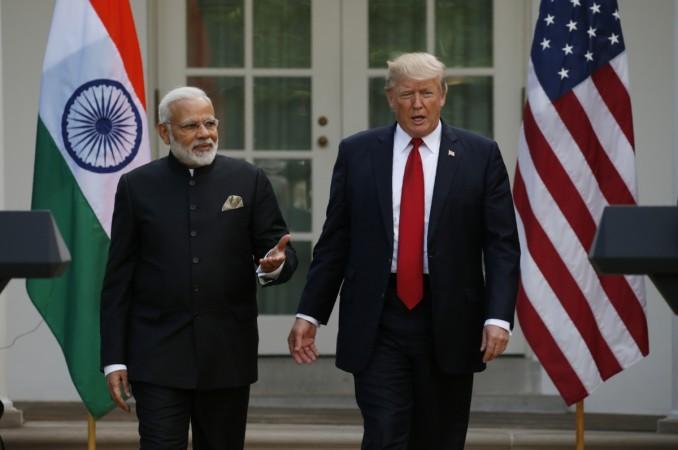
Enter the February 6, 2026, India-US interim trade framework, a pragmatic recalibration. India commits to eliminating or reducing tariffs on US industrial goods and select agricultural products: dried distillers' grains (DDGS) and red sorghum for animal feed, soybean oil (under tariff-rate quotas), tree nuts, fresh/processed fruits, wine/spirits, and others. Sensitive staples, wheat, rice, maize, soybeans, dairy, poultry, meat, remain protected, with no broad concessions. In reciprocity, the US applies an 18% tariff on select Indian goods (down from higher reciprocal rates) and lifts the 25% penalty tied to Russian oil imports. No major opening for US urea is evident; India's imports remain dominated by Russia and the Middle East.
This deal is double-edged. Cheaper DDGS and sorghum lower feed costs for India's booming dairy and poultry sectors, potentially boosting rural incomes and value addition. Soybean oil imports under quota ease edible oil pressures but risk squeezing domestic oilseed farmers. Fruit imports could challenge niche producers in Himachal or Jammu & Kashmir, though safeguards like minimum import prices apply. As Reuters noted post-announcement, smallholders, uncompetitive against heavily mechanized, subsidized US farms, face price squeezes without countermeasures. This underscores the urgent need for a level playing field: targeted support to enhance Indian farmers' competitiveness rather than isolation.
The path forward demands ruthless innovation. Emerging technologies offer unprecedented leverage. AI-powered platforms like Krishi Decision Support System (Krishi-DSS, launched August 2024) integrate satellite imagery, weather, soil, and scheme data for hyper-local advisories. Drones, scaled via Namo Drone Didi (targeting 15,000 units by 2025-26 with 40-100% subsidies for FPOs and women SHGs), enable precision spraying, pest scouting, and variable-rate nutrient application, slashing inputs by 20-30% while cutting labour. Satellites from ISRO and global constellations deliver real-time NDVI, soil moisture, and crop stress mapping at village scale, as in SLUSI's nationwide profiling. Quantum-inspired optimization algorithms, paired with IoT sensors and graph neural networks, tackle complex challenges: multi-agent reinforcement learning for decentralized supply-chain routing, blockchain for tamper-proof traceability from farm to export, and predictive models forecasting yields or disease under climate scenarios.
MahaAgri-AI Policy frameworks and startups like Farmonaut exemplify this: satellite-AI hybrids monitor millions of hectares, GenAI delivers vernacular advisories on irrigation and markets, and blockchain ensures premium pricing for organic or GI-tagged produce. Quantum computing pilots could soon optimize fertilizer allocation across 140 million smallholdings or simulate carbon sequestration at national scale. Integrated, these technologies could reduce post-harvest losses (currently 15-20%), slash GHG emissions (excess nitrogen fuels N₂O), and elevate resource-use efficiency to US levels, creating a true even playing field.
Policies must evolve accordingly. Strengthen SHC with real-time digital integration, mandatory linkage to PM-KISAN/DBT, and micronutrient subsidies. Phase urea decontrol while expanding NBS to organics, bio-fertilizers, and nano-urea. Rehash subsidies toward outcome-based incentives: payments for ecosystem services (carbon farming, erosion control), premium MSP for diversified crops, and insurance enhancements under PMFBY. Promote CA and rotations via targeted MSP assurances for pulses/millets/oilseeds in water-stressed zones. Ramp awareness through 6+ lakh demonstrations, Kisan Melas, vernacular apps, and school curricula, reaching women and marginal farmers via FPOs.
Technological assistance is non-negotiable: subsidized drone fleets, AI soil sensors, custom hiring centres for small plots, and public-private R&D matching global benchmarks. For the US deal's ripple effects, establish adjustment funds, direct income support, skill programs in precision ag, and value-addition clusters, to shield vulnerable soybean and fruit growers while amplifying gains in dairy.
Finally, reimagine agriculture's GDP footprint. Beyond primary production, slash losses via cold chains and e-NAM expansion; scale processing and food parks for higher-value exports (leveraging the trade deal's reciprocal access); prioritize horticulture, organic farming, and fisheries. Climate-smart practices plus carbon credits can monetize regeneration. With these, agriculture's multiplier, rural demand, employment, can sustain 8-10% annual sectoral growth, lifting its efficient GDP share while feeding 1.4 billion and exporting sustainably.India stands at a crossroads. The February 2026 trade pivot is not a threat but a catalyst, if met with soil-first resolve. As FAO Director-General QU Dongyu has urged, "Better land, soil and water management [are] key to feeding 10 billion people." Let us heed this. By healing our soils with science, policy courage, and inclusive technology, India can not only feed itself but lead the world toward regenerative abundance. The earth beneath our feet awaits our stewardship. The time for half-measures is over; the harvest of tomorrow begins today.
[Major General Dr. Dilawar Singh, IAV, is a distinguished strategist having held senior positions in technology, defence, and corporate governance. He serves on global boards and advises on leadership, emerging technologies, and strategic affairs, with a focus on aligning India's interests in the evolving global technological order.]