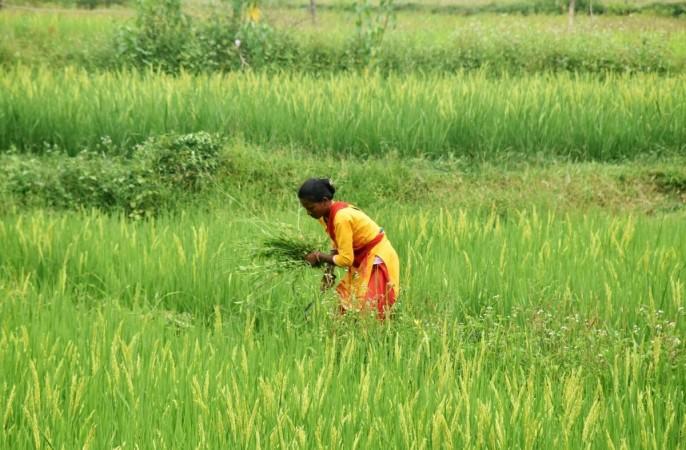
A smallholder farmer in rural Rajasthan spots yellowing leaves on his bajra crop at dawn. He opens WhatsApp on his basic smartphone, speaks in his local dialect, "Meri bajra ki patiyan peele ho rahi hain, kya karun?" and within seconds receives a clear, voice reply in the same language: a diagnosis, a low-cost remedy using household items, and a short video demonstration. No travel, no fees, no confusion. Weeks later, his crop recovers stronger, inputs cost less, and he has extra income for his family's needs.
This scenario reflects real-world applications documented in ongoing programs as of February 22, 2026. While not yet reaching every farmer or village, AI tools are deployed across multiple states, serving hundreds of thousands with verified benefits like higher yields, reduced costs, and better market access. Government data and independent reports confirm measurable impacts for poor and semi-poor rural households, with expansion underway through national and state initiatives.
The Strong Digital Foundation Supporting This Change
India's digital public infrastructure underpins these efforts. WhatsApp serves over 500 million users, even on basic devices. Bhashini, the government's free language AI platform, handles translation, speech-to-text, and text-to-speech in 22+ Indian languages for voice-first interactions. The Digital Agriculture Mission has created over 7.63 crore unique Farmer IDs (targeting 11 crore by 2026–27) and digitally surveyed 23.5 crore crop plots, enabling personalized advice. These components deliver accessible support in low-literacy, low-connectivity areas.
The Leading Tools Delivering Results Today
Several systems are operational, backed by government and organizational data.
Farmer.Chat, developed by Digital Green with OpenAI support, is a generative AI chatbot offering multilingual advice on crops, pests, livestock, soil, weather, irrigation, and schemes via text, voice, or photos. It uses validated sources like government data and links to local-language videos. As of early 2026, it has over 830,000 users across India and other countries, with more than 5–6 million queries handled. In India specifically, it reached 250,000 users by mid-2025, with women comprising 40% of users. Impact studies show 70% of users apply recommendations within 30 days, 73% access digital advice for the first time, and 60% take on-farm action, leading to income increases of up to 24% in some cases and higher adoption of sustainable practices. The platform is low-bandwidth and smallholder-focused, with costs under $1 per farmer annually. Expansion into states like Uttar Pradesh, Karnataka, and Maharashtra is planned for FY26.
Kisan e-Mitra, the government's voice-enabled AI chatbot, aids with PM-KISAN payments, Kisan Credit Cards, crop insurance (PMFBY), eligibility checks, and queries. It supports 11 regional languages and handles over 8,000 queries daily. As of December 2025, it had answered more than 93 lakh queries. Post-AI upgrades in 2024, it saw a 668% query increase, averaging 13,000 daily. It addresses 49 query categories, enhancing scheme access and transparency.
Telangana's Saagu Baagu project, supported by the World Economic Forum, provided AI advisories, soil insights, and market linkages. In its initial phase with 7,000 chilli farmers in Khammam district, it achieved a 21% yield increase, 9% reduction in pesticide use, 5% less fertilizer, better produce quality, and incomes around ₹66,000 extra per acre. The state has scaled it toward 500,000 farmers across 10 districts and multiple crops in Phase II. Maharashtra and other states are implementing similar hyperlocal AI advisories.
Complementary platforms like DeHaat, Farmonaut, CropIn, and SukhaRakshak offer satellite monitoring, price forecasting, and free/low-cost tiers for small farmers.
The Union Budget 2026–27 introduced Bharat-VISTAAR, a multilingual AI platform integrating AgriStack, ICAR practices, and advisory systems. Launched on February 17, 2026, it delivers voice-based, real-time guidance via phone calls to support decision-making on weather, soil, and pests. Early phases are active in states like Rajasthan, Maharashtra, Bihar, and Gujarat.
How These Tools Are Improving Incomes and Livelihoods
Agriculture supports about 80% of rural families. AI offers 24/7 guidance: photo-based pest detection cuts losses by 30–50%; real-time mandi prices and selling advice bypass intermediaries for 10–25% revenue gains; tailored plans save 20–40% on water and inputs while raising yields. Women in self-help groups report higher profits (up to 24%+) and faster adoption of climate-resilient methods.
Market linkages improve through AI matching on platforms like ONDC, price forecasting for storage decisions, and diversification suggestions (dairy, poultry, beekeeping, value-added products).
Financial access strengthens: chatbots check scheme eligibility and guide applications for subsidies, loans, and insurance. Farm data enhances credit scoring for easier micro-loans.
Non-farm opportunities emerge: voice-based skill tutorials in local dialects for tailoring, handicrafts, or solar repair; livestock monitoring; handicraft pricing and buyer connections.
Basic health and education gain too: symptom support for ASHA workers and personalized vocational learning, helping families stay healthier and more skilled without migrating.
Practical Steps to Accelerate Adoption in Villages
Start small and build evidence, no large budget required.
Immediate (1–2 weeks, no cost): Download Farmer.Chat from the Play Store and access Kisan e-Mitra via PM-KISAN app or website. Test in your village. Form a WhatsApp group with 20–50 farmers or self-help group members to share daily tips from the tools. Collaborate with local Krishi Vigyan Kendras or panchayats for trust.
Pilot Phase (1–3 months): Train 5–10 literate youth or women as "AI Champions" to assist with queries. Hold weekly demos (e.g., "Photograph your crop issue"). Track basic metrics: yields, costs, incomes before and after.
Scaling (3–12 months): Seek support via IndiaAI Mission challenges, state agriculture programs, or Digital Agriculture Mission funds for pilots. Embed in self-help groups and farmer producer organizations (women-led groups adopt quickly). Add offline caching and SMS backups. Measure outcomes like income gains, reduced migration, and women's participation to attract partners.
For custom needs (specific crops or regions), use open-source like KrishiMitra on GitHub or hire freelancers to link Bhashini APIs with WhatsApp (basic setup under ₹50,000 for 1,000 users).
Looking Ahead: Realistic Progress and Challenges
By 2027–28, more advanced agentic features could automate produce sales, scheme applications, or village coordination, potentially lifting livelihoods 30–50% for many. Government pushes (Farmer IDs nearing 100 million, Bharat-VISTAAR rollout, pest surveillance for 66 crops) signal strong momentum.
Challenges persist: connectivity and power gaps (address via community hubs and hybrids); building trust (pair AI with human extension workers); data privacy (use official platforms); ensuring new roles emerge (AI support, data collection) while reskilling happens. Overall digital adoption in agriculture is around 20-30%, indicating early stages but growing.
This is grounded progress. Tools are deployed, farmers are responding, and impacts are documented in reports from PIB, WEF, Digital Green, and others. Villages can lead if we focus on last-mile adoption.
Pick one village this week. Install the apps for 50 families. Track baselines. In months, the results will speak for themselves and open doors to more support.
[Major General Dr. Dilawar Singh, IAV, is a distinguished strategist having held senior positions in technology, defence, and corporate governance. He serves on global boards and advises on leadership, emerging technologies, and strategic affairs, with a focus on aligning India's interests in the evolving global technological order.]