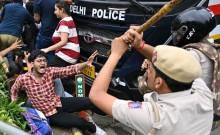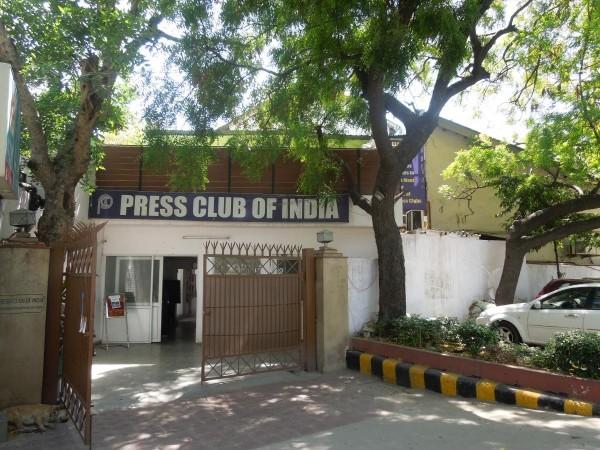
The Press Club of India elections being held today take place against one of the most empirically documented declines of journalistic freedom, safety, economic viability and institutional courage in India since Independence. This is not rhetorical pessimism. It is borne out by longitudinal global datasets, constitutional litigation patterns, newsroom employment statistics and documented cases of coercion against journalists. The PCI election therefore represents not a contest of personalities, but a referendum on whether Indian journalism still possesses the institutional capacity to defend its constitutional role.
However, the seriousness among them about the elections is apparent from the fact that the Press Club of India has a total membership of about 5,000 journalists, comprising roughly 4,200 active members and around 900 associate members, making it the largest journalist body in the country. In recent elections, the electoral roll has been about 4,500–4,550 eligible voters. Actual participation, however, is significantly lower: in the 2024 PCI elections, only 1,357 members voted, translating to a turnout of about 30 percent. Historically, voter turnout at PCI elections has fluctuated in the 30–50 percent range, meaning that more than half of eligible members typically do not vote, a striking gap between membership size and electoral engagement for an institution of this scale and importance.
Between 2014 and 2024, India's press freedom ranking deteriorated by over 60 places, falling to 161 out of 180 countries in the 2023 World Press Freedom Index. During the same period, at least 25 journalists were killed in connection with their work, according to the Committee to Protect Journalists (CPJ), while hundreds more faced arrests, FIRs, preventive detention, raids and prolonged litigation. Importantly, CPJ records show that over 70 percent of legal actions against journalists in India relate to reporting on governance, corruption, religion or security, precisely the areas central to democratic accountability.
Independence Versus Influence: An Institutional, Not Ideological, Question
The dominant fault line in this election is not ideology but institutional independence. The PCI's authority rests entirely on credibility and moral capital, not statutory power. Once leadership is perceived as compromised, cautious or transactional, that capital erodes rapidly.
This concern is grounded in constitutional jurisprudence. In Bennett Coleman & Co. v. Union of India (1973), the Supreme Court explicitly warned that economic and policy instruments can be as effective in suppressing the press as direct censorship. Subsequent judgments, including Indian Express Newspapers v. Union of India (1985), reinforced that even fiscal or regulatory pressure can amount to an unconstitutional restraint.
Yet, over the last decade, journalism has faced exactly such indirect constraints. According to data compiled by Article 14 and Internet Freedom Foundation, more than 1,200 internet shutdowns were imposed in India between 2012 and 2023, the highest in the world, severely impairing newsgathering and verification. The PCI's response to these structural threats has often been reactive, fragmented and episodic, raising legitimate questions about leadership resolve and strategic depth.
Legal and Policy Battlefield: Numbers That Cannot Be Ignored
The Digital Personal Data Protection Act, 2023 represents one of the most consequential regulatory shifts for journalism. Legal scholars point out that the Act contains over 20 instances of executive discretion without independent oversight, while exemptions for journalism are neither categorical nor judicially anchored.
Former Supreme Court judge Justice B.N. Srikrishna, who authored India's first comprehensive data protection draft, publicly cautioned that "journalistic exemptions must be explicit, not implied, otherwise investigative reporting becomes legally vulnerable by design." Despite this, the final Act leaves journalists exposed to penalties that can run into ₹250 crore, a figure that alone is sufficient to chill investigative journalism even without prosecution.
The PCI did participate in collective memoranda opposing these provisions. However, measurable outcomes remain limited. No statutory clarification, amendment, or binding guideline has emerged. This gap between advocacy and outcome is a critical issue voters are quietly assessing.
Quality of Journalism: Decline Measured in Output, Employment and Trust
Quality is not an abstract concern. It is measurable.
According to the Reuters Institute Digital News Report 2024:
Only 38 percent of Indians say they trust news most of the time, down from 51 percent a decade earlier.
Trust levels drop below 25 percent for television news.
Over 65 percent of respondents believe news outlets are influenced by political or corporate interests.
Employment data compounds the problem. Industry estimates suggest that over 35,000 journalists lost jobs between 2017 and 2022, with newsroom staff sizes shrinking by 30 to 50 percent in several legacy publications. Freelancers now account for a growing share of reportage, yet lack legal protection, institutional backing or health insurance.
Against this backdrop, courage and sacrifice are no longer exceptional; they are routine. Between 2020 and 2024, at least 150 journalists were named in criminal cases, many under laws carrying severe penalties, including UAPA and sedition provisions later questioned or struck down by courts. PCI leadership is therefore judged on whether it understands journalism as lived risk, not theoretical freedom.
Leadership Panels: A Quantitative Deficit of Gravitas?
A critical, if uncomfortable, question being asked privately is whether the bench strength of fearless, nationally influential journalists contesting these elections is adequate.
Consider this: during the Emergency (1975–77), over 250 journalists were imprisoned, and press bodies produced leadership that openly confronted state power. In contrast, today's environment has seen far fewer institutional leaders willing to incur comparable professional cost. This is not necessarily individual failure, but it reflects a systemic thinning of leadership pipelines due to newsroom precarity and economic dependence.
Former Chief Justice R.M. Lodha's warning that institutions collapse when leadership trades principle for convenience has particular resonance. Panels are therefore being judged not on slogans but on whether they contain individuals with a demonstrable record of resisting pressure rather than managing it.
Manifestos: Repetition Without Architecture
Most manifestos contain familiar language: defend press freedom, uphold democratic values, strengthen the club. What they largely lack are architectural details.
Absent or weakly articulated are:
Dedicated legal defence funds with corpus targets
Standing constitutional litigation committees
Formal MoUs with international press freedom organisations
Measurable targets for mentorship, training and ethical review
Strategic positioning on AI-generated misinformation, which the Reuters Institute estimates will affect over 40 percent of news consumption globally by 2026
Think tanks like Carnegie India have repeatedly argued that civil society institutions in constrained democracies must evolve into policy-literate, legally armed and data-driven entities. Manifestos that stop at protest language fall short of this requirement.
Institutional Democracy: Practice Versus Preaching
Internal governance issues are not peripheral. Transparency, financial accountability and representation determine credibility.
The Supreme Court in PUCL v. Union of India (2003) held that informed participation is the essence of democratic legitimacy. PCI's own processes, including communication with members, disclosure of financial priorities and inclusivity of younger and women journalists, remain uneven. This contradiction weakens external advocacy.
Past Performance: A Mixed Ledger
PCI has succeeded in remaining a convening space during crises and issuing collective statements. However, policy wins are scarce. No major media law has been amended following PCI intervention in the last decade. Internal factionalism has diluted leverage, and moral authority has not translated into structural influence.
Political theorist Pratap Bhanu Mehta has described this as India's broader institutional problem: strong rhetoric, weak execution. PCI is not exempt.
Forward Vision: Missing the Next Decade
Global projections show that:
Over 60 percent of news traffic will soon be platform-mediated
AI-generated content will outpace human-produced news in volume
Independent journalism will require institutional pooling of legal, technological and financial resources
Yet journalist organisations, including PCI, remain largely event-driven. Without a forward strategy, irrelevance is not a threat; it is an outcome.
The Election as a Measure of Institutional Self-Respect
The PCI election is not about comfort, access or symbolism. It is about whether Indian journalism still possesses institutional self-respect.
The Constitution has already spoken. The Supreme Court has repeatedly affirmed press freedom. Global data has documented the decline. The unresolved question is whether journalists, through their premier institution, are willing to organise power, not just express concern.
This election will signal whether the Press Club of India remains a social space with statements, or evolves into a serious institutional defender of journalism in an era of democratic stress.
[The author, Major General Dr Dilawar Singh, is an independent, self made, part time journalist. The opinions mentioned are personal.]