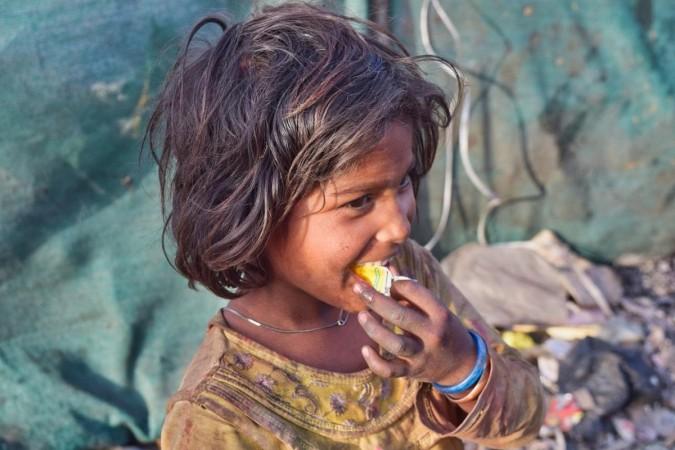
In Western media, academia, NGOs, and popular culture, few topics generate as much fascination as the poverty of the developing world—particularly India. This phenomenon, often derided as "poverty porn," involves the sensationalised, decontextualised depiction of extreme deprivation: sprawling slums, malnourished children, open defecation, and desperate street scenes. Films like Slumdog Millionaire, photo essays by Western photographers, celebrity "slum tours," and endless documentaries frame India (and similar nations) as a perpetual basket case of suffering.
These portrayals are not mere reporting; they serve emotional, ideological, and commercial purposes. They evoke pity, justify foreign aid, signal Western moral superiority, and sustain a narrative of the Global South as helpless and backward. Yet this fixation clashes sharply with economic realities. India has achieved one of history's most rapid escapes from mass poverty while building a modern economy. The disconnect reveals more about the critics' biases than about India itself.
"Poverty porn" exploits human suffering for impact. Charities and media outlets use visceral images of the poor—often stripped of agency or dignity—to elicit donations or clicks. In India's case, this manifests in recurring tropes: Dharavi slum as synecdoche for the nation, or rural malnutrition juxtaposed against Western excess. Critics within India and abroad have long called out examples like Slumdog Millionaire (2008) for romanticising misery while ignoring the broader context, or staged photo series that reduce complex societies to victimhood.
Why India? It is large, democratic, English-speaking, and culturally visible—making it an accessible canvas. Its colonial history invites post-imperial guilt-tripping, while its rising geopolitical weight (as a counter to China) makes undermining its progress convenient. Unlike authoritarian successes (e.g., China's poverty reduction under one-party rule), India's messy democracy invites endless scrutiny of flaws: caste, religion, inequality, or governance. Western outlets amplify negatives—often with selective data or local activist voices—while underplaying achievements. This creates a feedback loop: poverty porn sustains aid industries, academic careers, and a worldview where the West remains the benevolent saviour.
The reality is far more dynamic. India has slashed extreme poverty at a historic pace. According to the World Bank, extreme poverty (below $2.15/day in 2017 PPP) fell from 16.2% in 2011–12 to 2.3% in 2022–23, lifting 171 million people. At the $3.65/day lower-middle-income line, the decline lifted 378 million.
India's National Multidimensional Poverty Index (MPI), tracking health, education, and living standards, shows a drop from 24.85% in 2015–16 to 14.96% in 2019–21, with further gains reported—over 240 million escaping multidimensional poverty in recent years through targeted schemes like direct benefit transfers, food security, sanitation drives, and financial inclusion.
Nominal GDP has surged past $4 trillion, with consistent 6–7%+ annual growth, positioning India as the world's fastest-growing major economy and soon the third-largest overall. Per capita income is on track to reach around $4,000 by 2030, transitioning the country to upper-middle-income status.
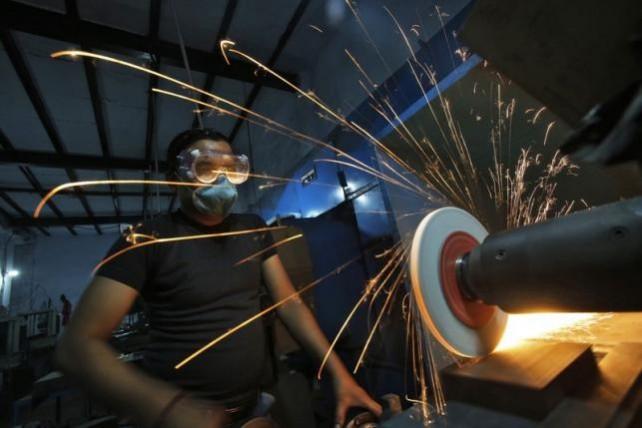
A burgeoning middle class—hundreds of millions strong and expanding—now drives consumption, tech innovation, and services. India leads in digital public infrastructure: UPI handles billions of transactions monthly, Aadhaar enables efficient welfare, and the country boasts a vibrant startup ecosystem, a booming IT sector, and global champions in pharmaceuticals and renewables.
Infrastructure tells an even more compelling story. National highways expanded dramatically (from ~91,000 km to over 146,000 km in a decade), airports grew from 74 to 164, and high-speed corridors multiplied. Programs like Bharatmala, Sagarmala, and Gati Shakti have modernised logistics. Electrification, rural roads, and sanitation (Swachh Bharat) have transformed daily life. India is now a space power (ISRO's cost-effective missions), a vaccine exporter, and a leader in solar energy deployment. These are not anomalies but the fruit of post-1991 liberalisation, sustained reforms, and democratic resilience.
Poverty persists—rural distress, youth unemployment, inequality, and urban slums remain real challenges amid a population exceeding 1.4 billion. But the trajectory is upward: literacy, life expectancy, and women's workforce participation (though uneven) have improved. India's story mirrors East Asia's earlier miracles more than perpetual victimhood.
The obsession with India's poverty becomes unfair when contrasted with Western realities and selective blindness elsewhere. American cities grapple with visible homelessness, tent encampments, opioid deaths, and urban decay—yet rarely framed as "poverty porn" defining the United States. Europe's migrant crises, energy poverty, or inequality draw less exoticised coverage. Western aid often flows to inefficient NGOs or perpetuates dependency, while India's self-reliant welfare model (e.g., PM Garib Kalyan Anna Yojana feeding 800 million) receives less credit.
Criticism of India frequently decontextualises: caste is ancient and complex, yet portrayed as a uniquely Hindu pathology; religious tensions are real, but ignore similar issues globally or India's secular constitution's endurance. Political critiques (e.g., of majoritarianism) often come from outlets quick to excuse authoritarian excesses elsewhere. Media studies and observers note a pattern of negative, alarmist framing in Western coverage—exaggerated headlines, divisive language, and underreporting of progress.
Geopolitically, a rising, democratic India pursuing strategic autonomy (e.g., on energy, Russia ties, or Global South leadership) challenges certain narratives. Praising China's poverty reduction while scrutinising India's democracy reveals inconsistency. Colonial legacies and lingering Orientalism play roles: the "white saviour" complex thrives on images of helpless brown masses, not empowered citizens building highways or coding apps.
Consequences are real. Distorted perceptions deter nuanced investment or tourism, fuel diaspora alienation, and distort policy debates. They discourage honest reckoning with India's internal failures—corruption, bureaucracy, and education quality—by framing problems as inherent rather than solvable through agency and growth.
India does not need Western validation. Its progress stems from its people's enterprise, democratic accountability, and policy choices. Yet balanced discourse benefits everyone. Western observers should grapple with data: India's poverty decline rivals or exceeds peers, its economy integrates globally (tech, manufacturing shifts from China), and its democracy—flawed but vibrant—delivers legitimacy absent in many aid darlings.
Poverty porn ultimately harms more than it helps. It erodes dignity, distorts priorities, and ignores how agency, markets, technology, and governance reduce poverty. India's trajectory—from socialist stagnation to aspirational powerhouse—offers lessons in resilience. The West's favourite topic reveals less about Indian suffering than about its own need for simplistic morality tales.
As India marches toward developed-nation status by 2047, the narrative must evolve. Focus on solutions, innovation, and human flourishing—not just suffering. The economic reality demands it: a confident, rising India is transforming not only itself but the global order. The poverty porn era should end—not by denial of challenges, but by recognition of triumphs.
[Disclaimer: This is an authored article by Arshia Malik, who is a writer, blogger, and columnist, focusing on geopolitics, Muslim reform and an Islamic Renaissance while documenting heretic Muslims. Views expressed in this article are author's own.]
This article was originally published in International Business Times, Singapore Edition.