A political storm has erupted in the Union Territory of Jammu and Kashmir after security agencies began profiling mosques and madrasas across the Kashmir Valley.
Cutting across party lines, most political parties have condemned the move and cautioned authorities against playing with the religious sentiments of the people.
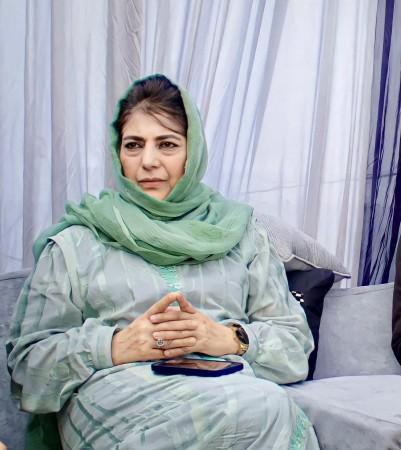
People's Democratic Party (PDP) chief and former chief minister Mehbooba Mufti was the first to react to the issue and termed the move "a deliberate attempt to alienate Muslims from their faith".
She asked, "If the government genuinely wants to monitor religious leaders, why not start with temples? Verify which priests serve where, who accesses inner sanctums, and the payments involved."
She pointed out that security agencies already possess land and personal records related to mosques. "Collecting Aadhaar details, photographs, and profiles of imams amounts to profiling meant to create fear. Our imams are patriotic, yet they are being treated like Over Ground Workers (OGWs)," she said, warning of nationwide repercussions.
The National Conference has called on the Lieutenant Governor to clarify his position, with Srinagar MP Aga Syed Ruhullah Mehdi labelling the surveillance a violation of constitutional rights and part of a "broader ideological project" to control religious spaces. NC spokesperson Imran Nabi Dar termed the exercise "intimidating and discriminatory".
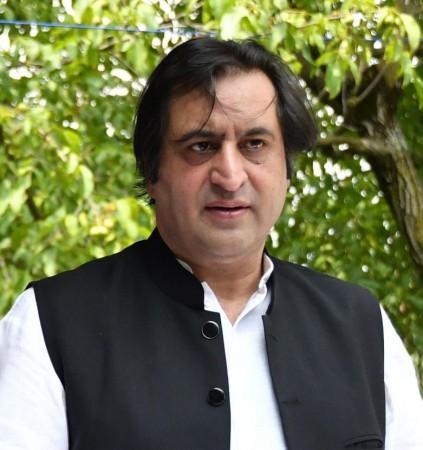
Jammu and Kashmir Peoples Conference president Sajad Gani Lone termed the move an assault on the secular fabric. "The profiling of mosques and imams is shocking and represents punitive overstretch," Lone said in a post on X. While acknowledging security challenges, he warned that "no security threat is bigger than the idea of India".
"Pushing Muslims to the wall and branding them suspect is a security risk in itself," Lone said, noting that a majority of Jammu and Kashmir Police personnel who laid down their lives in counter-terror operations were Muslims. "Will someone go to their graves and tell them that the mosques they prayed in are now being profiled?" Lone asked.
"An absolutely condemnable and atrocious move that reeks of blatant misuse of authority at the cost of the fundamental rights of citizens," former Srinagar mayor Junaid Azim Mattoo wrote on X. "There should be no place for ethnic, religious, or racial profiling in India. It is an assault on the idea of India. We cannot suspend the Constitution to fight terror."
Waqf Board Chairperson Defends Decision
BJP leader and chairperson of the Jammu and Kashmir Waqf Board, Dr Darakhshan Andrabi, defended the decision and said the ongoing registration and verification process was aimed solely at safeguarding religious assets, not targeting any individual or institution.
"When the Waqf Development Act was introduced and passed, politics was done on that as well. Despite that, we worked day and night. The Government of India, through the Ministry of Minority Affairs, introduced the 'UMEED Portal' for Waqf development for six months, and we began the process of registering Waqf properties," she said.
"As far as mosques are concerned, if they were part of Waqf properties, we would have registered them. There is no need to politicise mosques or mislead people over this issue", Andrabi further pointed out.
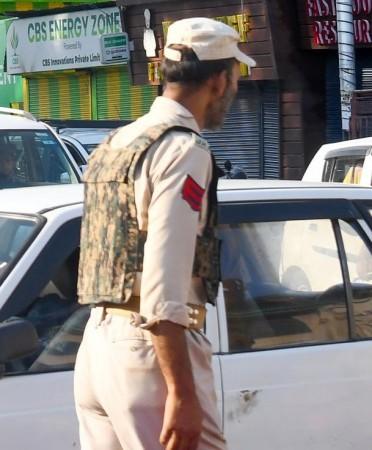
Authorities Profiling Mosques, Madrasas in Kashmir
Notwithstanding opposition from various religious and political groups, authorities have launched a much-talked-about campaign to profile mosques and madrasas across the Kashmir Valley as part of efforts to dismantle the terror ecosystem.
As reported earlier, in a major security crackdown following the exposure of a "white-collar" terrorist module in Jammu and Kashmir, authorities have initiated an extensive profiling drive of mosques, madrasas and individuals associated with their management, triggering heightened vigilance across the Valley.
Officials said village numberdars (local revenue officials) have been issued a detailed proforma directing them to collect exhaustive information about mosques, madrasas, imams, teachers and management committee members.
The move is aimed at mapping the financial structure, construction details and daily expenditure sources of religious institutions, which security agencies suspect may be misused by terror networks for recruitment and logistics.
The profiling exercise goes far beyond basic details. Imams and teachers are being asked to provide information related to Aadhaar cards, bank accounts, property holdings, social media handles, passports, ATM cards, ration cards, driving licences, mobile phone numbers, and even IMEI numbers of their devices.
The proforma also seeks details on the religious sect followed by each institution — whether Barelvi, Deobandi, Hanafi, or Ahle Hadith — to help agencies understand ideological influences.