A democracy cannot function without rules governing public protest. Police have a legitimate and necessary responsibility to regulate common protesters, students, young people, political workers and journalists when demonstrations threaten public safety, obstruct essential services, breach lawful restrictions or become violent. But there is a fundamental democratic principle that must never be forgotten: the institution empowered to regulate everyone else cannot itself remain beyond effective regulation.
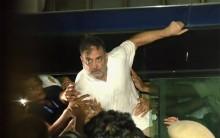
That is the uncomfortable question raised by the Delhi Police's latest advisory to journalists covering protests. Journalists have been told to carry valid identification, keep it visibly displayed, avoid obstructing police operations and maintain a safe distance during tense situations. The advisory followed allegations by women journalists that they were groped and assaulted by police personnel while covering the October 3 Jantar Mantar protest. Their complaints were referred to the Crime Branch for investigation.
The asymmetry becomes even clearer when one examines the conditions imposed on political gatherings. Pune Police reportedly attached 30 conditions to Rahul Gandhi's August 22 "Chhatron Ki Goonj" programme, covering security, gates, CCTV, women personnel, parking, fire safety, drones, noise, banners, emergency access and responsibility for law and order. In Indore, police imposed 31 conditions, extending into crowd segmentation, stage access, metal detectors, CCTV, emergency corridors, medical facilities, evacuation arrangements and programme content.
There is nothing inherently wrong with such precautions. Indeed, large gatherings require them. The problem begins when highly detailed regulation of citizens is combined with broad and insufficiently transparent discretion for the police themselves. The same standards must apply regardless of whether the gathering belongs to the BJP, Congress, AAP, a student organisation, a civil-society group or an entirely unaffiliated youth movement. It is not enough for police to deny political discrimination. The system should be designed so that there is as little room as possible for political discretion in the first place.
The answer is not to weaken police authority. It is to institutionalise police accountability.
If protesters must carry identification when required, police personnel deployed at protests should be visibly identifiable by name or service number. If citizens are prohibited from carrying certain objects, every weapon or crowd-control device issued to police should have an auditable chain of custody. If organisers must install CCTV and preserve recordings, police should be required to preserve their own body-camera, CCTV and other operational footage whenever force, detention or serious injury occurs. If organisers can have their permission cancelled for non-compliance, officers who violate operational protocols must face documented departmental and, where appropriate, criminal accountability.
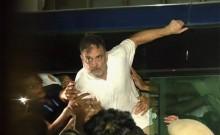
This becomes particularly important because there have been serious controversies over the manner in which force has been deployed. After videos showed men in plain clothes wielding police lathis during the July 2026 Jantar Mantar confrontation, Delhi Police directed personnel deployed there to report in uniform. That should not remain an ad hoc instruction after controversy. No unidentified person should be allowed to exercise police power at a public demonstration. Plain-clothes intelligence personnel may have legitimate operational roles, but anyone using force, detaining citizens or directing crowd-control operations must be identifiable and accountable through a documented chain of command.
The same principle must govern allegations involving excessive force, pellet-firing weapons, improvised or potentially dangerous equipment, and claims of assault. Every use of a firearm or projectile weapon should automatically generate an incident report, ammunition accounting, medical documentation, video preservation and independent review. The objective is not to prevent police from protecting life. It is to establish exactly why force was necessary, who authorised it, what alternatives were considered and what happened afterwards.
Sexual misconduct requires an even higher standard. Allegations of groping, sexual assault or gender-based misconduct involving police personnel cannot be treated merely as another disagreement between police and protesters. They require immediate preservation of evidence, protection of the complainant, separation of the accused from relevant operational duties where warranted, and an investigation independent enough to command public confidence. The recent controversy involving ACP Vivek Bhagat illustrates why administrative decisions concerning an accused officer can themselves become matters of public confidence; the Delhi Government subsequently withheld his additional duty charge while the matter was being examined.
There is another danger that deserves explicit attention: the impersonation or misuse of police identity by non-police actors. Any allegation that political workers or private individuals have worn police-like uniforms, carried police equipment or acted alongside police must be investigated rigorously. A democracy cannot tolerate uncertainty over who actually possesses state authority at a protest. Uniform, insignia, weapons and police powers cannot become political instruments.
Most importantly, police regulation must be politically neutral and demonstrably so. Permission criteria, crowd limits, barricading requirements, routes, timings, detention procedures, use-of-force thresholds and media access should be published in advance wherever operational security permits. Similar gatherings should face comparable standards. Exceptions should be recorded with reasons. Complaints should not be investigated by the same officers whose conduct is being questioned. And where serious allegations arise, an independent review mechanism should automatically examine the incident.
The principle is beautifully simple: Police must regulate protesters. Police must regulate students. Police must regulate crowds. Police may regulate journalists when their conduct genuinely interferes with lawful operations. But someone must regulate the police.
That "someone" cannot be political convenience, internal hierarchy alone or the public relations machinery of the police. It must be law, transparent protocols, judicial oversight where necessary, independent investigation, technology-enabled evidence and institutional accountability.
The police are the visible arm of the State at a protest. They therefore carry a greater responsibility, not a lesser one. The citizen may lose his temper; the police cannot lose their discipline. The protester may act unlawfully; the police cannot respond unlawfully. A journalist may cross a barricade; the police cannot cross the constitutional line.
A democracy does not become stronger when the State loses the capacity to control disorder. Nor does it become safer when police authority becomes unaccountable. The real test is whether the State can control disorder while remaining itself under control.
The rule should therefore be reciprocal and universal: every protester must be accountable, every journalist must be responsible, every organiser must comply with the law, and every police officer must be identifiable, proportionate and accountable.
That is not an anti-police proposition. It is the only proposition worthy of a democratic police force.
[Major General Dr. Dilawar Singh, IAV, is a distinguished strategist having held senior positions in technology, defence, and corporate governance. He serves on global boards and advises on leadership, emerging technologies, and strategic affairs, with a focus on aligning India's interests in the evolving global technological order.]