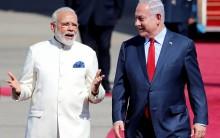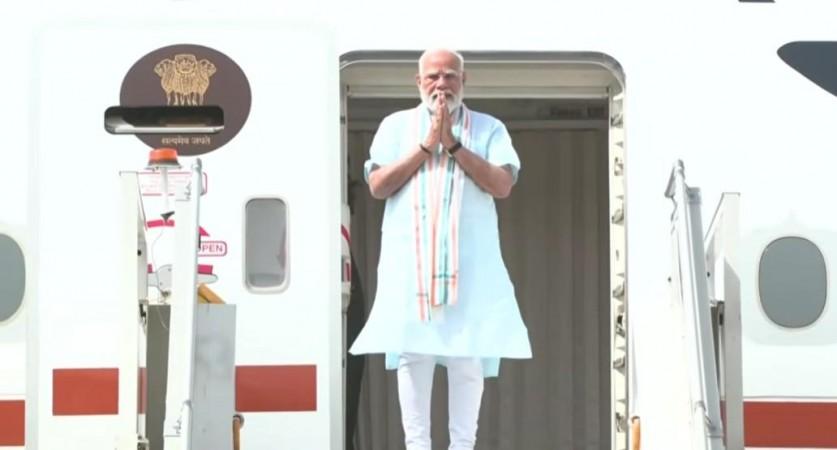
Prime Minister Narendra Modi returned to New Delhi on Thursday morning after successfully concluding a high-profile five-nation diplomatic tour covering the United Arab Emirates (UAE), the Netherlands, Sweden, Norway, and Italy. The visit, which began on May 15 and concluded on May 20, focused on strengthening India's global partnerships in energy, technology, trade, and strategic cooperation.
During the tour, India secured key agreements across sectors including energy security, green technology, artificial intelligence, defence cooperation, critical minerals, and healthcare mobility. In the UAE, both countries signed long-term LPG supply agreements and expanded strategic petroleum cooperation, while the UAE also committed investments worth USD 5 billion in India.
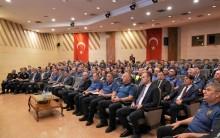
In Europe, India signed 17 agreements with the Netherlands in areas such as defence, green hydrogen, and critical minerals. In Sweden, bilateral ties were elevated to a Strategic Partnership, while PM Modi also participated in high-level industry discussions with European leaders. Norway marked a historic stop as Modi became the first Indian Prime Minister to visit the country in 43 years, attending the India-Nordic Summit focused on green technology and AI collaboration.
The final leg of the visit in Italy saw India and Italy upgrade ties to a Special Strategic Partnership, with both nations aiming to expand bilateral trade to €20 billion by 2029. Discussions with Italian Prime Minister Giorgia Meloni also focused on the India-Middle East-Europe Economic Corridor (IMEC) and deeper economic cooperation.
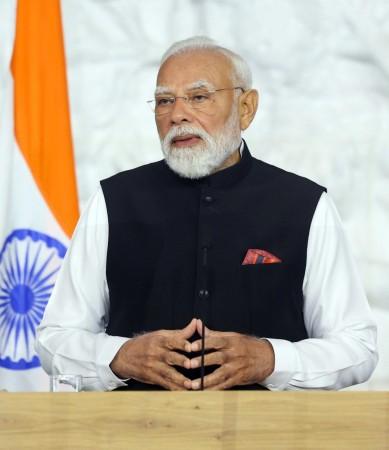
Soon after returning to Delhi, Prime Minister Modi is set to chair a crucial Council of Ministers meeting at Sewa Teerth later on Thursday evening. The meeting, the first such gathering of the year, will bring together cabinet ministers and ministers of state to review governance performance, flagship schemes, and implementation of major policy decisions.
The high-level review comes amid speculation of a possible cabinet reshuffle and is expected to focus on ministry performance, policy outcomes, and priorities for the coming months. Discussions are also likely to include the evolving geopolitical situation in West Asia, rising energy prices, and their potential impact on India's economy and trade flows.
The meeting is also being held in the backdrop of the BJP's recent electoral performance in West Bengal, Assam, and Puducherry, making it a politically significant gathering for the government.
According to sources, the meeting is being viewed as an important midterm stocktaking of the government's performance. The high-level gathering is expected to be attended by Union Cabinet ministers, ministers of state with independent charge, and ministers of state.
The meeting comes amid rising global concerns over energy security and increasing fuel prices linked to the ongoing West Asia conflict and disruptions around the Strait of Hormuz, a key maritime trade route.
Earlier, Prime Minister Modi had appealed to citizens to contribute towards economic resilience by reducing dependence on imported fuel and adopting environmentally sustainable alternatives. He urged people to use public transport, opt for carpooling, prefer railways for transportation of goods, and increase the use of electric vehicles wherever possible.