US President Donald Trump has said he does not "want to do a ceasefire" with Iran. "You know you don't do a ceasefire when you're literally obliterating the other side," Trump told reporters.
He also lashed out at NATO allies, calling them "cowards" for their lack of support in the war against Iran, and branding the Western military alliance "a paper tiger" without the United States.
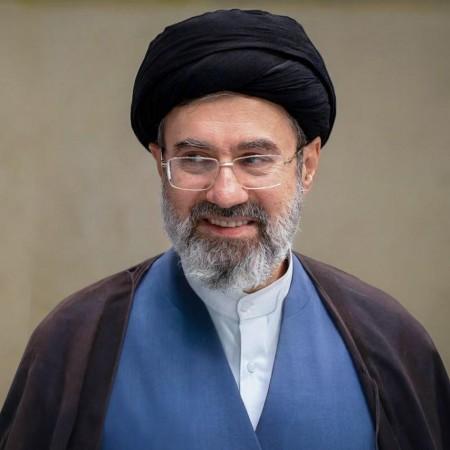
Meanwhile, Iran's Supreme Leader Mojtaba Khamenei, in a message marking the Persian New Year, said the country had dealt "a dizzying blow" to its enemies. He described the US-Israeli attack as a "gross miscalculation."
In a significant development, Sri Lanka denied a US request to land two fighter jets, while Switzerland halted weapons exports to the United States, citing its war on Iran.
Global Economic Impact
The economic fallout from the US-Israeli war with Iran is being felt worldwide, with ordinary people bearing the brunt—from fuel and food prices to rising mortgage costs.
Strikes on Tehran
Members of the Iran's Red Crescent Society are carrying out search and rescue operations after the latest air attack in Tehran, according to Press TV.
The report said the strike hit a residential building in the capital. There were no immediate reports of casualties or the extent of the damage.
Earlier, a series of loud explosions were heard across several districts of Tehran, including Ekbatan, near the iconic Azadi Tower.
UN Push on Hormuz
UN Secretary-General Antonio Guterres said the United Nations is prepared to help reopen the Strait of Hormuz.
He noted that the UN had previously helped broker the Black Sea Grain Initiative between Russia and Ukraine, which enabled the export of millions of tonnes of grain and fertiliser.
"My main objective is to see if it is possible to create conditions in the Strait of Hormuz similar to what existed in the past," Guterres said, adding that the UN is in talks with Gulf countries and the European Council.
However, he also criticised US-led efforts, saying approaches driven solely by President Trump are not an effective way to address the current crisis.
"We need to be clear about international law and the values of the UN Charter. That is essential in any peace initiative," he said, adding that he has not been in contact with Trump since the attacks began.
Global Response
South Korea has joined several European nations and Japan in calling for security to be restored in the Strait of Hormuz to stabilise energy markets.
Officials said the move reflects concerns over the safety of global shipping lanes and the direct impact disruptions could have on energy supply and the broader economy.
Rising Energy Concerns
The de facto closure of the Strait of Hormuz by Iranian forces has led to a sharp rise in energy prices in recent days, sparking fears of a global economic slowdown due to supply shortages.