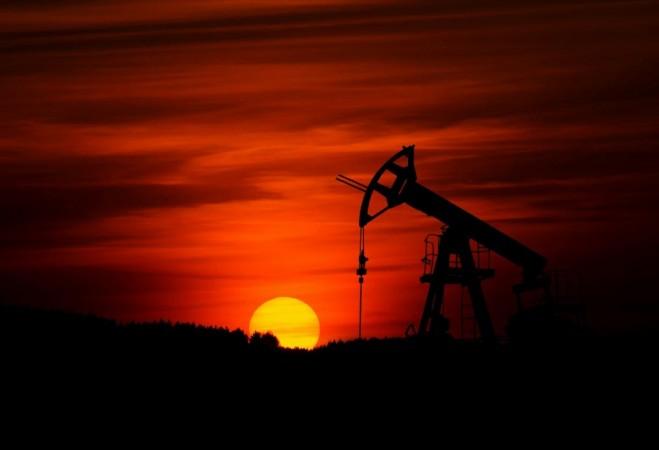
When Brent crude surged past the psychologically critical $100-per-barrel mark this week after renewed military escalation around the Strait of Hormuz, traders in London, policymakers in Washington, refinery executives in India and sovereign wealth strategists in Abu Dhabi reacted with the same unsettling realization: the world is no longer dealing with an isolated Middle Eastern conflict. It is witnessing the rapid convergence of war, finance, technology, energy and geopolitics into a single integrated global contest. The immediate trigger was a series of fresh confrontations in early May 2026 involving Iranian-linked maritime threats, intensified U.S. naval deployments in the Gulf, Israeli strategic alert expansions and emergency contingency coordination among Gulf energy exporters after reports of heightened risks to commercial shipping lanes. Within hours, insurance premiums for Gulf-bound tankers climbed sharply, energy futures spiked, currency markets turned volatile and global analysts began warning of possible cascading effects on inflation, food prices, supply chains and sovereign debt markets.
On April 13, 2024, the world crossed an invisible strategic threshold. For the first time in modern history, Iran launched a direct large-scale missile and drone assault against Israel from its own territory, firing more than 300 drones and missiles in retaliation for the April 1 strike on the Iranian consular complex in Damascus that killed senior Islamic Revolutionary Guard Corps commanders, including Brigadier General Mohammad Reza Zahedi. What unfolded that night was not merely another Middle Eastern confrontation. It marked the formal arrival of a new era in global conflict one in which military escalation, financial systems, energy security, cyber operations, reserve currencies, maritime chokepoints, artificial intelligence and technological influence became inseparably fused into a single strategic battlespace. By early 2026, the expanding confrontation involving Iran, the United States, Israel, the United Arab Emirates, Saudi Arabia, Russia and China had evolved into something far larger than a regional security crisis. It had become a contest over who will shape the architecture of the emerging world order itself.
The images dominating global television screens missile interceptions over Tel Aviv, burning tankers near the Strait of Hormuz, emergency meetings at the Pentagon, cyberattacks on infrastructure, sanctions announcements from Washington and oil traders watching Brent crude surge past psychologically critical levels — represent only the visible layer of a deeper transformation. Beneath these events lies a far more consequential struggle involving control over energy corridors, global trade settlement systems, strategic minerals, semiconductor supply chains, digital currencies, sovereign debt markets, shipping insurance networks and artificial intelligence ecosystems. Former U.S. Secretary of State Henry Kissinger once observed, "Control oil and you control nations; control food and you control people." In the emerging geopolitical landscape, a new extension has become increasingly evident: control financial systems, digital infrastructure and technological standards, and one influences the strategic behavior of the world itself.
The Strait of Hormuz has consequently become far more than a maritime passage. It is now the world's most sensitive economic pressure valve. Roughly 20 percent of globally traded petroleum and substantial LNG flows transit through this narrow waterway separating Iran from the Arabian Peninsula. In recent months, successive confrontations involving Iranian naval maneuvers, drone surveillance, suspected sabotage incidents and U.S.-led maritime security operations have demonstrated how vulnerable the global economy remains to disruption in this single corridor. In May 2026, renewed exchanges involving Iranian-backed actors and Western-aligned naval forces again pushed shipping insurance premiums sharply upward, while several tanker operators quietly altered routes or temporarily delayed cargo movement. Industry executives reported that war-risk insurance costs for Gulf transit had multiplied several times over compared to normal conditions. Commodity markets responded instantly. Brent crude crossed the $100-per-barrel threshold amid fears that even limited disruption could destabilize already fragile global supply chains.
The significance of these developments extends far beyond energy prices alone. Every increase in oil prices directly influences inflation expectations, sovereign borrowing costs, aviation economics, food prices, fertilizer production and currency stability across emerging markets. Modern economies remain deeply interconnected with uninterrupted energy flows. A senior executive at Vitol, one of the world's largest independent energy traders, recently remarked that "markets are now pricing geopolitical uncertainty as a structural premium rather than a temporary shock." That statement reflects a profound shift. Investors no longer perceive Gulf instability as episodic; they increasingly view it as a permanent feature of the global economic environment.
Iran's strategic doctrine has simultaneously evolved into one of the most sophisticated asymmetric pressure systems in the contemporary world. Tehran understands that it cannot conventionally defeat the United States or Israel in a sustained military confrontation. Instead, it has built a multidimensional strategy designed to generate persistent economic, political and psychological costs for adversaries. This doctrine combines ballistic missiles, proxy militias, cyber capabilities, sanctions-evasion networks, cryptocurrency channels, drone warfare, maritime harassment operations and informal oil trade systems into a remarkably resilient architecture of leverage. Former CENTCOM Commander General Kenneth McKenzie acknowledged this transformation when he stated in 2021, "Iran today has achieved regional military overmatch in missiles." Since then, Tehran's capabilities have only expanded further.
Iran's so-called "shadow fleet" has become central to its survival strategy. Tankers operating under altered ownership structures, manipulated transponder signals, ship-to-ship transfers and opaque financial arrangements have enabled Iran to continue exporting substantial oil volumes despite Western sanctions. Intelligence analysts estimate that a significant portion of Iranian crude now reaches Asian buyers through indirect routing systems involving intermediary jurisdictions and blended cargo mechanisms. Tehran has effectively weaponized ambiguity. The strategy is not necessarily to win conventional wars, but to create enough uncertainty in energy markets and regional security calculations that adversaries are compelled to continually reassess escalation costs.
At the same time, Israel has undergone a historic transformation in strategic thinking. Traditionally focused on territorial defense and conventional military superiority, Israeli doctrine now increasingly treats economic infrastructure, cyber resilience, artificial intelligence dominance and regional integration as core components of national security. The October 7, 2023 Hamas attacks and the subsequent regional escalation accelerated this shift dramatically. Israeli defense planners now openly discuss multidomain warfare involving cyber systems, fintech infrastructure, maritime trade routes, satellite networks, drone swarms and AI-assisted battlefield intelligence. Prime Minister Benjamin Netanyahu stated in late 2024, "The wars of the future will be won not only by soldiers on the battlefield but by nations that dominate technology, intelligence and innovation." That doctrine now shapes much of Israel's regional strategy.
The Abraham Accords, signed in 2020 between Israel and several Arab states including the UAE and Bahrain, represented far more than diplomatic normalization agreements. They were the foundation of an emerging economic-security architecture designed to integrate Gulf capital, Israeli technology, logistics corridors and regional infrastructure into a broader anti-instability framework. Cooperation expanded rapidly in areas such as cyber defense, AI, desalination technologies, anti-drone systems, renewable energy and maritime intelligence. Behind closed doors, intelligence-sharing mechanisms between Israel and Gulf states deepened significantly as concerns regarding Iranian influence expanded. Yet the ongoing regional tensions have also exposed Israeli vulnerabilities. Extended reserve mobilization, investor caution, rising defense expenditure, tourism volatility and political polarization have placed considerable pressure on the Israeli economy despite its technological dynamism.
For the United States, the stakes are even larger than regional security. Washington increasingly views the confrontation through the lens of preserving the global financial and strategic order built after World War II. American power rests not only on military strength but also on the dominance of the U.S. dollar, control over global payment systems, influence over maritime security and the credibility of sanctions mechanisms. Every crisis in the Gulf therefore becomes simultaneously an economic and geopolitical test. The Biden administration's earlier sanctions regime and the intensified strategic posture under subsequent American policy frameworks have reflected growing concern regarding de-dollarization efforts and the gradual emergence of alternative financial arrangements outside Western systems.
The underlying fear in Washington is clear: that prolonged fragmentation could accelerate the rise of parallel economic architectures led by China and supported by Russia, Iran and portions of the Global South. China's growing use of yuan-based energy settlements, bilateral trade agreements denominated in local currencies and development of alternative payment systems challenge aspects of the post-Bretton Woods financial ecosystem. Former U.S. Treasury Secretary Janet Yellen warned in 2023 that "economic fragmentation represents one of the greatest threats to global stability." Yet fragmentation is precisely what many powers are now preparing for.
The United Arab Emirates and Saudi Arabia occupy a uniquely pivotal position in this transformation. Both countries have moved decisively beyond the traditional model of singular strategic alignment with Washington. Instead, they are constructing multidirectional geopolitical relationships designed to maximize flexibility and reduce vulnerability. The UAE today functions simultaneously as a Western financial gateway, a Chinese investment partner, a Gulf logistics superhub, a regional AI center and a critical intermediary in global trade flows. Dubai and Abu Dhabi increasingly serve as nodes through which capital, commodities, technology and strategic influence circulate across continents.
The sophistication of Emirati strategy is particularly striking. The UAE has invested aggressively in ports, digital finance, renewable energy, artificial intelligence, advanced manufacturing and sovereign wealth expansion. Analysts at the Carnegie Endowment have described Abu Dhabi's approach as "multi-alignment without dependence." That phrase captures a defining reality of the emerging Gulf strategy. The Emirates seek strategic partnerships with all major powers while preserving autonomy from all of them simultaneously.
Saudi Arabia under Crown Prince Mohammed bin Salman has pursued an equally ambitious redefinition of national strategy. Vision 2030 represents not merely an economic diversification plan but an attempt to reposition the Kingdom as a technological, financial, logistical and geopolitical powerhouse. Riyadh's engagement with China, participation in BRICS discussions and calibrated coordination with Russia through OPEC+ illustrate how Gulf powers increasingly resist binary Cold War-style alignments. As geopolitical analyst Fareed Zakaria recently noted, "The Middle East is no longer an arena where external powers dictate outcomes; regional powers are now shaping the rules themselves."
China and Russia have emerged as major beneficiaries of the broader strategic fragmentation unfolding across the international system. Beijing views prolonged American involvement in Middle Eastern instability as strategically advantageous because it stretches U.S. military resources while encouraging nations to diversify economic dependencies. China's March 2023 mediation between Iran and Saudi Arabia demonstrated Beijing's expanding diplomatic confidence in the region. Simultaneously, Chinese investments in Gulf ports, logistics infrastructure, telecommunications systems and energy partnerships continue to deepen. Beijing's long-term objective is increasingly visible: secure energy access, strengthen Belt and Road corridors, expand yuan usage and gradually reduce exposure to Western-controlled financial systems.
Russia benefits differently but no less significantly. Elevated oil prices support Moscow's revenues amidst continuing sanctions pressures linked to Ukraine. Energy coordination through OPEC+ has strengthened ties between Russia and Gulf producers, while Western strategic distraction eases pressure on other fronts. Russian officials have repeatedly emphasized the need for a "multipolar financial order." Foreign Minister Sergey Lavrov declared in 2024 that "the era of Western monopoly over the global economy is ending." While such statements may partly reflect strategic messaging, they nonetheless capture the accelerating transition toward a more fragmented geopolitical environment.
The currency dimension of this evolving confrontation may ultimately prove even more consequential than military exchanges. De-dollarization, once dismissed as rhetorical aspiration, is gradually entering operational reality in specific sectors. Central banks across Asia and the Middle East have sharply increased gold purchases. Bilateral trade settlements using local currencies are expanding. Experiments involving central bank digital currencies are accelerating. Discussions within BRICS regarding alternative reserve arrangements, though still limited in practical implementation, reflect growing dissatisfaction with excessive dependence upon any single financial ecosystem.
Yet predictions regarding the imminent collapse of dollar dominance remain profoundly premature. The U.S. dollar still overwhelmingly dominates global reserves, trade finance, debt markets and derivatives systems. No alternative presently possesses comparable liquidity, institutional trust or global reach. However, what is changing is strategic psychology. Nations increasingly seek redundancy the capacity to operate outside a single system during periods of crisis. BlackRock CEO Larry Fink warned in his widely discussed 2022 shareholder letter that "the Russian invasion of Ukraine has put an end to the globalization we have experienced over the last three decades." The deeper implication of that observation is now becoming fully visible: globalization is not disappearing, but fragmenting into competing strategic ecosystems.
India occupies an extraordinarily important position within this emerging order. As one of the world's fastest-growing major economies and among the largest energy importers, India is simultaneously vulnerable to Gulf instability and strategically empowered by it. Rising oil prices directly affect India's inflation trajectory, fiscal balance, manufacturing competitiveness and currency stability. Yet India's relationships with nearly all major actors the United States, Israel, Iran, the UAE, Saudi Arabia and Russia provide New Delhi with unusual diplomatic flexibility. India's expanding refining capacity, manufacturing ambitions, digital economy and geopolitical credibility increasingly position it as a balancing power within a fractured global system.
The larger historical reality emerging from these developments is profound. The world is entering an era where conflicts will rarely remain confined to physical battlefields. Economic sanctions, cyberattacks, digital currencies, AI dominance, shipping routes, semiconductor supply chains, rare earth minerals, sovereign debt and information networks are all becoming instruments of strategic competition. Military power remains vital, but it is no longer sufficient. The nations that will shape the twenty-first century will be those capable of integrating financial resilience, technological sovereignty, energy security, AI infrastructure, cyber capability and geopolitical adaptability into coherent national strategy.
The confrontation involving Iran, America, Israel and the Gulf states is therefore not simply another Middle Eastern crisis. It is an early template for the future of global competition itself. The defining geopolitical question of the coming decade will not merely concern which nation possesses the strongest army or the largest economy. It will concern which powers control the systems upon which modern civilization depends and which nations possess the resilience to survive when those systems themselves become weapons.
[Major General Dr. Dilawar Singh, IAV, is a distinguished strategist having held senior positions in technology, defence, and corporate governance. He serves on global boards and advises on leadership, emerging technologies, and strategic affairs, with a focus on aligning India's interests in the evolving global technological order.]