The ongoing Iran-Israel-United States war resists conventional classification not because it is unusually complex, but because it is structurally different. Traditional categories regional war, proxy confrontation, hybrid conflict fail to capture the simultaneity with which military operations, economic systems, political pressures, and infrastructural vulnerabilities are interacting and reinforcing one another. What is unfolding is not merely escalation in intensity; it is a transformation in the architecture of conflict itself, where outcomes are no longer determined by centralised intent alone but emerge from the interaction of multiple, partially autonomous forces operating across interconnected systems.
"In systemic conflict, stability itself becomes both the primary casualty and the primary instrument of war."
At its most analytically rigorous level, the conflict can be understood as:
"The 2026 Iran War arguably represents the first fully realised systemic conflict of the modern era at scale where control is dispersed across state and non-state actors, intelligence and security establishments, proxy networks, market forces, internal political pressures, alliance constraints, operational limitations, and infrastructural vulnerabilities; where escalation is shaped through distributed leverage rather than centralised intent; and where the decisive battlespace lies in the functioning and disruption of interconnected global systems."
This is not an abstract formulation. It is supported by converging empirical patterns: sustained high-tempo precision strike campaigns coexisting with resilient retaliatory capability; geographic expansion across Lebanon, the Red Sea, Iraq, and Syria; chokepoint instability affecting nearly 20% of global oil flows through the Strait of Hormuz and approximately 10–12% of global trade via the Red Sea corridor; and macroeconomic transmission reflected in oil prices remaining above $110 per barrel through early 2026, driven significantly by geopolitical risk premiums rather than purely physical supply disruption. According to the International Energy Agency, even perceived risks to Hormuz can inject a persistent premium into oil markets, while maritime risk assessments from the Lloyd's of London have indicated multi-fold increases in war-risk insurance for vessels operating in the Red Sea zone during peak disruption phases. These overlapping dynamics indicate that the conflict has moved beyond containment into system-level stress propagation.
I. Control Recast: From Authority to Constraint Field
The first and most fundamental rupture lies in the transformation of control itself. In classical warfare, control however contested remains attributable to identifiable command structures. In the current conflict, that paradigm has eroded. Control has evolved into a multi-layered constraint field, where decisions are shaped, limited, and often redirected by a dense web of interacting pressures rather than exercised freely by any single actor.
This constraint field is constituted by several reinforcing layers. State actors continue to execute precision strike campaigns and defensive operations, yet their freedom of action is increasingly conditioned by the activities of non-state and proxy networks operating across multiple theatres. Intelligence and security establishments contribute to shaping the tempo and direction of the conflict, often in ways that are not fully visible but materially consequential. For instance, repeated Israeli precision targeting cycles have reportedly struck dozens of pre-identified sites, yet follow-on activity from dispersed launch units has persisted indicating limits of centralised suppression. Simultaneously, market forces particularly energy price volatility, shipping risk premiums, and capital flows feed directly into strategic calculations, influencing both escalation thresholds and de-escalation incentives.
Domestic political pressures further constrain decision-making. Rising energy costs, inflationary effects, and public tolerance thresholds create internal feedback loops that shape external behaviour. In the United States, Congressional and public scrutiny over prolonged military engagement has historically imposed ceilings on escalation an observation noted by analysts at the Brookings Institution, who argue that "domestic political bandwidth is as critical a variable as military capability in sustained conflict." Operational realities, including munitions expenditure rates and the depletion of high-cost interceptor systems such as those used in layered air defence, impose additional limits on sustained military tempo. Alliance dynamics add another layer of complexity, as partners calibrate their level of involvement, often placing implicit ceilings on escalation. Finally, critical infrastructure vulnerabilities especially maritime chokepoints and energy transit systems create points where limited actions can generate disproportionate systemic impact.
"Control is no longer exercised it is continuously negotiated within a system of competing pressures."
This diffusion does not imply the absence of control; rather, it indicates that control has become conditional, contested, and distributed across the system itself. The persistence of Iranian retaliatory capability despite sustained targeting, and the inability of superior military power to localise the conflict geographically, are direct manifestations of this transformation.
II. Escalation Rewired: From Linear Intent to Distributed Leverage
It is within this environment of fragmented and conditional control that escalation undergoes a profound transformation. The traditional escalation ladder sequential, predictable, and governed by centralised intent has given way to a networked escalation dynamic, in which outcomes are produced by the interaction of distributed levers operating across domains.
Escalation is now shaped through four interlocking mechanisms. First, horizontal expansion enables the activation of multiple theatres through proxy networks, extending the conflict beyond its initial geographic boundaries. The involvement of Hezbollah along Israel's northern frontier and Houthi-linked disruptions in the Red Sea exemplify this multi-theatre activation. Second, vertical intensification is visible in the sustained cycles of missile strikes and air defence responses, which not only generate immediate tactical effects but also influence long-term operational sustainability through cost-exchange dynamics. Analysts from the Center for Strategic and International Studies have noted that modern missile defence engagements often exhibit "unfavourable cost asymmetry," where defensive interceptors cost significantly more than incoming projectiles.
Third, systemic targeting particularly of energy flows and maritime trade routes extends the impact of military actions into the global economic domain. Fourth, temporal persistence, driven by repeated cycles of action and response, prevents stabilisation and keeps the system in a state of continuous stress.
The effects of this transformation are empirically observable. Disruptions near key maritime chokepoints have led to significant increases in shipping insurance costs and freight rates, forcing rerouting of vessels and extending delivery timelines by up to two weeks. These changes feed into global supply chains, contributing to inflationary pressures and influencing policy decisions in economies far removed from the immediate theatre of conflict.
"Escalation is no longer commanded it is triggered, transmitted, and amplified across interconnected systems."
This produces a defining paradox of the conflict:
"Technological superiority has delivered tactical dominance but not strategic control."
III. Mosaic Defence: Structured Decentralisation as Strategy
The observable fragmentation of control is not entirely incidental. It is, to a significant extent, underpinned by a coherent doctrinal framework most notably Iran's Mosaic Defense. This doctrine represents a deliberate response to conventional asymmetry, designed to ensure resilience, continuity, and strategic relevance even under sustained pressure from technologically superior adversaries.
Mosaic defence operates by dispersing capability across a network of semi-autonomous nodes, including mobile missile platforms, distributed drone systems, proxy formations, and localised command structures. These nodes are capable of independent action while remaining loosely aligned with broader strategic objectives. The result is a system that is inherently resistant to decapitation or paralysis.
The effectiveness of this approach is evident in several empirical patterns. Despite extensive targeting of fixed infrastructure, continued missile and drone launches from dispersed or concealed positions indicate the survival of mobile capabilities. Multi-theatre pressure such as coordinated or parallel activity by Hezbollah in Lebanon and Houthi-linked forces targeting maritime traffic illustrates how distributed nodes can sustain systemic pressure. As noted in assessments by the Institute for the Study of War, "Iranian-aligned networks are structured for redundancy and persistence rather than centralised control."
"Mosaic defence transforms vulnerability into resilience by dispersing control across a system that cannot be decisively neutralised."
However, it is analytically important to avoid over-attribution. The systemic behaviour of the conflict is not solely the product of deliberate design. Elements of improvisation, miscalculation, and reactive adaptation coexist with structured decentralisation, producing a hybrid dynamic that is both engineered and emergent.
IV. Battlespace Migration: From Territory to System Function
These dynamics collectively signal a deeper transformation: the migration of the battlespace from physical geography to the functioning of interconnected systems. While territory remains relevant, it is no longer the primary locus of strategic effect. Instead, the ability to influence, disrupt, or destabilise critical systems has become the central determinant of advantage.
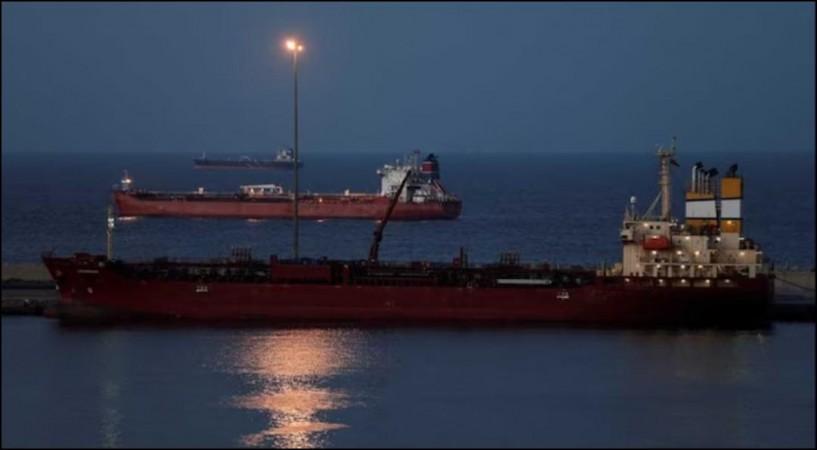
Energy systems provide the clearest example. The Strait of Hormuz, through which approximately one-fifth of global oil supply transits, has become a strategic lever where even the perception of disruption generates immediate price volatility. Similarly, instability in the Red Sea corridor accounting for roughly 10–12% of global trade has forced widespread rerouting of maritime traffic, increasing transit times by 10–15 days and significantly raising logistics costs. According to global shipping analyses, major carriers have rerouted vessels around the Cape of Good Hope during peak threat periods, adding both time and cost to global supply chains.
These disruptions extend beyond the physical domain into financial systems. Elevated energy prices contribute to inflationary pressures, influence monetary policy decisions, and affect currency stability. Supply chain disruptions alter production schedules and inventory management strategies, creating ripple effects across industries and geographies.
"The centre of gravity has shifted from where force is applied to how systems function under stress."
V. War as an Adaptive System: Feedback, Non-Linearity, and Persistence
As control fragments and the battlespace expands into systems, the conflict begins to exhibit the characteristics of an adaptive system. In such a system, outcomes are not linear or predictable; they emerge from continuous interaction among components.
Feedback loops play a central role. Military actions trigger market reactions, which generate political pressures that, in turn, influence subsequent military decisions. Non-linearity amplifies these effects, allowing relatively small disruptions to produce disproportionately large consequences. For example, localized maritime incidents have led to global increases in shipping costs and insurance premiums, demonstrating how tightly coupled modern systems have become.
The system also demonstrates a capacity for reconfiguration. When pressure is reduced in one domain, it often reappears in another, preventing the conflict from stabilising. This persistence is not driven by a single actor, but by the self-reinforcing nature of the system itself.
"The war is not unfolding sequentially it is evolving through interaction."
VI. Power Redefined: Position, Resilience, and Cost Imposition
Within this transformed environment, the concept of power undergoes a fundamental redefinition. Traditional metrics military strength, economic size, territorial control remain relevant but are no longer sufficient. Power is increasingly determined by an actor's position within critical systems, its ability to impose disproportionate costs, its resilience to disruption, and its capacity to adapt.
This explains how actors with limited conventional capabilities can still exert significant influence by targeting high-connectivity nodes within global systems. It also highlights the importance of resilience both economic and infrastructural as a critical component of strategic power.
"In systemic warfare, power lies not only in force, but in the ability to disrupt and endure within interconnected systems."
VII. Evidence of Systemic Stress: Metrics and Manifestations
The systemic nature of the conflict is reinforced by a range of measurable indicators. Energy market assessments consistently show oil prices sustaining above $110 per barrel, reflecting a persistent geopolitical risk premium. Maritime risk models indicate sharp increases in insurance costs for vessels operating in high-risk zones, while shipping data reveals widespread rerouting and extended transit times.
Operational indicators also point to systemic stress. The sustained use of high-cost defensive systems against lower-cost offensive platforms raises questions about long-term sustainability. Alliance behaviour, marked by cautious calibration and selective engagement, reflects the constraints imposed by broader systemic considerations. Domestic economic pressures, including inflation and energy costs, feed directly into strategic decision-making processes.
As noted in recent analytical commentary by the International Monetary Fund, "geopolitical fragmentation and supply disruptions are increasingly central drivers of macroeconomic volatility," underscoring the systemic embedding of conflict effects.
VIII. Friction and Reality: Between Design and Emergence
It would be analytically convenient to interpret the conflict as a fully designed systemic strategy. The reality is more complex and less deterministic. While doctrines such as mosaic defence provide a framework for decentralised resilience, the overall behaviour of the system is shaped equally by friction, uncertainty, and unintended consequences.
Miscalculations, intelligence gaps, political overreach, and reactive adaptation all contribute to the evolving dynamics of the conflict. The systemic character of the war is therefore not entirely engineered; it emerges from the interaction of deliberate strategies with unpredictable realities.
"Systemic warfare is not fully engineered it is what emerges when distributed capabilities interact under sustained pressure."
IX. Historical Context: Why This War Is Different
Historical precedents offer partial parallels but do not fully capture the current moment. The oil shocks of the 1970s demonstrated the global impact of energy disruption, while recent conflicts such as Ukraine have highlighted the role of hybrid and multi-domain warfare. However, these examples were either geographically contained or limited to specific domains.
What distinguishes the present conflict is the simultaneous activation of military, economic, and infrastructural systems at scale, creating a level of interconnected stress that has not been previously observed.
"This is not the evolution of hybrid war it is the emergence of systemic war."
X. The Template Effect: Replicability and Future Conflict
The most significant implication of the 2026 Iran War lies in its potential to serve as a template for future conflicts. The combination of chokepoint disruption, distributed proxy networks, economic-system targeting, and multi-domain integration offers a model that can be adapted and replicated by other actors.
"The greatest strategic risk is not geographic expansion but structural imitation."
For major economies particularly those dependent on energy imports and global supply chains this transformation necessitates a shift from efficiency-driven integration to resilience-driven structuring, encompassing diversification, redundancy, and strategic buffering.
XI. Shaping Future Global Behaviour: From Interdependence to Strategic Caution
Beyond its immediate operational and systemic implications, the 2026 Iran conflict is likely to exert a profound and lasting influence on state behaviour and global interaction patterns. If the defining feature of this war is the transformation of interconnected systems into active battlespaces, then the logical strategic response of states will be to re-evaluate the very foundations of interdependence that have underpinned globalisation for decades.
The post–Cold War model of global integration was built on the assumption that economic interdependence would act as a stabilising force. However, the current conflict demonstrates the inverse: that deeply interconnected systems energy, trade, finance, and logistics can be leveraged as instruments of coercion and disruption. As a result, states are likely to shift from an efficiency-driven paradigm toward one centred on resilience, redundancy, and strategic insulation.
This behavioural shift is already visible in emerging patterns. Energy-importing nations are accelerating diversification strategies, seeking to reduce exposure to single chokepoints such as the Strait of Hormuz. Maritime powers are reassessing naval deployment doctrines to ensure persistent presence across critical trade corridors. Supply chains, once optimised for cost efficiency, are increasingly being redesigned for geopolitical risk mitigation, including near-shoring, friend-shoring, and strategic stockpiling.
Financial systems, too, are likely to evolve. The weaponisation of economic interdependence whether through sanctions, market disruption, or risk amplification will drive states to explore alternative payment mechanisms, currency diversification, and financial decoupling strategies. This could accelerate the gradual fragmentation of the global financial architecture into competing or parallel systems, each designed to reduce vulnerability to systemic shocks.
At the strategic level, alliances themselves may undergo recalibration. Rather than acting solely as force multipliers, alliances will increasingly function as risk-sharing and resilience-building frameworks, where the capacity to absorb and manage systemic disruption becomes as important as collective defence.
"The central lesson of this conflict is not merely how wars are fought but how states must now behave to survive within systems that can be weaponised."
For countries such as India, which are deeply integrated into global trade and energy systems, the implications are particularly significant. Strategic autonomy will increasingly depend not only on military capability, but on the ability to secure supply chains, diversify energy sources, and build systemic resilience across economic and technological domains.
In this sense, the 2026 Iran War may come to define not only the future of warfare, but the future of global conduct itself marking a transition from an era of open interdependence to one of guarded connectivity and strategic caution.
The War That Redefined War
The 2026 Iran conflict will not be defined by territorial gains or conventional victory. Its enduring significance lies in the transformation it represents. It demonstrates that control can fragment without disappearing, that systems can become battlefields without being occupied, and that power can be exercised through disruption as effectively as through force.
"This war will not be remembered for who prevailed but for how it redefined the structure, conduct, and logic of war in an interconnected world."
It marks a decisive transition from command-driven warfare to constraint-driven conflict, from territorial objectives to systemic influence, and from decisive outcomes to persistent strategic competition.
"The future of war will not be determined by those who command the battlefield, but by those who understand and shape the systems within which battlefields exist."
[Major General Dr. Dilawar Singh, IAV, is a distinguished strategist having held senior positions in technology, defence, and corporate governance. He serves on global boards and advises on leadership, emerging technologies, and strategic affairs, with a focus on aligning India's interests in the evolving global technological order.]