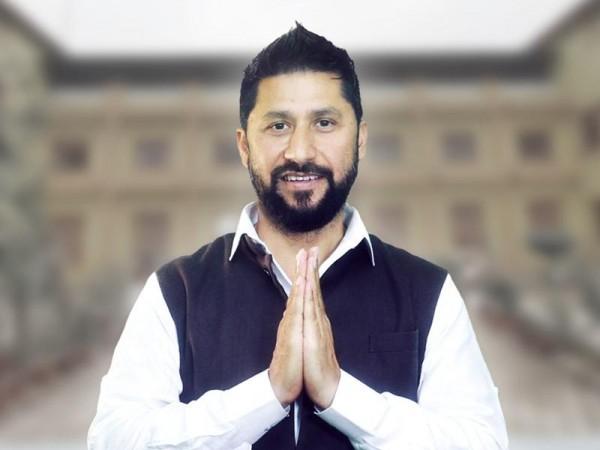
Nepal is not merely experiencing another electoral surprise; it is undergoing a structural political realignment. The rapid ascent of the Rastriya Swatantra Party (RSP) under the leadership of Rabi Lamichhane, alongside the meteoric political rise of Balendra Shah, signals the beginning of a transition from ideological party politics to performance-driven, personality-centric governance. What is unfolding in Kathmandu today reflects a broader global phenomenon: the erosion of legacy political establishments and the rise of digitally mobilised reformist movements built around charismatic disruptors and technocratic narratives.
Yet the deeper significance of this moment lies not simply in electoral arithmetic but in the potential reconfiguration of Nepal's political architecture. For the first time since the abolition of monarchy in 2008, the entrenched triad of traditional parties appears strategically vulnerable. Whether the new leadership can translate popular enthusiasm into durable institutional transformation will determine the future trajectory of the Himalayan republic.
The Historical Pattern: Nepal's Cycles of Elite Collapse
Nepal's political history unfolds through punctuated revolutions rather than gradual institutional evolution. Roughly once every generation, entrenched political elites lose legitimacy and are replaced through systemic upheaval.
The first major rupture occurred in 1951, when the Rana oligarchy collapsed under domestic pressure and international influence. The second came in 1990, when a pro-democracy movement dismantled the Panchayat system and restored multiparty politics. The third occurred in 2006, when mass protests and the Maoist insurgency culminated in the abolition of the monarchy and the birth of a federal republic.
The political upheaval of 2025, driven largely by youth protests against corruption and political stagnation, may represent the fourth such structural reset.
For decades Nepal's politics was dominated by three principal actors: the Nepali Congress, the Communist Party of Nepal (Unified Marxist–Leninist), and the Communist Party of Nepal (Maoist Centre). These parties emerged from ideological struggles but gradually evolved into patronage-based political networks. Leadership rotated among familiar figures such as Khadga Prasad Sharma Oli and Pushpa Kamal Dahal, often through fragile coalitions that produced chronic governmental instability.
The cumulative effect was institutional fatigue. Governance paralysis, corruption scandals, and economic stagnation steadily eroded public confidence in the traditional political class. The youth protests of 2025 therefore represented not simply a protest movement but a generational rejection of the post-monarchy political order.
Rabi Lamichhane: The Architect of a Post-Ideological Political Movement
Within this environment of disillusionment, Rabi Lamichhane emerged as a political entrepreneur capable of converting public frustration into organisational momentum. Before entering politics he had built national prominence as an investigative television journalist whose programmes frequently exposed corruption and bureaucratic malpractice.
His credibility derived from confrontation with entrenched power structures rather than participation in them. When Lamichhane founded the Rastriya Swatantra Party in June 2022, he deliberately avoided traditional ideological positioning. Instead, he framed the party as a technocratic reform platform focused on governance competence.
This strategic choice proved decisive. Rather than appealing to a narrow ideological constituency, the RSP attracted a diverse coalition of urban professionals, middle-class reformists, and politically disillusioned youth. The party's narrative revolved around transparency, administrative efficiency, and meritocratic leadership.
Such movements are increasingly visible in contemporary democracies. Political scientists have described them as "post-ideological insurgencies," formations that emerge when voters lose faith in established ideological narratives and instead seek pragmatic governance solutions.
Lamichhane's political success therefore lies not merely in personal charisma but in his ability to recognise and institutionalise a new political demand structure.
Balendra Shah: The Rise of the Networked Populist
If Lamichhane is the organisational strategist behind Nepal's political disruption, Balendra Shah represents its generational and cultural expression. Known popularly as Balen, Shah first captured national attention by winning the 2022 Kathmandu mayoral election as an independent candidate, defeating nominees from major political parties.
His victory signalled the growing power of digitally mobilised political networks. Shah's campaign relied heavily on social media engagement, grassroots volunteerism, and urban civic activism rather than traditional party machinery.
In many respects he represents a new archetype of political leadership emerging worldwide: the networked populist reformer whose legitimacy derives from direct engagement with citizens rather than hierarchical party structures.
This leadership style resonates strongly with younger voters who are increasingly sceptical of established political institutions. For Nepal's urban youth, Shah embodies competence, modernity, and generational change.
The convergence of Lamichhane's organisational platform with Shah's mass appeal has therefore created a powerful political alliance. Yet such dual leadership structures historically contain both opportunity and risk.
The Lamichhane–Shah Power Equation
The strategic relationship between Lamichhane and Shah will likely determine the durability of Nepal's political transformation. Political movements built around disruptive reform often rely on complementary leadership archetypes: the organiser who constructs the institutional platform and the charismatic figure who mobilises mass support.
Lamichhane fits the first archetype. Shah fits the second.
If managed carefully, this combination can produce formidable political momentum. Lamichhane's organisational discipline could provide stability while Shah's public popularity sustains electoral legitimacy.
However, history offers numerous examples where such arrangements eventually devolve into rivalry. When mass popularity begins to overshadow organisational authority, tensions within the leadership structure often emerge.
Nepal's own political history is replete with party splits triggered by leadership competition. Whether the RSP evolves into a durable political institution or fragments into competing factions will depend largely on how this internal power equation develops.
The Hidden Battlefield: State Institutions
Electoral success does not automatically translate into effective governance. Nepal's administrative apparatus remains deeply embedded with networks linked to traditional political actors.
Bureaucratic institutions, provincial governments, and elements of the judiciary often operate through informal patronage systems developed over decades. Reformist governments frequently encounter resistance from these entrenched networks.
Political scientist Samuel Huntington once observed that the true test of political reform movements lies not in electoral victory but in their ability to transform state institutions. Nepal's new leadership will therefore face the formidable task of converting popular enthusiasm into structural administrative change.
Without institutional reform, the momentum generated by the RSP's electoral success could dissipate rapidly.
The Economic Constraint
Nepal's political transformation is occurring within an economic structure that imposes severe constraints on reformist ambitions. The country's economy remains heavily dependent on remittances from migrant workers abroad, which account for a significant share of national income.
Industrial capacity remains limited, infrastructure deficits persist, and youth unemployment continues to drive large-scale labour migration. These structural realities mean that political promises of rapid economic transformation must confront formidable practical obstacles.
The RSP leadership has articulated ambitious goals including expanded hydropower production, infrastructure modernisation, and large-scale job creation. Nepal possesses enormous untapped hydropower potential, estimated at tens of thousands of megawatts, which could theoretically transform the country into a regional energy exporter.
However, realising this potential requires sustained investment, regulatory stability, and long-term strategic planning. In a political system historically characterised by short-lived governments, achieving such continuity will be a significant challenge.
The Geopolitical Equation
Nepal's political future cannot be separated from its geopolitical environment. Situated between India and China, the country occupies one of the most sensitive strategic locations in Asia.
Historically Kathmandu has pursued a policy of careful balancing between its two powerful neighbours. India maintains deep cultural, economic, and security linkages with Nepal, while China has steadily expanded its economic presence through infrastructure investments and cross-border connectivity projects.
The new leadership in Kathmandu may attempt to reposition Nepal as a strategic bridge between South Asia and the Tibetan plateau. Hydropower exports, cross-border transport corridors, and tourism development could potentially transform the country into a regional economic hub.
Yet such ambitions also carry geopolitical implications. Both India and China view Nepal as strategically significant. Navigating this geopolitical landscape without provoking excessive external pressure will require diplomatic sophistication.
Scenario Mapping: Nepal's Possible Political Futures
The political transformation underway in Nepal could evolve along several possible trajectories.
Reform Consolidation represents the most optimistic scenario. In this outcome the RSP successfully institutionalises governance reforms, reduces corruption, and delivers measurable economic improvements. Such success could establish Nepal as a rare example of democratic renewal in South Asia.
Charismatic Centralisation represents a second possibility. If Balendra Shah's personal popularity continues to grow, political authority may gradually concentrate around a single national figure. This could produce decisive governance but might also weaken institutional checks and balances.
A third scenario involves fragmentation of the reform movement. Internal rivalries within the RSP could lead to factional splits, recreating the coalition instability that has historically characterised Nepali politics.
Finally, there remains the possibility of restoration of the legacy political elite. Traditional parties retain deep networks within the bureaucracy and provincial governments. If the reformist leadership fails to deliver tangible results, these actors could regain political ground.
The Strategic Imperative
Nepal's new leadership therefore confronts a narrow window of opportunity. Electoral victories provide legitimacy but not permanence. To consolidate political transformation, several strategic imperatives must be addressed.
First, administrative reform must reduce bureaucratic inertia and strengthen institutional transparency. Second, economic policy must focus on sustainable job creation to reduce dependence on labour migration. Third, internal party cohesion must be maintained to prevent fragmentation of the reform movement. Finally, foreign policy must continue the delicate balancing act between India and China while preserving Nepal's strategic autonomy.
If these challenges are navigated successfully, Nepal may enter a new phase of political stability and economic modernisation. If they are mishandled, the country could return to the familiar cycle of coalition instability and elite competition.
The rise of Rabi Lamichhane and Balendra Shah therefore represents both an extraordinary opportunity and a profound test. Nepal's latest political revolution has opened the door to transformation. Whether that door leads to renewal or renewed instability will depend on the strategic choices made in the years ahead.
[Major General Dr Dilawar Singh is an Indian Army veteran who has led the Indian Army's Financial Management, training and research divisions introducing numerous initiatives therein. He is the Senior Vice President of the Global Economist Forum AO ECOSOC, United Nations and The Co President of the Global Development Bank.]