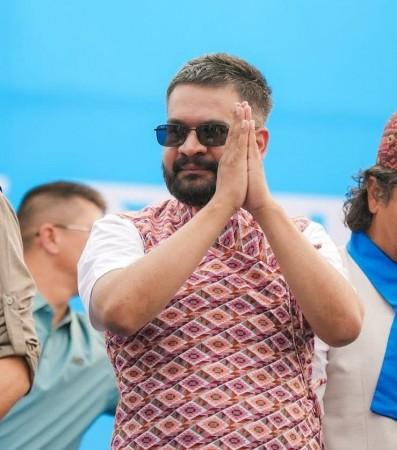
Nepal's remarkable political transformation is entering its most consequential phase. Less than a year after the youth-led movement toppled the political establishment and delivered an unprecedented parliamentary majority to Prime Minister Balendra "Balen" Shah and the Rastriya Swatantra Party (RSP), the Himalayan republic is confronting a challenge that electoral victories alone cannot resolve: whether democratic renewal can withstand rising communal tensions, institutional fragility and intensifying geopolitical competition.
The communal violence that erupted across parts of Madhesh in late July is more than a law-and-order incident. It is the first major stress test of Nepal's new political order.
The RSP's sweeping parliamentary victory in March 2026 ended nearly three decades of unstable coalition politics. Riding an anti-corruption platform and promising efficient governance, Shah projected himself as a technocratic reformer rather than a conventional politician. Early administrative successes, including reducing bureaucratic delays in public services, reinforced public confidence that Nepal had entered a new political era.
Yet governing a deeply diverse federal republic requires more than administrative efficiency.
The communal clashes in Sunsari, Siraha and adjoining districts, triggered during a Hindu religious procession but fuelled by accumulated mistrust, misinformation and provocative mobilisation, rapidly spread across the Terai. Multiple deaths, injuries, curfews and Army deployment exposed weaknesses in intelligence coordination, crisis management and political communication.
Security analysts note that warning signs had existed for years. Reports had identified recurring patterns of religious processions through sensitive localities, provocative slogans, online misinformation and increasing communal mobilisation. Successive governments largely failed to translate these assessments into preventive political action.
As noted Nepal scholar Professor Lok Raj Baral has argued, "The challenge before Nepal is no longer constitution-making but institution-building. Democratic legitimacy ultimately depends upon the capacity of institutions to manage diversity and resolve conflict."
Violence reflects ideological clash over Nepal's identity
Although Nepal formally became a secular republic in 2008, demands for restoring the country as a Hindu state have gained renewed visibility. Hindu nationalist organisations have expanded their mobilisation, particularly in parts of the Terai, while Muslim communities increasingly express concerns about political marginalisation and selective scrutiny of their educational and religious institutions.
This polarisation is being accelerated by social media, where misinformation spreads rapidly across Nepal's open border with India. Religious narratives, conspiracy theories and inflammatory content increasingly move faster than official clarifications, making local disputes susceptible to wider mobilisation.
Another sensitive issue attracting growing attention is the security environment surrounding remote Buddhist monasteries, or gumbas, particularly in Nepal's northern Himalayan districts.
Security agencies have periodically expressed concern that isolated religious institutions of various faiths could potentially be exploited by criminal or foreign-linked networks because of their remote locations. However, publicly available evidence has not established systematic stockpiling of arms inside Buddhist monasteries. High-profile inspections conducted after such allegations failed to uncover weapons caches.
The issue nevertheless illustrates a broader security dilemma. Religious institutions, irrespective of faith, increasingly intersect with questions of foreign funding, cross-border influence and national security. Addressing such concerns requires evidence-based investigation rather than politically selective narratives that risk deepening communal distrust.
Former Indian Foreign Secretary Shyam Saran has consistently argued that "India's relationship with Nepal succeeds when it is based on mutual sensitivity and sovereign equality, not assumptions of hierarchy." That observation remains especially relevant as sections of Nepal's political discourse continue to invoke anti-India nationalism.
Anti-India sentiment has deep historical roots, shaped by the 1950 Treaty, perceptions surrounding the 2015 blockade, border disputes over Kalapani, Lipulekh and Limpiyadhura, and concerns regarding political interference. During his earlier political career, Shah himself occasionally employed sharp nationalist rhetoric before adopting a more pragmatic approach after assuming office.
Today, however, Kathmandu's foreign policy appears less ideological than strategic. The government seeks balanced engagement with India, China and the United States while preserving Nepal's strategic autonomy. That balancing act reflects geopolitical necessity rather than diplomatic preference.
China continues expanding its economic and infrastructure footprint through connectivity initiatives and political engagement. India remains Nepal's indispensable economic partner, accounting for the overwhelming share of trade, transit access, energy connectivity and people-to-people interaction. The United States maintains significant development partnerships while supporting democratic governance and institutional reforms.
As strategic affairs expert Professor Mahendra P. Lama observes, "Nepal's geopolitical importance lies not merely in its location between two powers but in its ability to maintain internal stability while engaging both."
Nepal's security institutions equally important
The Nepal Army continues to enjoy comparatively high public confidence, having maintained constitutional restraint during the 2025 political transition while supporting civilian authority during subsequent crises. Nevertheless, repeated military deployment for domestic disturbances highlights persistent weaknesses within civilian policing, intelligence integration and provincial governance.
Former United Nations Under-Secretary-General Gyan Chandra Acharya has argued that "lasting peace depends upon strengthening institutions at every level of government rather than relying on crisis-driven responses." Nepal's incomplete federal transition makes that observation particularly relevant. Provincial governments still lack adequate administrative capacity, leaving Kathmandu responsible for responding to local conflicts that demand local political solutions.
For India, Nepal's stability carries immediate strategic implications. The nearly 1,800-kilometre open border, integrated economies, shared rivers and close societal ties mean that communal polarisation, organised crime or political instability can quickly acquire cross-border dimensions. At the same time, any perception of excessive Indian influence risks strengthening nationalist narratives that external actors seek to manipulate Nepal's domestic politics.
The broader lesson extends beyond Nepal. Across South Asia, electorates are increasingly rejecting entrenched political elites in favour of younger, reform-oriented leadership. Yet electoral disruption does not automatically produce institutional resilience. Without strong governance structures, identity politics can rapidly fill the vacuum left by discredited political establishments.
Nepal's democratic experiment therefore remains both promising and fragile.
The country's political transition has demonstrated extraordinary public faith in democratic change. Whether that optimism translates into durable stability will depend not on parliamentary numbers alone but on the government's ability to strengthen institutions, preserve constitutional pluralism, address legitimate security concerns without politicising religion, and navigate geopolitical competition with strategic balance.
The coming months will determine whether Nepal becomes a model of democratic renewal in South Asia or another reminder that political revolutions succeed only when institutions evolve as rapidly as public expectations.
[Major General Dr. Dilawar Singh, IAV, is a distinguished strategist having held senior positions in technology, defence, and corporate governance. He serves on global boards and advises on leadership, emerging technologies, and strategic affairs, with a focus on aligning India's interests in the evolving global technological order.]