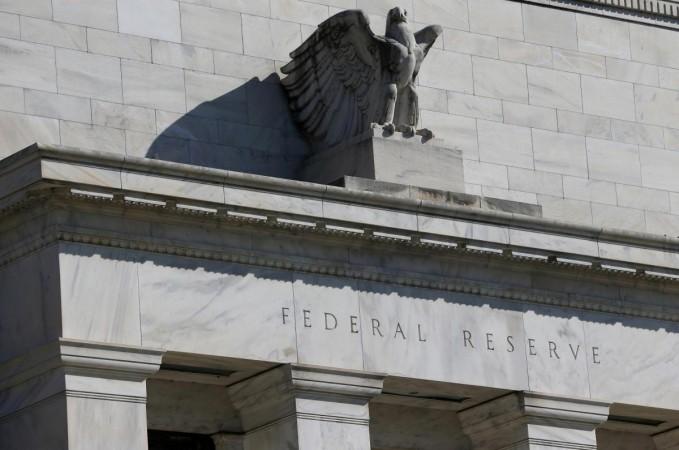
As the clock ticks toward 2:00 PM ET, when the Federal Open Market Committee (FOMC) will unveil its latest policy directive, markets worldwide hold their collective breath. The consensus is clear: a 25-basis-point reduction in the federal funds rate, marking the third consecutive cut this year and lowering the target range to 3.50% to 3.75%. This move, anticipated by 88% of traders via CME FedWatch Tool metrics, is no mere technical adjustment. It unfolds against a backdrop of unprecedented data voids precipitated by the longest U.S. government shutdown in history, compounding deep fissures within the Fed's ranks over the economy's precarious trajectory. Policymakers, led by Chair Jerome Powell, must reconcile a labor market teetering on fragility with inflation that refuses to fully retreat to its 2% perch. This decision is not just about today's quarter-point trim; it signals the Fed's philosophical stance on risk in an era of fiscal brinkmanship and geopolitical headwinds. Drawing on insights from leading think tanks, economic forecasts, and real-time market pulses, this analysis dissects the forces at play, revealing a central bank at a crossroads between prudence and preemption.
The roots of this moment trace back to September 30, 2025, when Congress failed to pass appropriations bills before the fiscal year expired, plunging the federal government into paralysis. What began as a partisan standoff over spending priorities, exacerbated by President Trump's push for deeper cuts to "Democrat programs" and resistance from a divided House, escalated into a 43-day impasse, the longest on record, surpassing the 35-day shutdown of 2018 to 2019. The impasse ended abruptly on November 12, when a temporary funding measure, signed into law by Trump, extended operations through January 30, 2026, alongside backpay for furloughed workers and partial restorations of disrupted services. Yet the damage lingers, not least in the economic ledger.
The shutdown's fiscal bite was swift and multifaceted. The Congressional Budget Office projects a 1.5 percentage-point drag on fourth-quarter 2025 GDP growth, halving the prior quarter's momentum and erasing roughly $18 billion in activity. This stems from furloughs affecting 730,000 federal employees and 670,000 working without pay, alongside halted contracts that idled private-sector firms and curbed small-business lending by $2.5 billion. Consumer spending, a linchpin of U.S. growth, faltered as households deferred big-ticket purchases and holiday travel, with credit card data indicating a 0.4 percentage-point unemployment spike to 4.7% in October. A partial rebound is anticipated in Q1 2026, boosting growth by 2.2 points as pent-up activity unleashes, but the net loss of $11 billion through 2026 underscores the inefficiency of such political theater.
Beyond direct costs, the shutdown inflicted a subtler yet profound wound: a blackout of vital economic intelligence. Federal agencies like the Bureau of Labor Statistics suspended data collection, delaying or outright canceling October's nonfarm payrolls, Consumer Price Index, and retail sales reports. November's jobs and inflation figures, due post-shutdown, arrived too late for today's FOMC deliberations, leaving policymakers with a "data fog" that echoes the 2013 impasse but amplified by modern complexities. Private proxies such as ADP's employment gauge showing a 50,000-job decline in October offer glimpses of cooling, but they lack the BLS's granularity, introducing volatility into forecasts. J.P. Morgan economists warn that distorted October metrics, blending shutdown distortions with underlying trends, could misalign the Fed's dual mandate of maximum employment and price stability. In this void, the Fed's October statement acknowledged "shifted balance of risks," opting for a cut while concluding quantitative tightening, a pragmatic hedge against incomplete visibility.
These gaps amplify the Fed's internal schisms, where hawkish sentinels clash with dovish sentries over the economy's true peril. On one flank, inflation hawks like Boston Fed President Susan Collins and New York Fed's Alessandro Perli decry premature easing, citing core PCE at 2.6% as "uncomfortably high" and resilient despite supply-chain easing. FOMC minutes from October reveal "many participants" deeming further 2025 cuts unwarranted, fearing entrenched price pressures amid Trump's tariff proposals, which could add 0.5 to 1% to CPI via imported goods. Collins, in a recent address, advocated a "high bar" for additional reductions, projecting steady rates into mid-2026 to anchor expectations. This caution reflects a scars-tissue memory of the 2021 to 2022 inflation surge, where delayed hikes cost credibility.
Counterpoised are the doves, prioritizing a labor market "on life support," as one analyst quipped amid shutdown-induced furloughs. Officials like Chicago Fed's Austan Goolsbee and San Francisco Fed's Mary Daly highlight JOLTS data showing vacancies dipping to 8 million (pre-pandemic lows) and layoff spikes in tech and manufacturing. October's private surveys, per Goldman Sachs, suggest payrolls contracted by 50,000, with unemployment potentially breaching 4.5% without intervention. Goolsbee has warned of a "disorderly" downturn if rates linger too high, invoking 2008 parallels where employment cliffs precipitated recessions. The October vote of 10 to 2 for the cut belied deeper rifts, with "several" members floating a 50 bps slash or outright pause. Powell, ever the consensus-builder, termed September's easing a "risk management" ploy, but his November pushback ("far from a foregone conclusion") underscored the tightrope.
Think tank luminaries illuminate these tensions with rigorous modeling. The Conference Board forecasts today's cut as inevitable, driven by softening labor indicators, but anticipates hawkish forward guidance, with the "dot plot" revealing five "soft dissents" for no further 2025 action. Brookings Institution scholars, dissecting shutdown legacies, estimate a 0.15-point GDP hit from furloughs alone, urging the Fed to err dovish lest fiscal austerity cascade into contraction. J.P. Morgan's Michael Feroli envisions two more 2025 trims (December and January) before a 2026 pause, predicated on labor fragility outweighing tariff-fueled inflation risks. Yet Oxford Economics' Michael Pearce calls it a "close call," with the committee's median growth projection upticking to 2.1% for 2025, tempering easing zeal. The Peterson Institute warns that Trump's shadow Fed chair (potentially Kevin Hassett) could politicize policy, eroding independence and spiking volatility. Collectively, these analyses portray a Fed threading a needle: 75 basis points eased since September, yet terminal rates hovering at 3% to 3.25% by mid-2026, per dot-plot consensus.
Markets, ever the oracle of sentiment, reflect this unease. Pre-meeting, Dow futures dipped 30 points, S&P 500 shed 0.1%, and Nasdaq wavered 0.2%, as traders priced an 89% cut probability but braced for Powell's presser at 2:30 PM. Bond yields tumbled, with 10-year Treasuries dipping to 3.8%, signaling bets on prolonged accommodation. In crypto spheres, chatter links the "data fog" to Bitcoin's dip below $90,000, fearing a hawkish surprise could trigger a "disorderly stock fall," especially in AI darlings. For Main Street, relief beckons: mortgage rates could ease to 6.2%, auto loans to 7%, and credit card APRs fractionally, though transmission lags mean months for full impact.
Businesses, however, face a bifurcated path: cyclicals rally on cheaper capital, while tariff-exposed sectors brace for headwinds.In sum, today's cut is a calibrated concession to uncertainty, not a surrender to it. As Powell navigates dissents and data deserts, the Fed's post-meeting statement and projections will crystallize whether 2026 dawns with easing or endurance. Watch for upward GDP revisions and sticky inflation dots; they portend a pause that could redefine the soft landing. In this high-stakes poker of policy, the Fed holds aces in adaptability, but the table is tilting toward turbulence.
[Major General Dr. Dilawar Singh, IAV, is a distinguished strategist having held senior positions in technology, defence, and corporate governance. He serves on global boards and advises on leadership, emerging technologies, and strategic affairs, with a focus on aligning India's interests in the evolving global technological order.]