


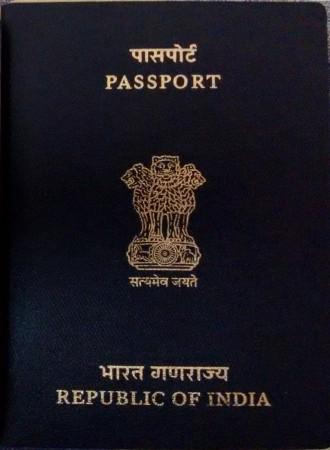
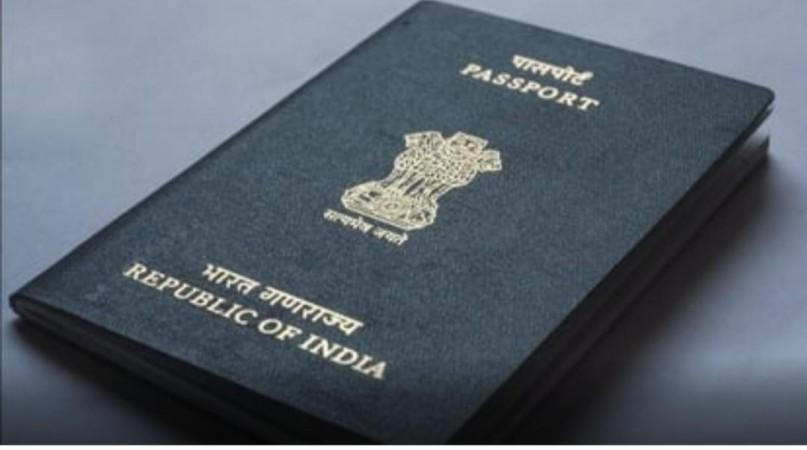
The Ministry of External Affairs (MEA) on Wednesday highlighted the growing role of India's new chip-based e-passports, saying the passport remains a travel document and not a proof of citizenship. Officials said passports attest to the nationality of Indian citizens while they are abroad and are issued only after extensive verification involving multiple government agencies.
Speaking on the occasion of Passport Seva Divas, observed on June 24 to mark the enactment of the Passports Act, 1967, officials said India has issued around 14.7 million e-passports since the chip-based documents were rolled out last year as part of the revamped Passport Seva Programme.
The e-passports, which contain an embedded antenna and Radio Frequency Identification (RFID) chip carrying personal details and biometric data, currently account for nearly 10 per cent of all passports in circulation. All newly issued passports are now chip-based.
Officials said the e-passports offer enhanced security, reduce the risk of tampering and unauthorised access, and make it significantly harder to obtain fake passports through fraudulent means. The improved security features also provide greater confidence to immigration authorities abroad and help speed up clearance processes.
The chips used in the e-passports are supplied by the India Security Press in Nashik, which sources them internationally. Officials said global best practices were studied while developing the system, and efforts are ongoing to further strengthen passport security.
While Tata Consultancy Services (TCS) serves as the technology and service provider for the Passport Seva Project, all passport-related data remains stored on servers managed by the Ministry of External Affairs, officials clarified.
The ministry also announced that it will organise a two-day Human Resource Mobility Forum on June 30 and July 1 to promote legal migration pathways and connect Indian job seekers with overseas employers. Denmark, Germany, Italy, Japan and Russia will be the focus countries at the event.
The forum is being organised in collaboration with the labour and education ministries and aims to bring together workers, recruitment agencies and foreign employers. Officials stressed the importance of proper training, awareness and ethical recruitment practices, especially in light of cases where Indians were allegedly duped into joining the Russian armed forces.
"Ethical employers have to be matched with aspirants, who also need to be aware of potential risks and fraudulent offers," an official said.
Officials also said efforts are underway to expand visa-free and visa-on-arrival access for Indian passport holders. Currently, 27 countries offer visa-free travel to Indians, up from 16 in 2019, while 47 countries provide visa-on-arrival facilities, compared to 38 in 2019. In addition, 66 countries offer e-visa facilities to Indian travellers.
India has also signed migration and mobility agreements with 25 countries, primarily in Europe, helping create legal migration pathways while facilitating the return of illegal migrants.
The government has also significantly improved passport services over the years. The average processing time for passport applications has been reduced to five to six days, while applicants now spend less than 45 minutes at Passport Seva Kendras. The number of Passport Seva Kendras and Post Office Passport Seva Kendras has increased from 77 a decade ago to 544 across the country.
Officials added that efforts are continuing to reduce police verification timelines, with a focus on replicating the success achieved in some states where verification is completed within two to three days.
Under the Passports Act, passports are issued to Indian citizens for international travel. Applicants undergo police verification and scrutiny of multiple government records before the document is granted.
The ministry's position appears to draw a distinction between a passport being evidence of citizenship and being conclusive proof of citizenship. Legally, the government retains the power to impound or revoke a passport if it discovers that citizenship was wrongly claimed or obtained through misrepresentation.
Yet, the clarification raises an obvious question. If a document issued by the sovereign after extensive verification is insufficient, the universe of documents capable of proving citizenship becomes considerably narrower.
The voter ID precedent:
The issue is not merely academic. During the recent special intensive revision (SIR) exercise of electoral rolls, one of the central legal questions before the Supreme Court was whether existing electors could be asked to furnish fresh documents establishing eligibility.
The controversy exposed an important distinction embedded in Indian law.
A voter identity card establishes that a person is enrolled as an elector. It does not independently establish citizenship. This follows from the scheme of the Representation of the People Act, 1950, under which only citizens can be registered as voters. However, electoral registration authorities retain the power to inquire into whether a person's inclusion in the rolls satisfies the statutory requirements. As a result, possession of an old voter card by itself did not necessarily answer questions regarding citizenship during the SIR exercise.
The MEA's latest clarification arguably pushes the debate further. If voter cards are not definitive proof of citizenship and passports too are not, citizens may reasonably ask which document carries that status.

![Angry Jaya Bachchan pushes journalist's mic away during INDIA bloc protest [watch]](https://data1.ibtimes.co.in/en/full/839178/angry-jaya-bachchan-pushes-journalists-mic-away-during-india-bloc-protest-watch.jpg?w=220&h=135&l=50&t=40 "Angry Jaya Bachchan pushes journalist's mic away during INDIA bloc protest [watch]")





![Angry Jaya Bachchan pushes journalist's mic away during INDIA bloc protest [watch]](https://data1.ibtimes.co.in/en/full/839178/angry-jaya-bachchan-pushes-journalists-mic-away-during-india-bloc-protest-watch.jpg?w=220&h=138)
![Angry Jaya Bachchan pushes journalist's mic away during INDIA bloc protest [watch]](https://data1.ibtimes.co.in/en/full/839178/angry-jaya-bachchan-pushes-journalists-mic-away-during-india-bloc-protest-watch.jpg?w=220&h=135)