On this Manipur Day, I extend warm greetings and deep respect to the resilient people of Manipur the proud Meitei, Kuki-Zo, Naga, and all communities who have preserved this beautiful land's rich cultural heritage, traditions, and spirit through immense trials. Your strength, diversity, and shared history deserve celebration and solidarity. Tragically, the shadow of violence continues to fall even on days meant for remembrance and hope. Just two days ago, on January 21, 2026, Mayanglambam Rishikanta Singh, a 29-year-old Meitei man married to a Kuki-Zo woman, was abducted from their home in Churachandpur and brutally executed by suspected militants in a chilling video that has since circulated widely. This cold-blooded killing shattered the fragile lull that had settled over the state in recent months, reignited protests across the valley, and once again exposed how deeply the ethnic fault lines still run. It serves as a painful reminder that peace remains precarious and that the wounds of the past three yearsof over 260 lives lost, more than 60,000 displaced, villages burned, and families torn apart have not yet healed.
On this Manipur Day, the call for genuine reconciliation, justice for every victim, and an end to the cycle of violence is more urgent than ever.
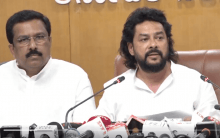
In the shadowed hills of Manipur, the execution of Mayanglambam Rishikanta Singh on January 21, 2026, stands as a stark symbol of unresolved conflict. A Meitei man married to a Kuki-Zo woman, Singh pleaded for his life in a viral video before being shot by suspected militants from the United Kuki National Army (UKNA). This incident, the first major inter-community killing in months, shattered a fragile calm and reignited protests and fears of renewed escalation in a state scarred by nearly three years of violence.
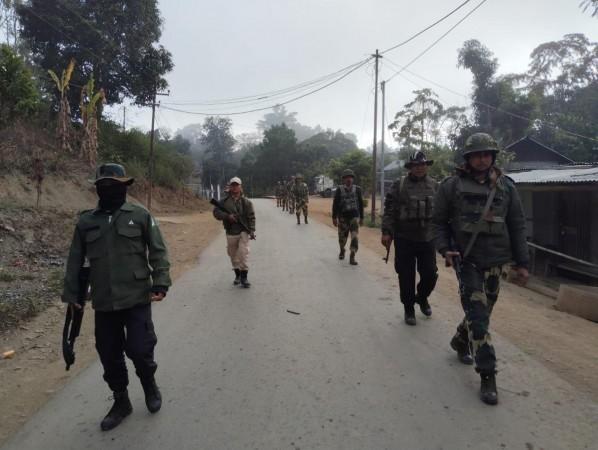
Since May 3, 2023, clashes between the valley-dominant Meitei community (53 percent of the population, mostly Hindu) and hill-based Kuki-Zo tribes (16 percent, largely Christian), with Naga groups (24 percent) caught in overlapping claims, have claimed over 260 lives, displaced more than 60,000 people, and destroyed thousands of homes, churches, and villages. Buffer zones patrolled by central forces now enforce a de facto partition, raising fundamental questions about India's capacity to manage ethnic pluralism, resource inequities, and the lingering effects of colonial legacies in its northeastern frontier.
This conflict is not simply a clash of identities. It is a convergence of historical injustices, economic disparities, and governance shortcomings that requires careful, evidence-based analysis. Acknowledging legitimate grievances on all sides while grounding recommendations in principles of equity, accountability, and reconciliation remains essential.
Historical Foundations: Colonial Bifurcations and Post-Independence Tensions
Manipur's ethnic mosaic, with Meiteis concentrated in the fertile Imphal Valley and Kuki-Zo and Naga tribes in the surrounding hills, traces its divisions to British colonial policies. The administration separated the princely valley state under Meitei rule from semi-autonomous hill tracts, embedding long-term disparities in land access, governance, and development. Valleys received centralized investment while hills remained marginalised.
After integration into India in 1949, Meitei political dominance in the state assembly clashed with tribal demands for autonomy, fuelling insurgencies among Naga and later Kuki groups. The 1990s brought deadly Naga-Kuki clashes that claimed over 1,000 lives, followed by 1997 Kuki-Meitei violence driven by territorial and resource competition. Missionary activity accelerated Christian conversions among hill tribes, deepening religious divides with Hindu Meiteis. By the 2000s, instability in Myanmar drove Chin-Kuki migration, intensifying Meitei concerns about demographic change. These historical layers show that the current crisis is not sudden but the result of accumulated, unaddressed asymmetries in which each community's sense of victimhood reinforces the other's perception of threat.
Multifaceted Causes: Grievances on All Sides
The 2023 violence erupted after a Manipur High Court directive recommended consideration of Scheduled Tribe status for Meiteis, which would grant them access to hill lands and affirmative benefits traditionally reserved for tribes. Meiteis, confined to 10 percent of the land despite forming over half the population, argue that this corrects historical disadvantages following independence, when they lost tribal classification amid population growth and valley overcrowding. Kuki-Zo and Naga tribes contend that it would undermine Article 371C protections, opening their 90 percent hill territories to valley encroachment and diluting existing quotas.
Economic and demographic pressures compound these tensions. Illegal migration from Myanmar's Chin-Kuki communities, accelerated by the 2021 coup, has led to new settlements in reserved forests, prompting Meitei claims of demographic invasion through fake identities. A narcotics economy worth an estimated Rs 60,000 crore annually, linked to hill poppy cultivation and Myanmar's Golden Triangle, implicates syndicates across communities, yet state eviction drives have disproportionately affected Kuki areas. Religious and cultural divides add further strain: Meiteis often view hill tribes as relative newcomers, while tribes perceive valley dominance as exploitative. Uneven development, with valleys advancing in infrastructure and employment while hills lag, and recent amendments to mining laws that enable corporate extraction without strong tribal consent, deepen resentment. These factors create a zero-sum dynamic in which one group's perceived gain is another's loss.
Armed Actors: Militants, Militias, and Community Defenses
Violence is sustained by a complex network of armed groups. Meitei outfits such as Arambai Tenggol and Meitei Leepun have been accused of radicalising youth and carrying out attacks on Kuki areas, with reports linking them to political patronage. Kuki groups, including UKNA and Kuki National Army, defend hill territories while facing allegations of extortion and involvement in drug networks. Naga factions, notably NSCN-IM, pursue overlapping claims for Greater Nagalim. Civil society organisations, from Meitei bodies like COCOMI to Kuki Inpi and Thadou Inpi, often amplify community narratives and demands. External elements, including Myanmar refugees and alleged foreign backing of insurgents, add geopolitical complexity. Armed actors thrive in an environment of limited accountability.
Politics and Governance: Examining Shortcomings Through Evidence
The former state government under Chief Minister N. Biren Singh faced credible accusations of partiality. Policies such as the War on Drugs and anti-immigration campaigns disproportionately targeted Kuki hill areas, with rhetoric framing communities as linked to poppy cultivation and illegal migration. Reports documented alleged protection of Meitei vigilante groups and looting of over 6,000 weapons from armories with minimal resistance. The Supreme Court observed serious allegations of inept law enforcement and, in some cases, collusion with perpetrators.
The Union government's response drew criticism for initial delays and reliance on the state machinery. Prime Minister Modi's prolonged absence from the state and reluctance to intervene vigorously allowed tensions to escalate. President's Rule, imposed in February 2025 following Singh's resignation, aimed to restore neutrality but has not fully resolved core issues. Long-pending matters such as land reform, immigration verification through NRC, and sustainable alternatives to narcotics cultivation remain unaddressed, perpetuating cycles of mistrust.
The Current Landscape: Fragility and Flickers of Hope
Manipur continues under President's Rule, with buffer zones restricting movement and creating a partitioned reality that limits economic recovery and resettlement. Relief camps across districts house over 60,000 displaced persons in difficult conditions, with shortages of food, water, sanitation, and healthcare. Targeted atrocities, including documented sexual violence and the recent death of a Kuki-Zo gang-rape survivor from trauma, underscore persistent impunity. Militant activities, extortion, and sporadic clashes continue, yet cross-community condemnations, such as those following Singh's killing by Thadou Inpi Manipur and Meitei civil society groups, demonstrate shared revulsion at violence and potential for dialogue. Economically, blockades and disruption have devastated trade and agriculture, while geopolitically, Myanmar's civil war spills across the border through refugees, arms flows, and insurgent sanctuaries, threatening India's broader regional strategy.
Prospects Ahead: Risks and Opportunities
Without sustained reform, Manipur faces the danger of prolonged fragmentation, irreversible displacement, and spillover into neighbouring states. Demographic trends, including higher fertility rates in hill areas, are expected to narrow the Meitei population advantage after the 2027 census and delimitation, potentially increasing tribal representation in the assembly and shifting political power dynamics. Kuki-Zo demands for separate administration could lead to boundary redraws that overlap with Naga claims, risking multi-ethnic instability. Myanmar's ongoing conflict threatens renewed refugee inflows and disruptions to cross-border connectivity projects. At the same time, shared outrage over atrocities and instances of joint condemnation offer pathways toward inclusive dialogue. The challenge lies in translating these moments into structured processes before mistrust hardens further.
Imperatives for Principled Resolution
Resolution requires evidence-based, merit-driven steps grounded in constitutional principles and human rights standards. Impartial disarmament and recovery of remaining looted weapons must be prioritised through coordinated security operations. Implementation of a National Register of Citizens and effective border management should address immigration concerns while upholding humanitarian obligations. Transparent, inclusive negotiations involving Meitei, Kuki-Zo, and Naga representatives are essential to balance demands for autonomy with calls for state integrity and equitable resource distribution. Accelerated justice through independent probes, Special Investigation Teams, and support for survivors of violence, particularly sexual violence, is critical to rebuild trust. Equitable development investments must close hill-valley gaps in infrastructure, education, and employment. Sustainable livelihood alternatives to poppy cultivation should be expanded under rehabilitation packages that include housing, financial aid, and community participation. Long-term constitutional reforms for shared governance, drawing from successful models of autonomy within the Indian framework, can foster coexistence without fragmentation. Manipur's future depends on collective commitment to these principles: only through impartial action, accountability, and genuine dialogue can the state move beyond division toward a durable peace that honours the dignity and security of all its communities.
[Major General Dr. Dilawar Singh, IAV, is a distinguished strategist having held senior positions in technology, defence, and corporate governance. He serves on global boards and advises on leadership, emerging technologies, and strategic affairs, with a focus on aligning India's interests in the evolving global technological order.]