France, the United Kingdom and Germany have clarified that they were not part of the recent US-Israeli strikes on Iran that began late last week. However, the three nations signalled their readiness to take defensive measures if required, particularly to neutralise threats from Iranian missiles and drones.
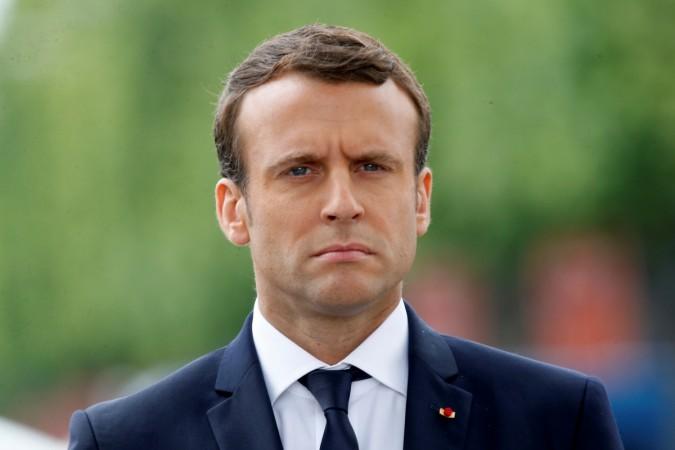
In a televised address on Tuesday, French President Emmanuel Macron revealed that French forces intercepted drones in what he described as legitimate self-defence during the early hours of the conflict, aiming to protect allied airspace. While he did not provide operational details, he confirmed that Rafale fighter jets, air defence systems and airborne radar assets had recently been deployed to the Middle East. "We will continue this effort as long as necessary," he said.
Macron also announced the repositioning of France's aircraft carrier, the Charles de Gaulle, which will operate with frigate escorts and its full air wing. Explaining the move, he pointed to a drone strike that damaged the runway of a British air base in Cyprus. Stressing that Cyprus is a member of the European Union and a strategic partner of France, he said the situation warranted French support.
The French leader highlighted Paris's defence agreements with Qatar, Kuwait and the United Arab Emirates, along with strong security commitments to Jordan and Iraq, underscoring France's broader regional role.
Addressing the expanding conflict, Macron said the Iran-backed militant group Hezbollah had made a serious error by launching strikes against Israel, thereby endangering Lebanon. At the same time, he cautioned Israel against initiating a ground offensive in Lebanon, calling such a move a dangerous escalation and a strategic mistake. He urged Hezbollah to halt its attacks and called on Israel to respect Lebanon's sovereignty and territorial integrity.
Macron reiterated France's commitment to international law, stating that Paris could not endorse the US-Israeli strikes on Iran as they were conducted outside an established legal framework. He called for an immediate end to hostilities and emphasised that lasting peace could only be achieved through renewed diplomatic engagement.
Referring to the reported killings of Iran's Supreme Leader Ali Khamenei and other senior officials, Macron remarked that history does not mourn those who oppress their own people. He expressed hope that the Iranian people would be able to determine their future freely and potentially form a government that better represents their aspirations.
At the same time, Macron placed responsibility on Tehran for contributing to the crisis, accusing Iran of advancing a controversial nuclear programme, expanding its ballistic missile capabilities, and supporting armed groups across the region, including Hezbollah in Lebanon, the Houthis in Yemen, Shiite militias in Iraq, and Hamas, while maintaining a hostile stance toward Israel.