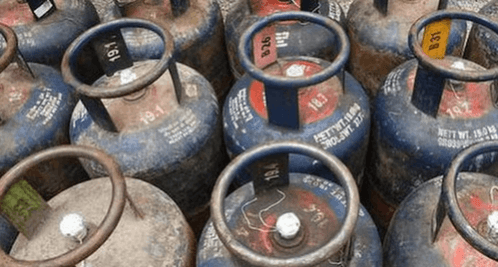
State-owned oil marketing companies (OMCs) on Saturday raised the prices of domestic and commercial LPG cylinders, with household cooking gas becoming costlier by Rs 60 and commercial cylinders by Rs 114.5, amid rising global energy prices linked to the ongoing conflict in the Middle East.
According to the Indian Oil Corporation, the price of non-subsidised domestic LPG used by most households has been increased to Rs 913 per 14.2-kg cylinder in New Delhi -- up from Rs 853 earlier.
This marks the second price hike in less than a year for domestic LPG cylinders.
Commercial LPG cylinders -- typically used by hotels, restaurants and other businesses -- have also seen an increase of Rs 114.5 per unit.
According to industry officials, the recent surge in global energy prices follows the escalation of military tensions in the Middle East.
The conflict has disrupted energy market sentiment and raised concerns over supply stability in key global oil and gas routes.
The rise in LPG prices comes amid broader volatility in energy markets, with crude oil prices climbing in recent weeks as geopolitical tensions intensify in the region.
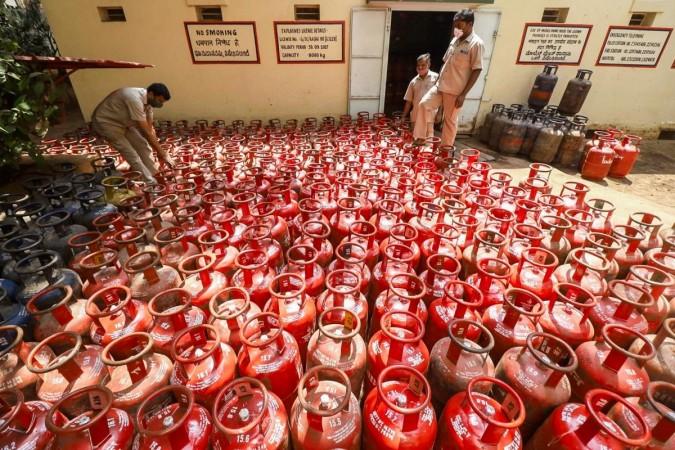
Meanwhile, PSU oil marketing companies have also confirmed that fuel stocks remain adequate amid rumours of petrol and diesel shortages.
Both Bharat Petroleum Corporation Limited (BPCL) and Indian Oil Corporation (IOCL) on Friday dismissed rumours of fuel shortages, calling them "completely unfounded" and "baseless".
In a post on its X handle, BPCL said India's energy supply remains reliable and resilient, with ample petroleum reserves and uninterrupted supply chains.
"There have been some rumours about shortages of petrol and diesel in certain areas, which are completely unfounded," the company said, adding that there is no reason to be alarmed about fuel availability.
"BPCL is fully operational and steadfast in ensuring a smooth fuel supply for all customers," it added.
Meanwhile, IOCL said reports on social media suggesting a shortage of petrol and diesel are baseless.
"India has sufficient fuel stocks, and supply and distribution networks are functioning normally," it said.
"IndianOil is committed to maintaining uninterrupted fuel supply across the country. Citizens are requested not to panic or crowd fuel stations and to rely only on official sources for accurate information," the company added in a post on its X handle.
Shares of oil marketing companies Bharat Petroleum Corporation Limited and Indian Oil Corporation on Friday ended in the negative zone, with BPCL falling nearly 2 per cent to Rs 352.95 and IOCL declining about 2 per cent to Rs 168.10 on the National Stock Exchange of India.
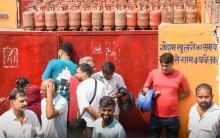
After the price of domestic LPG cylinders was increased by Rs 60, residents from Delhi, Uttar Pradesh, and Maharashtra on Saturday expressed concern over the rising cost of living, saying the hike would significantly affect their household budgets and daily expenses.
Many residents said that cooking gas is an essential commodity and that the increase in prices would make it difficult for middle-class and lower-income families to manage their expenses.
Anupama, a resident of Delhi, said global developments might be influencing the rise in prices but hoped the government would find a solution.
"As wars are going on in different parts of the world, it is impacting many countries. Gas is largely exported from Gulf countries, so it is natural that the price may increase. I hope the government will come up with some solution. During this difficult situation, we should stand with the government," she said.
Another resident of Delhi, Ashu Sharma, highlighted the importance of LPG in daily life.
"LPG cylinders are a basic necessity. It is essential for cooking food in every household," he said.
A local resident in Delhi also expressed concern over the financial burden on middle-class families.
"We are very troubled. We belong to the middle class, and it is becoming increasingly difficult to manage our livelihood," the resident said.
In Uttar Pradesh's Mirzapur, a businessman said the continuous rise in prices was creating difficulties for people.
"The war is ongoing and prices are continuously rising. This is causing serious problems in people's lives. Incomes are low while expenses are increasing," he said.
Residents in Ayodhya also voiced similar concerns, saying the hike in LPG prices was adding to their financial challenges.
"There are many difficulties. Things are not running smoothly, and people are facing many problems, including issues related to gas availability and rising prices," a local resident said.
Another resident in Ayodhya said using cooking gas was unavoidable despite the price increase.
"The rising gas prices make things very difficult. Prices keep increasing, but what can we do? We cannot manage without gas because it is a necessity," the resident said.
A third local said that even a small increase in prices creates a noticeable impact on household expenses.
"If the price increases significantly, it definitely becomes a problem. But we still have to buy it because we have no other option. Even small tasks at home become more expensive," the resident added.
Another resident urged the government to support economically weaker sections.
"With the rising prices of cooking gas, common people are struggling financially. The government should help the poor. Prices of everything are increasing, and it is becoming very difficult to manage," the person said.

In Mumbai, Maharashtra, a woman said the price hike would make it harder for families already facing financial challenges.
"If we are not getting regular wages, how will we run our household? It has been two to three months and we have not received payment for our work. How will we cook at home or manage our family expenses when the prices of vegetables, LPG cylinders, and other daily necessities are constantly rising?" she said.
(With inputs from IANS)