
With nearly 50 per cent polling recorded in the first six hours, Kerala's high-stakes Assembly election gathered remarkable momentum on Thursday, raising expectations that the final turnout could challenge long-standing records. Nearly 50 per cent of the state's 2.71 crore electorate had exercised their franchise by 1 p.m.
With polling set to close at 6 p.m., all eyes are now on whether the state will breach the elusive 80 per cent mark and possibly inch closer to its historic high of 85 per cent recorded in 1960.
The steady stream of voters across urban and rural booths alike has injected fresh uncertainty into an already tightly contested election. Officials, led by Chief Electoral Officer Rathan U. Khelkar, had set an ambitious target of 85 per cent turnout this time.
While that benchmark remains challenging, the brisk pace of voting has made crossing 80 per cent a realistic possibility — something Kerala has not achieved since 1987, when turnout last touched that level. In recent electoral cycles, participation has remained robust but below the 80 per cent threshold.
The 2016 Assembly election, which brought Pinarayi Vijayan to power, recorded a turnout of around 77 per cent. Five years later, when he secured a historic re-election, the figure dipped slightly to about 75 per cent.
This time, with a revised electoral roll placing the total voter base at 2.71 crore, the early surge has left political parties watching developments closely. Higher turnout levels have traditionally produced unpredictable outcomes in Kerala, often reshaping electoral arithmetic in the final stretch.
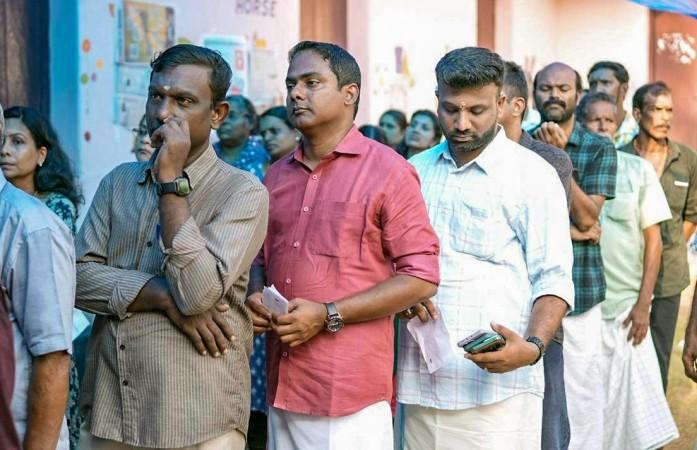
Across constituencies, long queues and enthusiastic participation cutting across age groups and regions have become a defining feature of the day. Polling officials attribute the strong response to heightened voter awareness, competitive campaigning, and a keen sense among the electorate about the stakes involved.
As the day progresses, the central question remains: will the surge sustain through the afternoon and push Kerala into record territory — and more importantly, who stands to gain from a higher voter turnout?
Malayalam cinema icon Mammootty was seen casting his vote alongside his wife Sulfath Kutty at a polling station in Kochi on Thursday morning as voting for the Kerala Assembly Elections 2026 got underway. The veteran actor arrived in a composed, understated manner, dressed in a brown long-sleeved collared shirt paired with black sunglasses. His presence drew attention from voters and onlookers, underscoring the role public figures often play in encouraging electoral participation. He was also spotted leaving the polling booth with actor and his son, Dulquer Salmaan.
The elections, being held across the state today, saw an early voter turnout of 16.2 per cent by 9 a.m., according to the Election Commission of India. Over 2.6 crore electors are eligible to vote in this election, which will determine the fate of 883 candidates contesting across 140 constituencies.
Official data indicates that the electorate comprises 1,38,27,319 women and 1,31,26,048 men, along with 277 voters registered under the third gender category. Among voters, 4,24,518 fall within the 18–19 age group, while 2,04,608 are aged 85 and above.
To facilitate the polling process, authorities have set up 30,471 polling stations across Kerala, supported by 119 logistics and voter machine distribution centres, along with 41 counting centres. Kerala Chief Electoral Officer Rathan U. Kelkar confirmed that 1.46 lakh trained polling personnel have been deployed statewide to ensure smooth operations.
Security and enforcement measures have also been intensified, with over 1,200 police teams active on the ground and FIRs registered against 180 individuals in connection with election-related activities.
The election is shaping up as a key political contest between the ruling Left Democratic Front (LDF) and the opposition United Democratic Front (UDF), with the BJP-led NDA also aiming to expand its vote share. The LDF, which currently holds 99 seats, is seeking a third consecutive term after making history in 2021 by retaining power in a state traditionally known for alternating between coalitions led by the CPI(M) and the Congress.