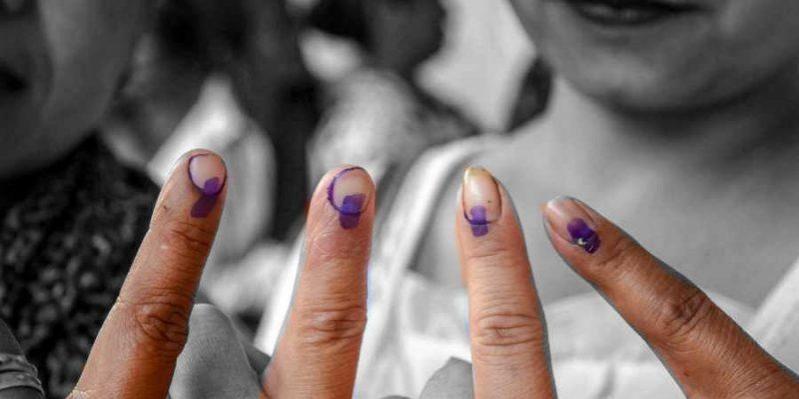
Kerala's forthcoming Assembly election is unfolding within an electoral architecture that is fundamentally more complex than in any previous cycle. What makes the 2026 contest distinct is not merely anti-incumbency or alliance arithmetic, but the quiet transformation of the mechanics of elections themselves. Instruments resembling systematic voter scrutiny and intensive roll verification, coupled with increasingly professionalised booth-level interventions, have begun to matter in Kerala in ways they never did earlier. These processes do not operate evenly across social groups. Urban poor settlements, coastal belts, migrant-linked households and first-time or floating voters are far more vulnerable to procedural friction than entrenched middle-class or rural voters. In a state where 20 to 30 Assembly constituencies are routinely decided by slender margins, even marginal asymmetries in voter inclusion, verification or turnout can decisively alter outcomes without any visible "wave".
Overlaying this procedural shift is the BJP's contemporary electoral practice, which in Kerala is often misunderstood. The party is not contesting 2026 with a simplistic objective of "winning the state". Its strategy is subtler and more disruptive. The aim is to break Kerala's long-standing bipolarity by converting a large number of seats into tripolar contests, shaving off small but electorally potent slices of vote share from either the LDF or the UDF. A 3 to 7 percent vote diversion in carefully chosen constituencies is sufficient to flip results, especially where anti-incumbency is already operating at the margins. Money, media reach and micro-targeting are therefore not being deployed to overpower Kerala's political culture, but to exploit its fine electoral balances.
The recent local body, municipal and panchayat elections provide an important but often misread diagnostic. They do not predict Assembly outcomes in a linear fashion, yet they reveal the underlying health of political ecosystems. The LDF's performance suggests that its core vote remains largely intact. Where the Left dominates institutionally through cooperatives, unions, welfare networks and cadre depth, it continues to win decisively. However, it is precisely in the marginal wards, semi-urban panchayats and municipal fringes that erosion is visible. These losses do not indicate ideological rejection so much as governance fatigue and a willingness among voters to experiment when the stakes appear lower. For a party in power for nearly a decade, this is a classic early warning signal rather than a collapse.
The UDF, on the other hand, has demonstrably regained organisational breath. Congress-IUML coordination has improved, particularly in Malabar, where minority consolidation appears stronger than it was in 2021. In central Kerala, dissatisfaction within sections of the Christian electorate has not entirely dissipated, giving the UDF a renewed opening. Yet this recovery remains uneven. Leadership ambiguity, inconsistent booth-level discipline and the absence of a compelling statewide narrative continue to blunt the alliance's ability to convert favourable sentiment into assured victories.
The BJP's local body gains, though numerically limited, are strategically significant. They mark a psychological transition from political marginality to conditional relevance. In urban corporations, municipal councils and select panchayats, the party has demonstrated that it can finish second, narrow margins sharply, or in rare cases win outright. This matters less for the number of local bodies controlled and more for legitimising the BJP as a credible third force in 15 to 20 Assembly segments. Once that threshold is crossed, vote-splitting becomes structural rather than incidental.
When the Assembly landscape is examined through this lens, a clearer typology emerges. Roughly 45 to 50 constituencies remain heavily LDF-dominant, characterised by dense CPI(M) cadre networks, high welfare penetration and strong cooperative or labour institutions. These seats, spread across parts of Kannur, Kozhikode, Alappuzha, Kollam and industrial belts, are structurally resilient. Anti-incumbency may narrow margins, but without extraordinary disruptions, they are unlikely to change hands. At the other end, about 35 to 40 seats are structurally favourable to the UDF, anchored in IUML consolidation, church-centred social capital and Gulf-linked entrepreneurial economies in Malappuram, Ernakulam, Kottayam and Idukki. Losses here would indicate not voter volatility but alliance failure.
The real contest lies in the remaining 30 to 35 marginal and high-volatility constituencies. These seats, concentrated in urban and semi-urban zones such as Thiruvananthapuram, Kochi, Palakkad, Thrissur and coastal belts, combine mixed caste profiles, younger electorates, high media exposure and narrow historical margins. It is here that procedural factors, turnout management, narrative framing and vote-splitting intersect most sharply. A swing of even three percent, or the emergence of a credible third contender, can flip outcomes across a dozen seats.
Within this volatile category lie 15 to 20 constituencies where the BJP is poised to make its most consequential impact. Making a mark here does not necessarily mean winning a large number of seats. It means finishing close enough to alter the result between the LDF and UDF. These are areas where Hindu vote consolidation across caste lines is more feasible, where temple-centred mobilisation resonates, and where campaign spending, legal preparedness and media saturation can be deployed most effectively. In these seats, the BJP's role as spoiler or disruptor may matter more than its seat tally.
Money, muscle, manipulation and media operate differently in Kerala than in many other states, but they are not irrelevant. Direct vote-buying has limited efficacy, yet financial resources shape turnout logistics, legal challenges, narrative dominance and organisational stamina. Physical coercion is rare, but administrative and procedural pressure is not. Media influence is less about persuading an already opinionated electorate and more about saturating micro-narratives within closed digital ecosystems. The cumulative effect of these factors is not to overturn Kerala's political culture, but to tilt close contests quietly and decisively.
Taken together, the likely outcomes narrow to three broad strategic scenarios. The LDF could retain power narrowly by holding its core seats while benefiting from opposition vote-splitting in marginal constituencies. The UDF could secure a majority, but only with exceptional alliance discipline, leadership clarity and an ability to blunt the BJP's disruptive interventions. The third possibility is a fragmented verdict, where the BJP wins a handful of seats, finishes second in many more, and leaves the Assembly outcome determined by razor-thin margins across regions.
Ultimately, Kerala 2026 will not be decided by ideology alone. It will be shaped by the mastery of electoral processes, the management of margins and the capacity of alliances to adapt to a more engineered and less forgiving electoral environment. The Left retains depth, the UDF carries momentum tempered by fragility, and the BJP possesses strategy without social majority. Whether Kerala remains fundamentally bipolar or enters a phase of managed tripolarity will be the deeper political question answered by this election.
[Major General Dr. Dilawar Singh, IAV, is a distinguished strategist having held senior positions in technology, defence, and corporate governance. He serves on global boards and advises on leadership, emerging technologies, and strategic affairs, with a focus on aligning India's interests in the evolving global technological order.]