Twelve Maoists—including Central Committee member and top insurgent leader Ramdher Majji—surrendered before security forces in Chhattisgarh's Khairagarh-Chhuikhadan-Gandai district on Monday, marking one of the biggest breakthroughs in the MMC (Madhya Pradesh–Maharashtra–Chhattisgarh) zone in recent years.
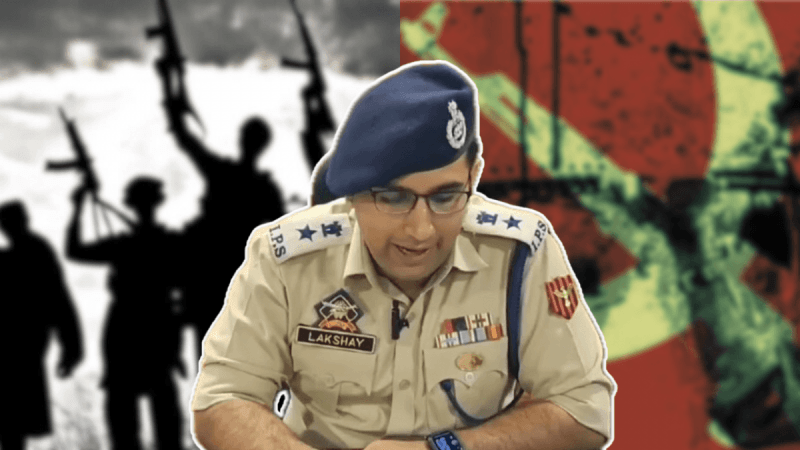
The surrender took place in Kumhi village under Bakarkatta Police Station, where senior officers of the Chhattisgarh Police, Khairagarh Superintendent of Police Lakshay Sharma, IPS, and the Central Reserve Police Force (CRPF) oversaw the formal laying down of arms. The group handed over an AK-47 rifle, an SLR and several other weapons, ending years of activity across the heavily contested tri-state belt.
According to officials, the cadres were active in multiple districts across Madhya Pradesh, Maharashtra and Chhattisgarh, operating within the Maoist network responsible for extortion, recruitment and armed ambushes in the MMC region. Ramdher's surrender is being described by security sources as "the most significant setback" for the Maoist hierarchy in nearly a decade.
In related development, a high-profile female Naxalite cadre, who carried a joint bounty of Rs 17 lakh announced by three states, surrendered to police in Rajnandgaon, reflecting a breakthrough in anti-Maoist operations that involve senior police leadership including IPS officer Lakshay Sharma.
Kamala Sodi, 30, a long-active member of the Madhya Pradesh-Maharashtra-Chhattisgarh (MMC) Naxal zone, laid down arms at the Superintendent of Police's office in Khairagarh on Thursday. Her surrender was overseen by Inspector General of Police Abhishek Shandilya and Superintendent of Police Lakshay Sharma, according to police officials.
Sodi had been engaged in sabotage and organisational activities since 2011, and stepped away from the insurgency under sustained pressure from security forces and incentives under Chhattisgarh's Rehabilitation Policy 2025. Upon surrender, she was granted an immediate Rs 50,000 incentive and will be eligible for further benefits under the state's programme.
The police clarified that Sodi was a cadre of the Mad Division of the Bastar MMC zone and was implicated in multiple hostile incidents targeting security personnel. A total bounty of Rs 17 lakh had been declared jointly by Madhya Pradesh, Maharashtra, and Chhattisgarh police for her capture.
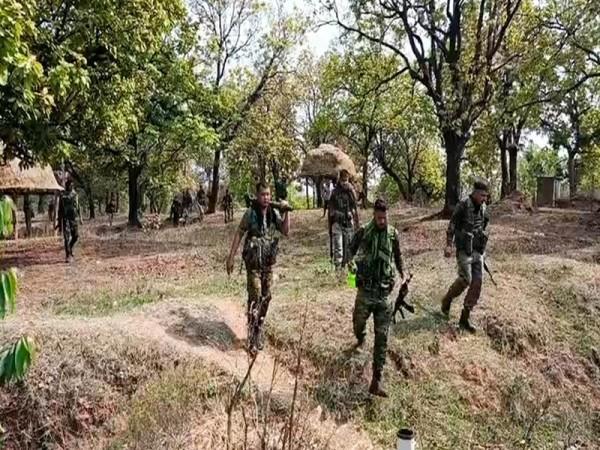
In a related development, security agencies reported that Ramdher, a notorious Naxalite Central Committee member active for years in the MMC zone, surrendered along with 12 other key insurgents. Sources suggest that this represents possibly the most substantial mass surrender in the area in over a decade, and the MMC zone could soon be declared Naxal-free, signalling a pivotal shift in the long-running Maoist insurgency.
At the centre of these operations is Lakshay Sharma, a 2016-batch IPS officer from the Manipur cadre whose career trajectory has spanned two of India's most enduring security challenges: terrorism in Jammu & Kashmir and Maoist insurgency in central India.
Sharma served as the Senior Superintendent of Police (SSP) in Bandipora district in Jammu & Kashmir, a region known for chronic terror and insurgency activity. He assumed the role in early 2023, taking charge of district policing and counter-terror operations on behalf of the Jammu & Kashmir Police.
His tenure in Kashmir saw him engage in policing and intelligence operations aimed at disrupting terror funding and arresting overground actors linked to terror networks, such as Lashkar-e-Taiba associates.
Sharma was later repatriated to his parent cadre and reassigned to Chhattisgarh, reflecting a broader strategy to deploy experienced counter-insurgency officers where the internal security situation demands intensive, coordinated action.
The Chhattisgarh offensive aligns with sustained efforts by Indian security forces to weaken the operational structure of the Naxalite-Maoist insurgency, once pervasive across central India's forest belts. While anti-Maoist operations remain complex, the recent series of high-profile surrenders, backed by rehabilitation incentives and sustained pressure by joint police task forces, marks a notable moment in the decades-long campaign.
Law enforcement analysts say the integration of officers with frontline experience in counter-terror and anti-insurgency tactics, such as Sharma, has helped intensify pressure on Naxal networks that have historically exploited terrain and community vulnerabilities to sustain their operations.