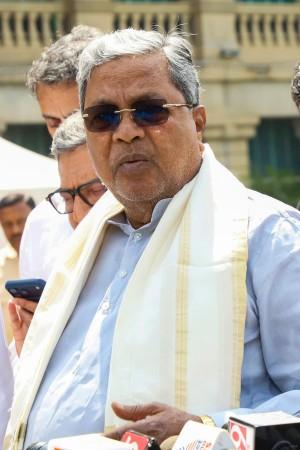
Karnataka Chief Minister Siddaramaiah on Monday said the state government is closely monitoring the escalating tensions in West Asia following the US-Israel strikes on Iran, and assured that the safety and well-being of Kannadigas abroad remains the government's highest priority.
In a statement, the Chief Minister said that around 109 Kannadigas are currently stranded due to airspace disruptions and flight cancellations — about 100 in the UAE, including Dubai, and nine in Bahrain. He said government teams are in constant touch with authorities and affected individuals to verify details and extend necessary assistance.
The State Emergency Operations Centre and all District Emergency Operations Centres have been activated. The state government is also coordinating closely with the Ministry of External Affairs, the Ministry of Civil Aviation, and Indian embassies and consulates in the affected regions.
The Chief Secretary has written to the Centre seeking urgent intervention to ensure the safety, assistance and possible repatriation of stranded Kannadigas. A separate communication has been sent requesting coordination with airlines for flexible ticket rescheduling and the earliest possible return flight services.
Appealing for calm, Siddaramaiah urged Kannadigas in the affected regions to strictly follow advisories issued by local authorities and Indian missions and to register through embassy helplines. He reiterated that the government stands firmly with Kannadigas abroad and will take every necessary step to ensure their safe return.
District-wise data shows that of the 100 stranded in the UAE, the highest numbers are from Ballari (32) and Bengaluru (25), followed by Davanagere (nine), Chikkamagaluru (five), Madikeri (four), Vijayapura (four), Shivamogga (three), Raichur (three), Mangaluru (three), Udupi (two), Chitradurga (two), Kalaburagi (two), Chikkaballapura (two), Tumakuru (one), and three whose district details are yet to be confirmed.
In Bahrain, four stranded persons are from Hassan district, three from Udupi, one from Madikeri, and one from an unidentified district.
Meanwhile, the Union government has gone on high alert over possible attempts to exploit the Iran crisis to incite communal unrest in India. Following an Intelligence Bureau warning, the Ministry of Home Affairs has advised states and union territories to monitor radical pro-Iran preachers and inflammatory sermons.
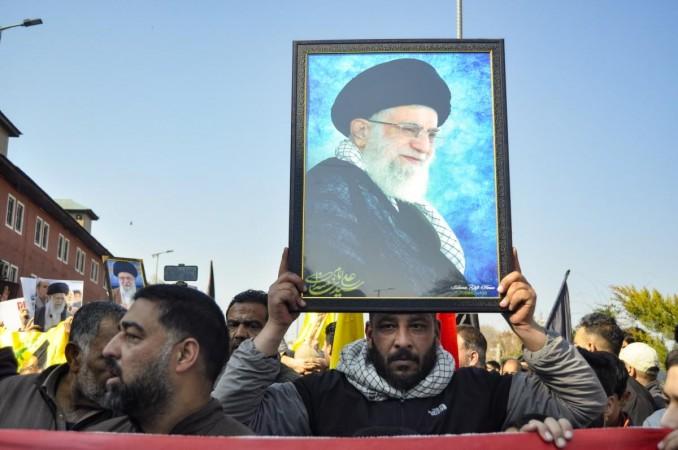
The advisory comes after the US-Israel strikes on Iran that reportedly led to the death of Supreme Leader Ayatollah Ali Khamenei. Intelligence officials said that while prayer meetings held following the Ayatollah's death have so far remained peaceful, there are concerns that radical elements — including those with alleged links to Pakistan's ISI — could attempt to infiltrate such gatherings and provoke violence.
The Centre cautioned that developments in West Asia could have domestic ripple effects and warned states to remain vigilant against inflammatory speeches aimed at triggering communal tension. States such as West Bengal and Assam, which are headed for elections this year, have been asked to exercise particular caution amid concerns of external and internal elements attempting to disturb peace.
Central intelligence agencies are working closely with state units to monitor potential threats, including suspected foreign interference. Officials said the situation in West Asia is being assessed not only for its geopolitical impact but also for its possible internal ramifications.
Prime Minister Narendra Modi also spoke to Israeli Prime Minister Benjamin Netanyahu to discuss the evolving regional situation and called for an early cessation of hostilities. He emphasised that the safety of civilians must remain a priority.
The Prime Minister chaired a meeting of the Cabinet Committee on Security (CCS) to review the developments, including the February 28 airstrikes on Iran and the difficulties faced by Indian travellers transiting through the region. He directed all concerned departments to take necessary measures to assist Indian nationals affected by the crisis.
(With inputs from IANS)