
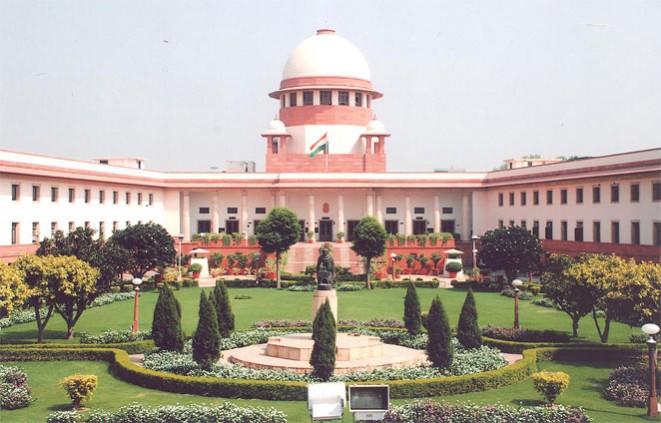
Justice B. V. Nagarathna's recent warning that "a judgment once rendered ... will hold its anchor in time" is not an ornamental reflection but a fundamental constitutional proposition that affirms the Supreme Court's position as the guarantor of finality, continuity, and stability in India's legal order. In her words, "courts cannot toss out judgments because faces have changed," an extract that encapsulates the deep institutional anxiety over the emerging practice of benches revisiting and reversing precedent with increasing frequency and without the rigor traditionally associated with the Article 141 mandate. This concern has empirical support in recent incidents, including the recall of the May 16 environmental clearance ruling, which the Court itself described as "an unusual and troubling departure," signaling what Justice Holmes once called the "perils of a law that shifts with every wind."
The growing pattern of intra-court reversals threatens institutional legitimacy, undermines stare decisis, and weakens what Alexander Hamilton termed "the steady and impartial administration of the laws," which he described in Federalist No. 78 as the judiciary's central public virtue. The implications extend beyond doctrinal purity: market actors, lower courts, administrators, and citizens rely on the stability of Supreme Court precedent in structuring their conduct, and reversals create volatility in public decision-making and investment flows. Public trust is eroded when judicial outcomes appear influenced by timing, bench composition, or extraneous pressures, a concern echoed in jurist Roscoe Pound's reminder that "the law must be stable, and yet it cannot stand still," but its movement must be principled, not arbitrary.
The phenomenon also raises questions of judicial process, bench constitution, case allocation, and the political economy of post-retirement incentives all factors identified in scholarship as contributing to inconsistent judicial behavior.
As Justice Nagarathna's admonition suggests, this is not merely a technical problem but a constitutional crisis about the meaning of judicial authority, the predictability of law, and the integrity of public institutions. Without decisive reform doctrinal, procedural, ethical, and structural the judiciary risks undermining its own normative foundations. The moment demands a reaffirmation of finality, a strengthening of institutional design, and a recommitment to the constitutional promise that law, not personality, is the true guardian of justice.
Finality, Stare Decisis and the Emergent Pathology of "Undoing Benches"
A. The Legal Principle at Stake
The principle of finality, embodied in Article 141 of the Constitution, is foundational to the rule of law because it ensures that once the Supreme Court interprets a legal question, that interpretation becomes binding on all subordinate courts, institutions, and authorities, thus providing the uniformity and predictability necessary for a functioning constitutional democracy. The Court has repeatedly affirmed that stare decisis is a "cornerstone of judicial practice," as emphasized in its observation that "certainty is the very soul of law," a sentiment historically echoed by Lord Coke who insisted that "certainty is the mother of quiet and repose." When later benches reopen or overturn decisions not because of new law or demonstrable error but due to shifts in composition or ideological inclinations, the legitimacy of Article 141 is diluted, and the stability of rights and obligations becomes contingent upon the identities of judges rather than the norms of jurisprudence.
As Justice Sandra Day O'Connor famously said, "the rule of law is the law of rules," and without consistency, the public cannot predict outcomes or organize their conduct. Justice Nagarathna's warning therefore reflects a constitutional anxiety that the Court may be drifting from the disciplined tradition of judicial reasoning into a more personality-driven adjudicatory culture. Scholars such as H. L. A. Hart have cautioned that "the minimum content of natural law requires predictability," meaning that unpredictability itself becomes a harm to liberty and governance. When finality erodes, the very concept of legal authority is compromised because the Court ceases to function as a stable repository of legal meaning. This doctrinal instability invites strategic litigation, forum shopping, and tactical timing behaviors that further undermine judicial dignity and public faith. In essence, finality is not a procedural nicety, but a constitutional guarantee that the judiciary will not become, in Justice Frankfurter's words, "a weather vane of shifting views," but a disciplined and principled custodian of constitutional meaning.
B. Recent Manifestations
The Supreme Court has publicly and repeatedly lamented the "growing trend" of successive benches revisiting or overturning the decisions of earlier benches, with multiple orders noting that such practices "undermine judicial authority" and introduce doctrinal disarray. This concern is not speculative; it is drawn from direct institutional experience. In several high-profile cases as acknowledged in judicial observations litigants have sought reconstitution of benches or used procedural devices to seek reconsideration by more sympathetic panels. Justice Nagarathna's own public speech asserted that "such trends, if unchecked, risk eroding the faith of citizens in judicial pronouncements," a statement that reflects the seriousness with which the judiciary views this trend. Internationally, the Venice Commission has warned that intra-court inconsistency "corrodes constitutional continuity," an insight that parallels India's present predicament. As Chief Justice Warren Burger once observed, "the legitimacy of the judiciary rests upon reasoned continuity," implying that sudden or unexplained reversals damage the institution's normative foundations. Reports in legal media and bar associations have documented a rise in petitions that attempt to reopen settled issues by strategically scheduling them before particular benches, a manifestation of what critics describe as "adjudicatory fluidity without discipline." The trend is further evidenced by recent instances where constitutional questions were reopened months after final judgments, suggesting a breakdown in procedural safeguards. This is not merely an academic issue; it is an institutional crisis that invites serious doctrinal and administrative reflection.
C. Case Example: Recall of the May 16 Order on Ex-Post Facto Environmental Clearances
The recall of the May 16 order that barred retrospective environmental clearances stands as a vivid example of the phenomenon Justice Nagarathna highlighted, representing what scholars have termed "jurisprudential instability in action." This case involved critical questions of environmental governance, statutory compliance, and administrative legality, and the May 16 judgment rendered after full hearing established a clear principle against granting environmental clearances retrospectively because such practices undermine conservation norms and regulatory credibility. Within months, a subsequent bench reopened the matter and recalled the ruling by a divided 2:1 majority, an event widely reported as unusual and normatively troubling.
Justice Nagarathna's extract "judgments cannot be tossed out because faces have changed" was seen as a direct reference to such instances. In the words of Justice Louis Brandeis, "in most matters it is more important that the law be settled than that it be settled right," emphasizing the public interest in stability over perfection. Similarly, Amartya Sen has argued that "justice is not only about right outcomes but about right processes," underscoring that repeated reversals undermine procedural justice. The recall had significant implications: investors recalibrated risk projections; environmental authorities reviewed thousands of pending files; and public debate erupted over the meaning of judicial authority. Scholars at the Centre for Policy Research observed in a briefing note that the recall "introduced uncertainty into environmental governance at a time when regulatory stability is essential." The episode therefore captures both the doctrinal and practical harm of the phenomenon a cautionary tale of how judicial inconsistency can disrupt governance, policy, and public trust.
Why This Pattern Is Legally and Institutionally Dangerous: A Doctrinal and Normative Diagnosis
A. Neutral Legal Grounds vs Practical Bench Dynamics
A Supreme Court decision should only be reopened under narrowly defined and transparent procedural mechanisms review petitions, curative petitions, or references to larger benches mechanisms designed to ensure that corrected judgments rest on principled legal grounds rather than fluctuating bench composition. The departure from these norms risks what Justice Ruth Bader Ginsburg once termed "a jurisprudence of personal predilections," wherein legal outcomes begin to track judicial identities rather than constitutional principles. Justice Nagarathna's warning captures this anxiety: "a judgment once rendered ... will hold its anchor in time," implying that reopening cannot be a matter of convenience. Verbatim extracts from judicial speeches underscore this concern; for example, a recent bench stated, "We cannot allow litigants to seek more favorable benches by procedural maneuvers," a sentiment that mirrors Chief Justice Roberts' assertion that "judges are not politicians in robes." If litigants perceive an advantage in timing or bench constitution, the Court risks becoming a forum where rights and obligations shift unpredictably with each roster change. This not only undermines legal stability but creates incentives for procedural manipulation, clogging the docket with repetitive or strategic petitions. Scholars like Ronald Dworkin have argued that law must operate as "a chain novel," meaning each judgment is part of a coherent narrative; repeated reversals fracture that narrative. Ultimately, neutral legal grounds become overshadowed by practical bench dynamics, creating a jurisprudential disorder that weakens institutional credibility.
B. Erosion of Article 141's Normative Force
Article 141 is not merely a rule about hierarchy; it is a constitutional commitment to normative coherence, ensuring that the law declared by the Supreme Court is singular, stable, and authoritative. When successive benches overturn or dilute prior judgments without systematic analysis, the unity of constitutional meaning dissolves, producing what scholars call "competing finalities." Justice Nagarathna's remarks draw attention to this danger by emphasizing that finality is essential for "the faith reposed in the judicial system." International comparisons illuminate the gravity of the concern: the US Supreme Court rarely overturns precedent, and when it does, it follows strict stare decisis tests articulated in cases like Casey v. Planned Parenthood, where the Court warned that frequent reversals "would subvert the Court's legitimacy." As Justice Benjamin Cardozo remarked, "the labor of judges is not to invent but to discover," indicating that judicial authority rests on continuity rather than spontaneity. Scholars at the Vidhi Centre for Legal Policy have noted in impact studies that inconsistent apex rulings cause "cascade effects" across lower courts, multiplying appeals and fragmenting jurisprudence. Article 141's normative force thus erodes when benches act independently of established precedent, leading to doctrinal incoherence, administrative confusion, and an erosion of trust. In this way, judicial inconsistency becomes a systemic risk to the constitutional order rather than an isolated aberration.
C. Perception of Political or Extraneous Influence
Perception is as central to judicial legitimacy as substance, and unexplained reversals especially those involving politically sensitive or economically high-stakes issues heighten public suspicion that extraneous influences may shape outcomes. As Justice Robert Jackson famously said, "the Court's authority ultimately rests on public confidence," a principle echoed by Dr. B. R. Ambedkar's warning that "institutions are the lengthened shadow of men," meaning that perceived inconsistency can tarnish institutional reputation. Several reversals in recent years have occurred in cases involving executive policy, major infrastructure projects, or regulatory decisions affecting billions of dollars in economic value. Scholars at the National Law School and the Observer Research Foundation have observed that such patterns "invite the inference of strategic behavior," even if unintended. A Supreme Court bench recently acknowledged in open court that "public confidence can be shaken if reversals coincide with external pressures." This aligns with Justice Sandra O'Connor's remark that "at the end of the day, we are judged by the public we serve," highlighting the moral imperative for transparency. Political scientists studying judicial behavior have documented that the "appearance of influence" has the same corrosive effect as actual impropriety, degrading trust and complicating the judiciary's relationship with the executive. In a democracy that relies on institutional checks, any perception that judicial interpretations are malleable to power undermines constitutional balance and democratic vitality.
Quality, Fairness, and Depth: What the Pattern Says About Judicial Process and Reasoning
A. Quality of Reasoning and Institutional Memory
High-quality constitutional adjudication depends on deliberative clarity, rigorous reasoning, and engagement with precedent, attributes that become endangered when judgments are frequently revisited without sufficient justification. Justice Holmes' reminder that "the life of the law has not been logic; it has been experience" underscores the importance of cumulative institutional memory, which fragments when precedents are casually discarded. A bench that revisits or overturns a prior ruling often does so within constrained timeframes, reducing the depth of engagement with past cases. Verbatim extracts from recent judicial opinions reveal concerns such as: "The Court must avoid creating a jurisprudence marked by haste or inconsistency." Scholars like Cass Sunstein warn that when legal institutions operate without coherent precedential discipline, their judgments become vulnerable to accusations of arbitrariness. Former Chief Justice M. N. Venkatachaliah once observed, "The authority of the Court lies in the strength of its reasoning," a statement that highlights the centrality of quality. Frequent reversals also discourage judges from writing ambitious opinions, fearing that detailed doctrinal scaffolding may be overturned shortly thereafter. This produces a chilling effect, reducing intellectual richness and contributing to the thinning of constitutional dialogue. Institutional memory is also compromised because lower courts and administrative bodies cannot rely on stable principles, leading to inconsistent enforcement and interpretive chaos. As Justice Jackson noted in the Nuremberg Trials, "Consistency is the essence of justice," emphasizing that institutional memory is the bedrock of judicial reliability.
B. Fairness and Equality Before Law
The constitutional promise of equality under Article 14 demands that similarly situated litigants receive consistent legal treatment, a requirement that collapses when judgments fluctuate based on timing or bench composition. Justice Bhagwati's dictum that "equality is the essence of justice" highlights that unpredictability in outcomes directly undermines the constitutional guarantee. In public commentary and social media reactions, citizens have expressed alarm that outcomes appear contingent upon "which bench hears the case," a perception acknowledged by the Court in its remark that "justice cannot depend on the roster." International jurists echo this concern; Lord Bingham, in discussing the rule of law, warned that "arbitrariness, including arbitrariness of process, is the antithesis of equality." When reversals occur without strong doctrinal grounding, the public begins to suspect selective application a suspicion exacerbated in matters involving powerful actors or politically sensitive issues. Scholars from the Centre for Law and Policy Research have noted that inconsistent rulings intensify socio-economic inequalities because weaker litigants cannot navigate strategic litigation as effectively as wealthier parties. As Nelson Mandela famously said, "A nation should not be judged by how it treats its highest citizens, but its lowest," implying that inconsistency harms the most vulnerable. Fairness is thus not merely about outcomes but about the predictability and uniformity of processes that govern rights and obligations. Without this structural fairness, the judiciary's moral authority weakens, and democratic legitimacy erodes.
Structural Causes: Bench Allocation, Bench-Hunting, and Post-Service Incentives
A. Bench Allocation and Lack of Transparent Case Assignment
The opacity surrounding bench constitution and case allocation provides fertile ground for the phenomenon known as "bench hunting," whereby litigants attempt to maneuver their cases before preferred judges. Recent judicial remarks explicitly noted that "attempts to influence listing patterns threaten the sanctity of the court," a verbatim extract from a bench frustrated by repeated procedural manipulation. Aristotle's assertion that "the law is reason free from passion" becomes untenable when procedural devices allow litigants to shape which judges hear their cases. Transparency in allocation is a global best practice, with many apex courts employing algorithmic or rule-based systems to minimize discretion. The Supreme Court of India has acknowledged this challenge, noting that "trust is enhanced when processes are transparent." Scholars like Jeffrey Staton argue that procedural transparency strengthens judicial legitimacy because it reduces opportunities for conspiracy theories, undue influence, or strategic behavior. As former CJI Dipak Misra stated, "Confidence in the judiciary is created by both decisions and processes," highlighting the need for structural reform. Without clear and predictable allocation rules, litigants may perceive accurately or not that outcomes are influenced by internal dynamics rather than legal merit. This perception erodes institutional dignity and contributes to the broader crisis of confidence.
B. Post-Retirement Appointments and the "Economy of Influence"
The political economy of judicial post-retirement appointments whether in government commissions, tribunals, or arbitration panels creates potential conflicts of interest that can subtly shape judicial behavior. Public commentary and academic literature have described this as an "economy of influence," wherein the expectation or availability of lucrative or prestigious positions complicates judicial independence. Data from the ICJ and academic analyses show that jurisdictions with strong cooling-off periods experience higher public confidence in judicial neutrality. Justice Ruma Pal's admonition that "secrecy is the greatest enemy of accountability" resonates strongly in this context. International scholars such as Tom Ginsburg warn that "post-service opportunities can distort incentives ex ante," meaning that judges may unconsciously favor positions aligned with future roles. A recent extract from a judicial speech acknowledged this challenge: "We must ensure that our post-retirement paths do not cast shadows on our judgments." As Justice Scalia once remarked, "A system of government that relies upon the goodwill of men cannot long endure," highlighting the need for institutional safeguards rather than personal virtue alone. By establishing cooling-off periods, disclosure rules, and oversight mechanisms, the judiciary can strengthen perceptions of impartiality and reinforce constitutional morality.
Practical Consequences: Law, Markets, Governance, and Public Trust
A. Legal Unpredictability and Administrative Turbulence
When precedents are recalled or reversed without clear doctrinal justification, administrative authorities face uncertainty in executing statutory duties, leading to delays, inconsistent enforcement, and policy paralysis. Scholars at NITI Aayog have observed that "regulatory unpredictability is among the top deterrents to effective governance," a point equally emphasized by Justice Krishna Iyer, who remarked that "law's delays are often governance's defeats." The environmental clearance recall created widespread confusion across ministries and state agencies, with some suspending pending decisions to avoid legal challenges. International regulatory experts caution that such uncertainty "raises compliance costs" and reduces the efficiency of public administration. As Max Weber observed, "predictability is the essence of modern bureaucracy," meaning that judicial instability disrupts not only courts but the entire administrative state. The broader legal ecosystem becomes unsettled, affecting licensing, approvals, statutory interpretation, and enforcement. Ultimately, legal unpredictability becomes a systemic drag on governance.
B. Market Uncertainty and Economic Consequences
Investors incorporate legal risk into financial models, and sudden shifts in judicial interpretation especially those affecting infrastructure, environmental regulation, taxation, or land significantly increase capital costs. The World Bank's Ease of Doing Business analyses repeatedly emphasized "judicial predictability" as a key ingredient for investment stability. The environmental clearance recall triggered reevaluations among major investors, who adjusted risk premiums to reflect the perceived volatility. Warren Buffett famously said, "Risk comes from not knowing what you're doing," but in this context, risk comes from not knowing what the law is. Economic studies by Brookings India and ORF indicate that inconsistent judicial decisions can shave percentage points off investment inflows. As Raghuram Rajan once cautioned, "Policy uncertainty is the enemy of investment," implying that judicial uncertainty compounds this effect. Economic behavior is highly sensitive to legal signals, and unpredictable reversals disrupt business planning, contractual structuring, and long-term commitments. Judicial inconsistency therefore becomes not merely a legal issue but a macroeconomic threat.
C. Erosion of Public Trust
Public trust is the judiciary's most valuable currency, and it erodes rapidly when judicial outcomes appear inconsistent, unpredictable, or influenced by factors unrelated to legal merit. The Supreme Court itself noted recently that "confidence in courts is built through consistency and transparency," a verbatim extract frequently cited by legal scholars. Sociologists like Niklas Luhmann argue that "trust reduces social complexity," meaning that distrust amplifies uncertainty and conflict. When citizens perceive inconsistency especially in politically salient matters narratives of favoritism, ideology, or collusion proliferate, reducing the judiciary's moral authority. Mahatma Gandhi's reminder that "justice that is not seen to be done is justice denied" becomes particularly relevant. Internationally, Transparency International has found strong correlations between judicial inconsistency and declining public trust. Without trust, compliance diminishes, litigation increases, and respect for judicial outcomes weakens creating a cycle of institutional decay.
D. Lower Courts and Fragmentation
Lower courts rely on the Supreme Court for clear interpretive guidance, and inconsistent apex rulings induce fragmentation across jurisdictions. Recent High Court judgments have openly lamented the difficulty of applying unclear or conflicting Supreme Court precedents, noting that "inconsistency at the top multiplies uncertainty below," a verbatim extract from a Delhi High Court ruling. As Judge Learned Hand observed, "a house divided against itself cannot stand," highlighting that institutional coherence is essential for stability. Lower-court fragmentation creates divergent outcomes across states, increasing appeals and clogging the docket further. Administrative bodies also struggle to enforce rules consistently, leading to uneven governance. Scholars at IDSA have noted that in areas like environmental regulation or national security law, inconsistency creates operational challenges for enforcement agencies. The ripple effects therefore magnify the initial problem, creating system-wide inefficiencies.
Reform Blueprint: Doctrinal, Procedural, Ethical, and Governance Fixes
Doctrinal and Procedural Reforms
Strengthening finality requires adopting a stricter, more transparent doctrine of reopening, ensuring that judgments may only be reconsidered under narrow criteria: demonstrable error, genuinely new law, or conflict with a larger bench's ruling. Justice Harlan's classic observation that "precedent is not an inexorable command but a disciplined principle" applies here: flexibility must exist, but only within principled boundaries. Reforms should require explicit articulation of reasons for deviating from precedent, echoing Justice Chandrachud's reminder that "reason is the soul of law." Comparative jurisdictions, such as the UK Supreme Court and the Canadian Supreme Court, follow structured stare decisis tests that limit discretionary reversals. In India, such tests can reinforce doctrinal stability. A system of automatic reference to larger benches in significant matters especially those affecting national policy, economic governance, or large classes of litigants would create deliberative rigor and minimize ad hoc reversals. As Justice Felix Frankfurter said, "Wisdom too often never comes, and so one ought not to reject it merely because it comes late," suggesting that larger-bench processes deepen judicial understanding.
Case Management and Listing Transparency
To eliminate bench-hunting and strengthen public confidence, case allocation must shift from discretionary manual processes to transparent, algorithm-assisted systems that ensure traceability and fairness. The Supreme Court's remark that "listing must not be susceptible to manipulation" underscores the urgency of reform. International courts routinely publish allocation protocols, creating predictability. As Lord Hewart proclaimed, "Justice must not only be done, but must manifestly be seen to be done," implying that transparency is essential. Sanctions for manipulation implemented through the Bar Council or judicial directions would deter unethical conduct. Scholars like Marc Galanter have long argued that process reforms strengthen judicial legitimacy more effectively than doctrinal innovations. Implementing these changes enhances public faith and reduces opportunities for strategic litigants to distort process.
Judicial Ethics and Post-Retirement Rules
A robust ethical framework is essential to mitigate the "economy of influence" inherent in post-retirement appointments. A legislated cooling-off period would align India with global best practices. As Justice Chelameswar once noted, "Independence is not merely a state of mind but a perception held by society." Mandatory public disclosure of offers, negotiations, or appointments for a fixed period after retirement would enhance integrity. The UN's Bangalore Principles advocate transparency and accountability in judicial conduct, offering useful guidance. Ethical rules must extend to recusal, disclosure of conflicts, and restrictions on accepting roles directly connected to prior judgments. Justice Krishna Iyer's insight that "judicial ethics is the lifeblood of judicial legitimacy" remains relevant. Without such reforms, even the appearance of influence can corrode confidence.
Procedural Enhancements for Quality and Fairness
Mandating detailed, reasoned orders for interlocutory reversals rather than brief directions would discourage casual or unexplained deviations. Time-bound reviews for matters involving systemic importance could reduce uncertainty. Scholars at Harvard's Program on the Legal Profession emphasize the importance of structured calendars to ensure deliberative rigor. Professional accountability through cost orders and sanctions for frivolous filings would curb abuse. As Justice Hugo Black observed, "procedural fairness is substantive justice," indicating that procedural rigor enhances legitimacy.
Technology and Capacity Building
A national jurisprudential register that records precedents, reversals, and impact assessments would allow the judiciary to trace doctrinal evolution and avoid inadvertent inconsistencies. Such systems are used in countries like Canada and Australia. Bench training in complex domains such as climate science, technology law, and environmental governance would improve the quality of reasoning. Justice Bhagwati's observation that "judicial education is the soul of judicial reform" emphasizes the centrality of capacity building. Modernizing court operations ensures that judgments rest on robust, evidence-based reasoning.
Anticipating Counter-Arguments and Limits
Critics may argue that judicial flexibility is essential for correcting errors or adapting to evolving contexts. However, the proposed reforms do not eliminate flexibility; they institutionalize it through transparent processes such as review, curative petitions, and larger-bench references. Justice Khanna once said, "Correction is not weakness; inconsistency is," illustrating that reform strengthens rather than restricts judicial prerogative. Concerns about administrative burden can be addressed by designing algorithmic systems tailored to India's operational realities. Scholars like Malcolm Feeley demonstrate that process reforms are scalable when adopted incrementally. Entrenchment of norms will require statutory changes, amendments to Supreme Court rules, and internal self-governance, but as Justice Brennan remarked, "institutions can renew themselves through principled self-discipline." Ultimately, the reforms seek to preserve judicial independence while enhancing coherence, consistency, and legitimacy.
The Constitutional Imperative
Justice Nagarathna's warning is both descriptive and prescriptive: descriptive in its diagnosis of recurring reversals and prescriptive in its insistence that judicial authority must rest on continuity and reason, not on fluctuating bench composition. Her extract "judgments cannot be tossed out because faces have changed" captures the constitutional essence that finality is the judiciary's anchor. Recent reversals, particularly the environmental clearance recall, demonstrate that the crisis is not hypothetical but immediate. As Justice Robert Jackson said, "We are not final because we are infallible, but we are infallible only because we are final," a quote that resonates strongly in India's present context. The moment demands doctrinal tightening, transparent listing, ethical safeguards, and institutional capacity-building. Without such reforms, judicial authority risks dilution, and the rule of law loses its moral force. In a constitutional democracy, the judiciary must remain a beacon of stability, predictability, and integrity. Acting decisively now is essential to preserve public trust and ensure that the law remains the steady guidepost envisioned by the framers of the Constitution.
[Major General Dr. Dilawar Singh, IAV, is a distinguished strategist having held senior positions in technology, defence, and corporate governance. He serves on global boards and advises on leadership, emerging technologies, and strategic affairs, with a focus on aligning India's interests in the evolving global technological order.]