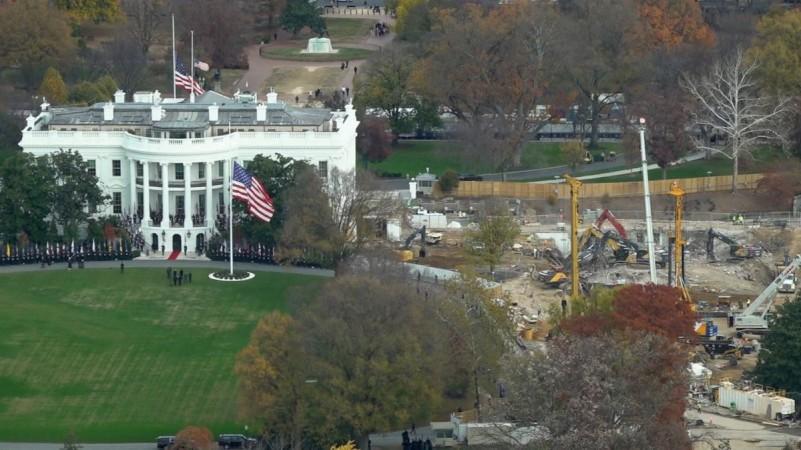
A federal judge on March 31, 2026, ordered the Trump administration to suspend construction of a $400 million White House ballroom, halted due to concerns that the project proceeded without congressional approval. U.S. District Judge Richard Leon granted a preliminary injunction in response to a request from the National Trust for Historic Preservation, a preservationist group, which argued the President exceeded his authority.
The ruling represents the first major judicial rebuke of President Donald Trump's efforts to overhaul the White House. Judge Leon emphasized that while the President oversees the White House, he is not its owner and does not have unilateral authority to undertake major construction without legal approval. He wrote, "The President of the United States is the steward of the White House for future generations of First Families. He is not, however, the owner!"
The injunction temporarily halts ballroom construction but allows work critical to the safety and security of the White House to continue, including underground bunkers and other security measures. The judge acknowledged logistical issues in stopping an ongoing project and paused enforcement of his order for 14 days, during which the administration plans to appeal.
President Trump rejected the ruling, arguing the project is privately funded and suggesting that security-related work allows construction to continue. He emphasized enhancements such as drone-proof roofs, secure air-handling systems, bio-defense measures, bomb shelters, medical facilities, and secure communications, claiming these safety improvements justify continuation.
The National Trust for Historic Preservation welcomed the ruling. President and CEO Carol Quillen said it ensures compliance with the law and proper oversight, calling it "a win for the American people on a project that forever impacts one of the most beloved and iconic places in our nation." The Trust had sued in December, seeking congressional review and independent oversight before construction proceeded.
WASHINGTON (AP) — A federal judge on Tuesday ordered the Trump administration to suspend its construction of a $400 million ballroom where it demolished the East Wing of the White House, barring construction work from proceeding without congressional approval.
— zamohappy (@zamohappy) March 31, 2026
U.S. District… pic.twitter.com/hkgwqZXrxH
The White House ballroom, which will be 90,000 square feet and accommodate 999 people, represents the most significant structural change to the White House since President Harry S. Truman added a balcony on the south side. Trump began demolition of the East Wing last October, prior to receiving approval from the National Capital Planning Commission or the Commission of Fine Arts.
Judge Leon questioned the administration's legal arguments, noting shifting rationales and comparing the massive ballroom project to smaller renovations by past Presidents. The court rejected the claim that prior approvals or private funding give the President unilateral authority for large-scale construction. "This clearly is not how Congress and former Presidents have managed the White House for centuries," he wrote.

The ruling came two days before the National Capital Planning Commission was set to consider approving the addition. The administration maintains that above-ground construction is scheduled to begin in April, while plaintiffs argue the imminence of the project increases the need for judicial oversight.
Since returning to office, Trump has pursued extensive renovations, including patio spaces, flagpoles, bathroom and room renovations, gold flourishes in the Oval Office, and additions to the colonnade. He also plans ceremonial arches near the Lincoln Memorial, renovations of golf courses, and a Kennedy Center overhaul requiring a two-year closure.