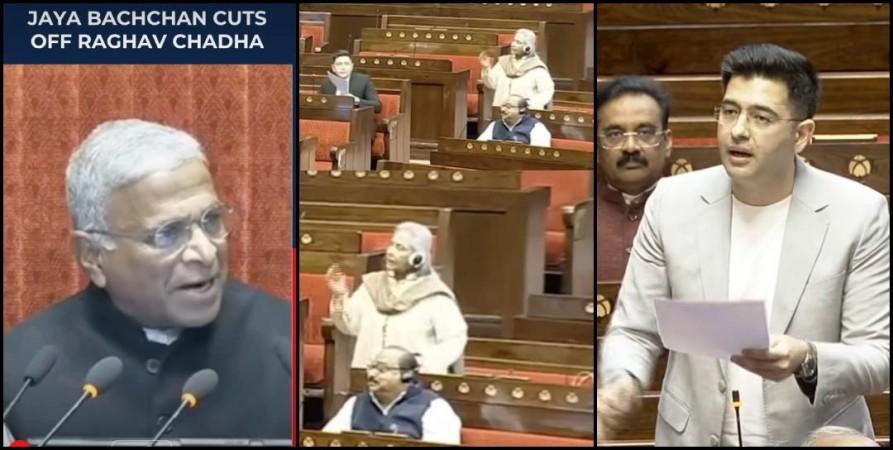
In a dramatic moment during the ongoing Budget Session of Parliament in New Delhi, Aam Aadmi Party (AAP) MP Raghav Chadha's speech in the Rajya Sabha was brought to an abrupt halt after a heated exchange unfolded between him and SP MP Jaya Bachchan.
Proceedings took an unexpected turn when Chadha, who had risen to address the House on issues including proposals for electoral reforms and the right to recall lawmakers, found his speech overshadowed by growing tensions elsewhere in the chamber. As he continued speaking, Jaya Bachchan interrupted, stating, "If given time, I can speak without looking at the paper."
The exchange created visible tension in the House, drawing sharp reactions and sparking debate online.
During the session, Chadha raised concerns about the budget, specifically asking, "What percentage of the budget has been allocated for job creation for 3.1 crore unemployed youth?" He emphasized that, although he is not a numbers expert, these were important queries requiring clarification.
Chadha repeatedly pointed out that if MPs are given sufficient time, they can speak without reading from prepared notes; however, when time is limited, they are forced to read their statements. He highlighted that time allocation is decided by the party during the BSE meeting, not by the Chair, and reminded senior members of the procedural rules.
Jaya Bachchan interjected during Chadha's speech, arguing that experienced MPs could speak without notes if given proper time. She stressed that interruptions and strict adherence to reading statements limit the effectiveness of debate and emphasized that members should be allowed to express their points freely, relying on knowledge and experience rather than merely reading prepared speeches.
During the exchange, other participants instructed MPs not to read from written speeches, reiterating that they are expected to speak to points rather than recite statements verbatim. Chadha noted that every time he gets an opportunity to speak, he faces interruptions, which he found unusual and frustrating.
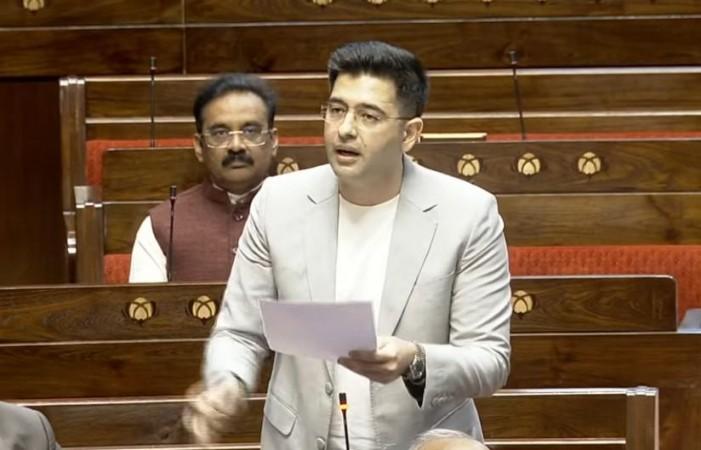
Apart from that Aam Aadmi Party (AAP) Rajya Sabha member Raghav Chadha has strongly advocated for the introduction of a "Right to Recall" mechanism in India, allowing voters to remove non-performing elected representatives such as MPs and MLAs before the end of their term.
Speaking in the Rajya Sabha during Zero Hour, Chadha spoke on the issue, emphasising that the current system lacks accountability and performance evaluation for elected leaders.
Chadha highlighted a key flaw in India's electoral democracy: "Before the election, the leader is after the public, and after the election, the public is after the leader."
He argued that a five-year term is too long in today's fast-paced world, and electing the wrong leader can plunge lakhs of people and entire regions into darkness and backwardness.
The AAP leader stressed that voters deserve the power to correct their mistakes, describing the Right to Recall not as a weapon against politicians, but as an "insurance for democracy".
He pointed out existing provisions in the Indian Constitution and laws, such as the impeachment of the President, removal of the Vice President, Judges and even no-confidence motions against governments, questioning why voters should not have similar recourse against non-performing MPs or MLAs.
Drawing international examples, Chadha noted that the mechanism exists in over 24 democracies, including Canada and Switzerland.
He cited the recall of California Governor Gray Davis in 2003, where 1.3 million constituents signed a petition amid an energy crisis, budget mismanagement, and other issues, leading to his removal after 55 per cent of voters approved it in a special election.
In India, Chadha referenced existing local-level practices, where gram panchayat representatives in states like Karnataka, Madhya Pradesh, Maharashtra, and Rajasthan can be recalled by gram sabha votes.
He proposed safeguards to prevent misuse, including a minimum performance period of 18 months before any recall attempt, specific grounds for removal and a high threshold, such as at least 50 per cent voter approval in a recall vote.
Chadha believes such a system would force political parties to field better candidates, eliminate "non-performing assets", mature India's democracy, and truly empower citizens by giving them ongoing control over their representatives.