In a living democracy the street is not an inconvenience. It is the residual sovereignty of the people made visible. The Indian Constitution does not use the word protest, yet Articles 19(1)(a) and 19(1)(b) guarantee freedom of speech and expression together with the right to assemble peaceably and without arms. These freedoms are subject to the reasonable restrictions set out in Articles 19(2) and 19(3) in the interests of sovereignty, security and public order. The balance is delicate and necessary. The deeper question is how that balance is struck when successive decisions relocate protest sites steadily farther from the centres of decision.
The Supreme Court has repeatedly clarified the constitutional position. In Himat Lal K. Shah versus Commissioner of Police in 1973 the Court held that freedom of assembly is essential to any democratic system because citizens must be able to meet face to face to discuss their ideas and problems. In Mazdoor Kisan Shakti Sangathan versus Union of India in 2018 the Court affirmed that holding peaceful demonstrations to air grievances is a fundamental right, while allowing authorities to regulate time, place and manner so that the rights of residents are not extinguished. In Amit Sahni versus Commissioner of Police in 2020 the Court stated that democracy and dissent go hand in hand, yet demonstrations expressing dissent must take place in designated places and cannot indefinitely occupy public thoroughfares. Regulation is legitimate. Progressive insulation of power is not.
Democracy requires more than periodic elections. It needs continuous accountability. Parliamentary opposition, independent media, civil society and the practical capacity for non-violent resistance form interlocking restraints on concentrated authority. Constitutional scholar Upendra Baxi once observed that the right to protest is the people's residual sovereignty exercised between elections. Historian Ramachandra Guha has noted that India's democratic resilience has always depended on the willingness of ordinary citizens to occupy public space near the institutions they seek to influence. Political scientist Yogendra Yadav has warned that when the physical spaces of assembly are pushed to the margins, the feedback loops that keep elected power responsive begin to weaken.
India's own record proves the point. The JP movement helped end the Emergency. Language agitations reshaped federal politics. The 2011 anti-corruption fast at Jantar Mantar produced legislation and a new political force. The Nirbhaya protests transformed criminal law on sexual violence. The farmers' sit-ins of 2020-21 forced the repeal of three farm laws. Visibility, duration and proximity mattered in every case.
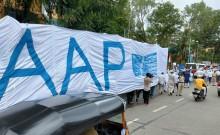
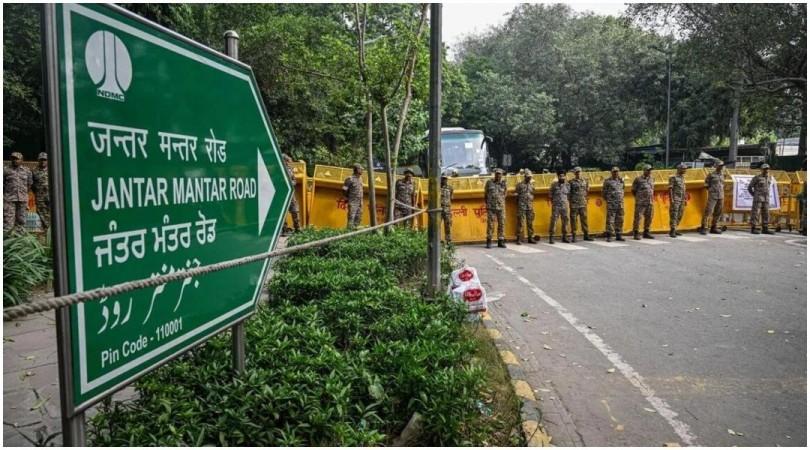
Location is never neutral. A demonstration within sight of Parliament, ministries and media offices carries different political weight from one held kilometres away on the urban fringe. Delhi's protest geography has migrated outward for decades. After Independence the Boat Club lawns along Rajpath offered open space and direct proximity to power. In 1988 hundreds of thousands of farmers occupied those lawns for nearly a week. Security concerns and the scale of that mobilisation led authorities in the early 1990s to close the site to large gatherings. Jantar Mantar Road, still central yet narrower and easier to control, became the practical alternative. For more than thirty years it served as the capital's most recognisable square of dissent, hosting anti-corruption fasts, demands for justice after sexual violence, farmers' drought protests, citizenship law opposition and recent student mobilisations over examination integrity.
That arrangement was imperfect. Prolonged occupations created noise, litter and hardship for residents. Courts correctly insisted on balance. In October 2026 Jantar Mantar was denotified. The new designated venues lie farther from Parliament, leadership residences and the daily flow of citizens and cameras. Capacity may increase, yet isolation grows. Facilities for water, sanitation, medical aid and communication remain uneven. Permission processes can become instruments of delay. The practical effect is to convert a constitutional right into a managed concession exercised at greater distance and lower intensity.
Mature democracies do not exile dissent. London's Parliament Square and Trafalgar Square stand near Westminster. Washington's Lafayette Square faces the White House. Paris retains Place de la Bastille as both symbol and practical gathering ground. These spaces operate under rules of time and manner. They do not abandon the principle that protest belongs near the institutions it seeks to influence.
Recent policing in the capital has sharpened the stakes. Large deployments, mass detentions, internet restrictions and reported force against peaceful demonstrators, journalists and lawyers raise the cost of assembly. Containment becomes simpler when the designated ground is distant and easily sealed. The temptation is understandable. The long-term cost is democratic.
A serious republic would treat protest infrastructure as public infrastructure. Suitable sites should retain reasonable proximity to power and media. They should offer graduated capacity, basic facilities and transparent, time-bound permission processes. Residents' rights must be protected through noise limits, duration caps and cleaning protocols, not by progressive removal of the square itself. Independent monitoring of police conduct is essential.
Two futures now compete. In one, regulated yet accessible grounds still allow citizens to be heard while order is maintained. Courts police the reasonableness of restrictions, and successive governments accept that visible dissent is a feature of legitimacy, not a threat to it. In the other, each new denotification pushes assembly farther outward until the physical spaces of collective voice empty. Expression migrates online or into private venues where scale and spontaneity diminish. The feedback loops that keep elected power responsive between elections weaken.
India's constitutional experiment has endured because its people have repeatedly insisted on being heard. Jantar Mantar was never perfect. Its denotification is not the end of protest. It is a clarifying moment. The true test of a democracy is not whether it permits dissent in theory, but whether it designs the geography, facilities and policing of protest so that the people's voice can still reach the ears of power. When the square of dissent moves farther from the centre, the centre itself grows quieter. And quieter centres do not remain stable forever.
[Major General Dr. Dilawar Singh, IAV, is a distinguished strategist having held senior positions in technology, defence, and corporate governance. He serves on global boards and advises on leadership, emerging technologies, and strategic affairs, with a focus on aligning India's interests in the evolving global technological order.]