The United States and Israel struck Iran's Natanz nuclear facility in an airstrike on Saturday (Mar 21), the Islamic Republic's atomic energy organisation said. This comes as the war in West Asia enters its fourth week. According to a statement carried by Iranian media, the facility's enrichment complex was targeted in a morning attack.
"Following the criminal attacks by the United States and the usurping Zionist regime against our country, the Natanz enrichment complex was targeted this morning," the organisation said in a statement carried by the Tasnim news agency. It added that there was "no leakage of radioactive materials reported" in the area in central Iran.
According to Associated Press, Natanz — Iran's main enrichment site — was also struck in the first week of the war. Satellite images revealed damage to several buildings at the facility following the attack. In a statement, the United Nations' International Atomic Energy Agency (IAEA) confirmed the damage from earlier strikes, saying that "no radiological consequence" was expected.
Spoke with President Dr. Masoud Pezeshkian and conveyed Eid and Nowruz greetings. We expressed hope that this festive season brings peace, stability and prosperity to West Asia.
— Narendra Modi (@narendramodi) March 21, 2026
Condemned attacks on critical infrastructure in the region, which threaten regional stability and…
IAEA calls for 'military restraint'
Following the attack on the nuclear facility, the IAEA said it was looking into Iran's report that the Natanz nuclear site had been targeted during the war. It also called for military restraint to avoid any risk of a nuclear accident.
"The IAEA has been informed by Iran that the Natanz nuclear site was attacked today. No increase in off-site radiation levels has been reported. The IAEA is looking into the report," the watchdog said in a statement on X. "IAEA Director General Rafael Grossi reiterates the call for military restraint to avoid any risk of a nuclear accident."
Iran war enters 22nd day
The conflict in West Asia has entered its 22nd day on March 21. Hostilities began on February 28 when US and Israeli forces launched strikes on Iran, killing Iran's Supreme Leader Ali Khamenei and several other top officials. The operation was named 'Epic Fury' by the US and 'Lion's Roar' by Israel. The attacks came amid heightened tensions between Washington and Tehran and ongoing talks over Iran's nuclear programme.
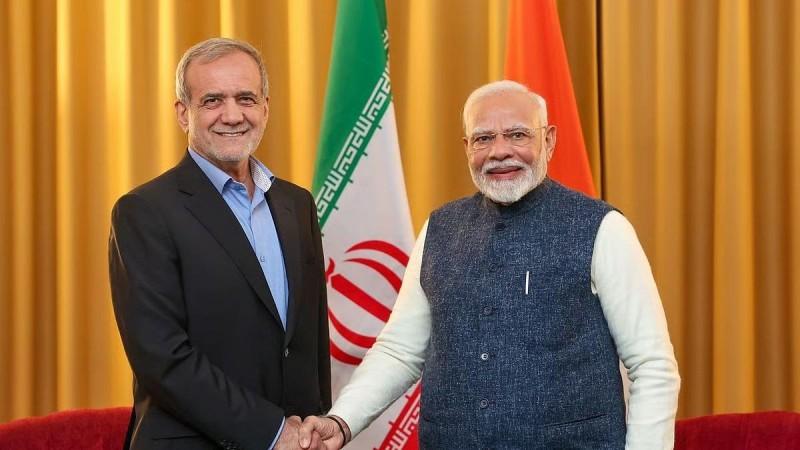
Prime Minister Narendra Modi spoke with Iranian President Masoud Pezeshkian, conveying Eid and Nowruz greetings while condemning recent attacks on critical infrastructure in West Asia. Modi emphasised the need to safeguard freedom of navigation, keep shipping lanes secure, and appreciated Iran's support for the safety of Indian nationals in the country.
Russian President Vladimir Putin congratulated Iranian leaders on Nowruz, reaffirming Moscow's position as a "loyal friend and reliable partner" to Tehran, the Kremlin said. The message comes amid heightened regional tensions, with Russia reiterating its support for Iran during the ongoing conflict.
Tens of thousands of Shia Muslims gathered in Karbala for Eid al-Fitr prayers, where cleric Sheikh Ahmad al-Safi condemned US and Israeli attacks on Iran and Lebanon. Large crowds were seen at Bayn al-Haramayn Square, highlighting strong regional sentiment amid the ongoing conflict.
Iran has permitted limited cargo vessel movement through the Strait of Hormuz despite ongoing US and Israeli attacks, reports said. Shipping data shows multiple vessels transited the strait and unloaded cargo at Khomeini Port, signalling controlled maritime activity as tensions continue to disrupt global shipping routes and energy flows.
United Airlines CEO Scott Kirby said the carrier expects oil prices to remain above $100 per barrel through 2027 and is preparing for potential spikes up to $175. Rising jet fuel costs could add $11 billion annually, prompting route cuts and continued suspension of flights to Tel Aviv and Dubai.