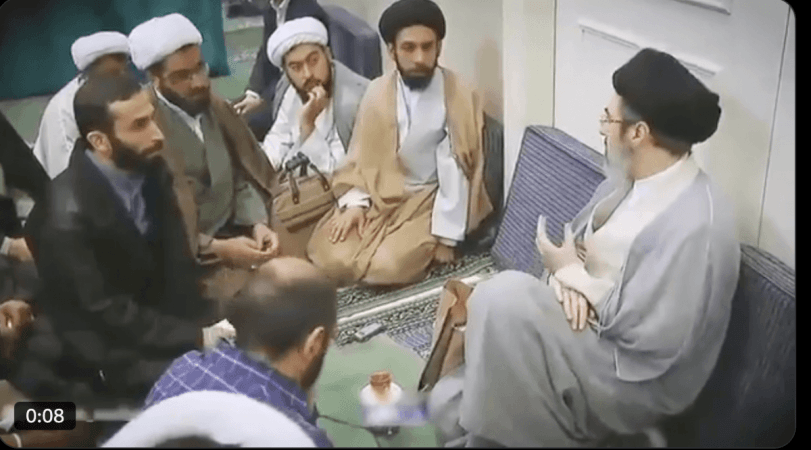
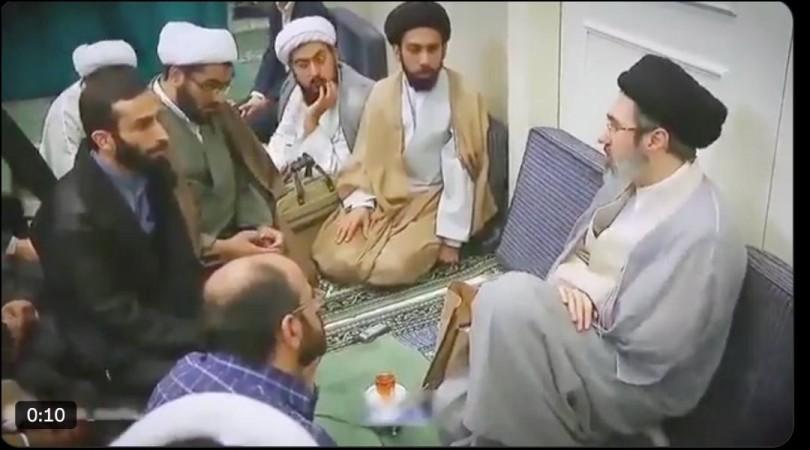
Days after reports in Israeli media claimed that Iran's Supreme Leader Mojtaba Khamenei was in critical condition and had been taken to a hospital, Iran's semi-official Mehr News agency released an undated video appearing to show him in good health.
The video of Mojtaba Khamenei was published for the first time by Mehr, a semi-official news agency sponsored by the government of Iran and run by the Iranian government's Islamic Development Organisation, as an effort to negate mounting speculation over Khamenei's health and whereabouts.
On Friday, Israeli media reports claimed that Khamenei was in an "extremely critical condition". Channel 14, citing sources inside Iran, and The Jerusalem Post, quoting IranWire and sources close to Iranian President Masoud Pezeshkian's administration, reported that concerns over his health were circulating among Iran's leadership. A source cited by The Jerusalem Post said, "We would not be surprised if we heard news of his martyrdom soon."
Khamenei took over as Supreme Leader shortly after his father, Ayatollah Ali Khamenei, was assassinated in joint US-Israeli military strikes on February 28. He has not appeared in public since assuming the position and has communicated only through written statements.
According to reports, Khamenei was injured and may have suffered disfiguring injuries during the initial strikes on his father's compound. The injuries reportedly forced him into hiding, while he has allegedly communicated with senior regime figures through a slow network of intermediaries to avoid being targeted.
Iranian President Masoud Pezeshkian has also acknowledged the difficulty of directly interacting with Khamenei. In a state TV interview, he said that direct interaction with the Supreme Leader is currently "very difficult".
Questions over Khamenei's whereabouts and ability to lead have also emerged in international and regional reports. In July, Saudi news outlet Al Hadath, citing an Israeli security source, claimed that Khamenei was "not in Iran". Around the same time, US President Donald Trump said in a Fox News interview that Iran's top military leadership had been eliminated. He also claimed that Khamenei was "90% gone" and incapacitated following the military campaign.
Earlier on Friday, Israeli media reports had claimed that Khamenei was in an "extremely critical condition". Channel 14, citing sources inside Iran, and an earlier report by The Jerusalem Post, quoting IranWire and sources close to Iranian President Masoud Pezeshkian's administration, reported that concerns over his health were circulating within Iran's leadership.
Iran’s semi-official Mehr News Agency releases video of Supreme Leader Mojtaba Khamenei for the ‘first time’ pic.twitter.com/cuI9erhN2f
— Wunderkind (@EngineerNGR) August 8, 2026
Iranian state officials have previously rejected claims about the severity of Khamenei's initial injuries. Representatives from Iran's Health Ministry described the injuries as superficial, while senior officials maintained that he continues to provide strategic oversight and operational directives.
Conflicting accounts on condition
Around the same time, US President Donald Trump asserted in a Fox News interview that Iran's top military leadership had been eliminated, claiming that Khamenei was "90% gone" and incapacitated following the military campaign.
Iranian state officials have previously downplayed the severity of his initial injuries, but the persistent lack of live appearances or direct public addresses continues to fuel intense regional and international speculation regarding his health and leadership stability.
While Western and opposition intelligence sources have frequently suggested that he sustained severe or disfiguring injuries, leading to his total absence from live public appearances and reliance solely on written statements, Iranian state officials have offered contrasting accounts.
Representatives from Iran's Health Ministry previously characterised his initial injuries as superficial, and senior officials have maintained that he continues to provide strategic oversight and operational directives for the country.


![Saif Ali Khan makes Instagram debut, follows only wifey Kareena Kapoor Khan [Reactions]](https://data1.ibtimes.co.in/en/full/839635/saif-ali-khan-makes-instagram-debut-follows-only-wifey-kareena-kapoor-khan-reactions.jpg?w=220&h=138)