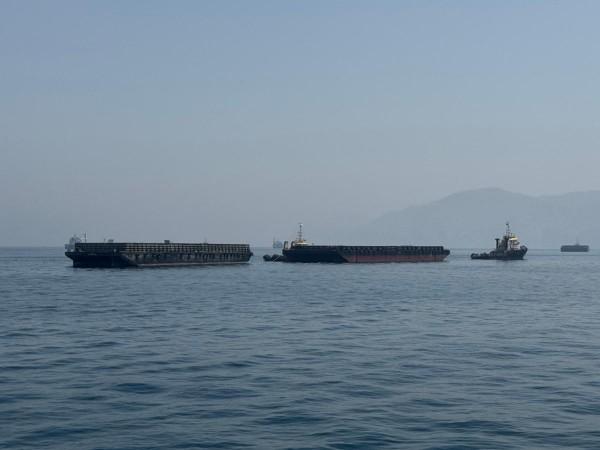
India has safely navigated 62 India-bound vessels through the Strait of Hormuz amid the ongoing West Asia crisis, even as reports suggest Iran and Oman have reached an understanding to reopen the strategically vital waterway for commercial shipping.
Minister of Ports, Shipping and Waterways Sarbananda Sonowal informed Parliament on Friday that, as of August 3, a total of 62 India-bound ships had successfully transited the Strait of Hormuz, including 23 Indian-flagged vessels and 39 foreign-flagged ships carrying Indian interests. He also said that 4,052 Indian seafarers have been repatriated from the Gulf region.
The minister said the Directorate General of Maritime Administration (DGMA) has been regularly updating its advisories in view of the evolving maritime security situation in the Middle East to ensure the safety and security of Indian seafarers.
In response to renewed attacks on merchant vessels, the Directorate General of Shipping has mandated the implementation of full International Ship and Port Facility Security (ISPS) Code measures and advised against deploying Indian seafarers on voyages transiting through the Gulf region, Sonowal said in a written reply in the Lok Sabha.
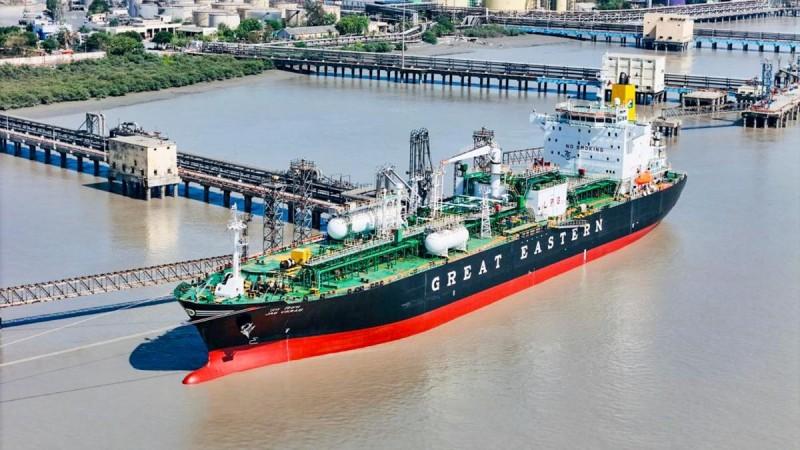
The DGMA has also issued advisories for Indian and foreign-flagged vessels carrying Indian seafarers operating in the Black Sea, calling for enhanced caution, voyage-specific security assessments, strict adherence to security protocols and immediate reporting of incidents.
Similarly, ships operating in the Bab-el-Mandeb Strait, the southern Red Sea and adjoining Yemen waters have been directed to exercise utmost caution, continuously monitor security developments and implement additional risk mitigation measures.
To safeguard Indian seafarers from the onset of the Strait of Hormuz crisis, the government established a dedicated 24x7 Control Room, maintains a live vessel-and-crew database and issues Situation Reports (SITREPs) every 24 hours to track vessel movements, Indian seafarers, incidents and casualties.
The DGMA has also developed the eNavik Portal, an integrated digital platform featuring 24x7 Marine Casualty Reporting, Crisis Management and Seafarer Grievance Redressal modules to enable prompt reporting, automated routing to authorities and real-time tracking of response measures.
The evolving maritime security situation is being closely monitored through the DG Communication Centre (DGCOMM) in coordination with the Indian Navy, flag states, coastal authorities, shipowners, ship managers, Recruitment and Placement Services Licence (RPSL) agencies and other stakeholders.
Sonowal added that inter-agency coordination is being maintained with the Ministry of External Affairs, the Indian Navy and Indian missions abroad. International coordination for evacuating stranded seafarers is also underway through mechanisms involving the International Maritime Organization (IMO), the UK Maritime Trade Operations (UKMTO), the Maritime Information Cooperation & Awareness (MICA) Centre and coastal states.
He further said welfare assistance is being extended through continuous engagement with the families of affected seafarers, while compensation is provided in cases of fatalities. Immediate financial assistance of Rs 10 lakh is also released through the Seafarers Welfare Fund Society.
Meanwhile, Saudi-based Al Hadath and Al Arabiya television channels reported, citing senior sources, that Iran and Oman have reached an understanding on the framework of an agreement to reopen the Strait of Hormuz for 60 days.
According to the reports, the proposed agreement, which still requires approval from Iran's Supreme National Security Council and could be announced within days, aims to restore commercial navigation through the strategically important waterway.
Under the reported arrangement, vessels entering the strait would use a route closer to Iran, while outbound ships would sail closer to Oman. No transit fees or service charges would be imposed, and regional countries could participate in demining operations and technical procedures.
The reports also stated that, once approved, Iran and the United States would resume implementing their peace Memorandum of Understanding (MoU), including provisions related to reopening the strait and ensuring the safe passage of commercial shipping. Indirect negotiations between Tehran and Washington are reportedly continuing through mediators and have entered their final stage.
Iran tightened its control over the Strait of Hormuz on February 28 after barring vessels linked to Israel and the United States following joint military strikes on Iranian territory. Although Iran and the United States signed an MoU in June aimed at ending regional hostilities, subsequent escalation in the region has cast uncertainty over further negotiations.
Separately, Iran's Acting Defence Minister Brigadier General Majid Ebn-e-Reza said on Thursday that the country's armed forces remain fully prepared to respond to any threat, stressing that Iran's indigenous defence capabilities provide it with significant military strength. He claimed that countries seeking security through foreign military systems would eventually realise the superiority of Iran's domestically developed defence technology.






![Siwet Tomar thrown out of Rise & Fall after he pushes, hits ex-BJP spokesperson Shehzad Poonawalla [Watch]](https://data1.ibtimes.co.in/en/full/838545/siwet-tomar-thrown-out-rise-fall-after-he-pushes-hits-ex-bjp-spokesperson-shehzad-poonawalla.jpg?w=220&h=138)