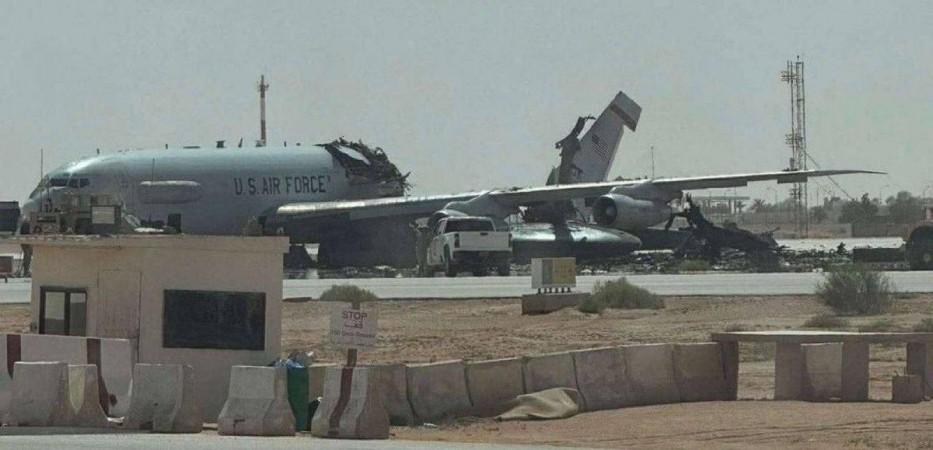
Fresh images circulating online suggest that a US Air Force E-3 Sentry Airborne Warning and Control System (AWACS) aircraft may have been severely damaged during an Iranian missile and drone strike on Prince Sultan Air Base on March 27.
Strike Targeted High-Value Military Assets
The reported attack appears to have focused on critical US military infrastructure stationed at the base. Alongside the AWACS platform, multiple KC-135 aerial refuelling tankers are also believed to have sustained damage. Early reports indicate that more than a dozen US personnel were injured, underscoring the scale and intensity of the strike despite active air defence systems in place.
??? Photos are coming out showing a US Air Force E-3 Sentry completely destroyed on the ground at Prince Sultan Airbase after the Iranian attack.
— Mario Nawfal (@MarioNawfal) March 29, 2026
Source: @RapidReport2025 https://t.co/vYSsbjY2wq pic.twitter.com/mN3J7U1MpK
Why The E-3 Sentry Matters
The E-3 Sentry is a cornerstone of US aerial surveillance and command operations. Developed in the 1970s, the aircraft provides real-time radar coverage extending over 200 miles, enabling forces to detect threats, monitor airspace, and coordinate combat missions.
With an estimated replacement cost of $500 million to $700 million and a limited fleet of roughly 31 aircraft, any damage to an AWACS platform represents a significant operational setback.
Impact On Military Operations
If confirmed, the damage to the AWACS aircraft could disrupt US military coordination across the Middle East. These platforms act as airborne command centres, essential for managing air operations, tracking incoming threats, and directing allied forces in real time.
Defence experts have long noted that replacing or repairing such specialised systems is both time-consuming and complex, meaning even a single loss can affect operational readiness in the region.