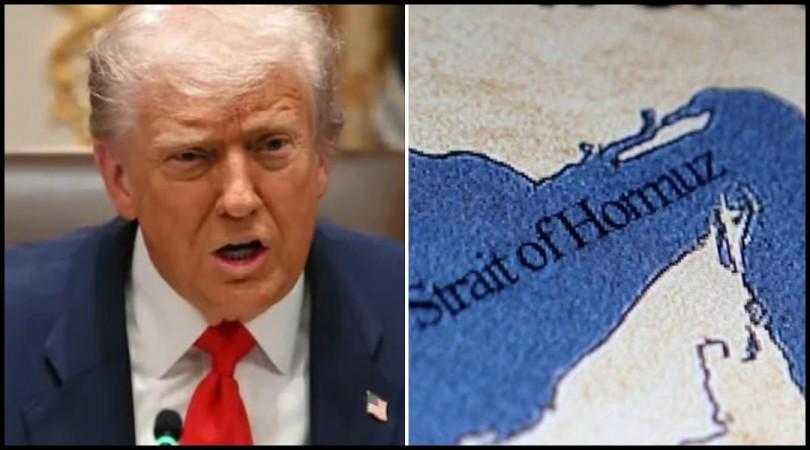
The US military has paused its strikes on Iran after President Donald Trump announced a two-week ceasefire with Tehran, providing a last-minute off-ramp that delayed his threat to target Iran's power grid and bridges. Trump said the proposal, put forward by Pakistan, includes opening the Strait of Hormuz — through which a fifth of the world's energy supplies pass — while Washington and Tehran attempt to negotiate a peace deal.
Tehran confirmed its acceptance of the proposal. Iranian Foreign Minister Abbas Araghchi stated that if the US and Israel halt their attacks, Iran will also suspend its "defensive operations" for the two-week period. Araghchi, a veteran of past nuclear negotiations with the United States, added that the Iranian military will coordinate vessel passage through the critical waterway during the ceasefire, while emphasizing that "Iran's Armed Forces" would maintain control over the passage.
Tehran also claimed victory in the conflict, which began after US-Israeli strikes on February 28, asserting that it compelled the United States to accept its 10-point plan. This plan includes lifting sanctions and recognizing Iran's nuclear enrichment program. According to Iran's Supreme National Security Council, the ceasefire framework requires "continued Iranian control over the Strait of Hormuz, acceptance of enrichment, and lifting of all primary and secondary sanctions."
Other key elements of the proposal, transmitted through Pakistani mediators, include US military withdrawal from the Middle East, an end to attacks on Iran and its allies, the release of frozen Iranian assets, and a UN Security Council resolution making the agreement binding. "Adoption of such a resolution would render all these agreements binding under international law and constitute a significant diplomatic victory for the Iranian nation," the council stated.
Significantly, the plan calls for expanded Iranian control over the Strait of Hormuz, a vital route for around a fifth of global oil supplies, which has effectively been blocked to maritime traffic since the start of the five-week conflict.
On Truth Social, Trump said he has received a "workable" 10-point ceasefire proposal from Iran. He explained that the US agreed because it has already met and exceeded all military objectives and is close to a "definitive agreement concerning long-term peace with Iran and peace in the Middle East."
Trump said, "Based on conversations with Prime Minister Shehbaz Sharif and Field Marshal Asim Munir of Pakistan, who requested I hold off the planned attacks, and subject to Iran agreeing to the COMPLETE, IMMEDIATE, and SAFE OPENING of the Strait of Hormuz, I agree to suspend bombing and attacks for two weeks. This will be a double-sided ceasefire."
He added that Iran has agreed to nearly all points of past contention, and the two-week period will allow a permanent agreement to be finalized.
"Almost all points of past contention have been agreed to between the United States and Iran. This two-week period will allow the agreement to be finalized and consummated. On behalf of the United States, and representing the countries of the Middle East, it is an honor to have this long-term problem close to resolution," Trump said.
Iran's 10-Point Conditions
The 10-point plan that the US has deemed "workable" includes:
- Non-aggression
- Continuation of Iran's control over the Strait of Hormuz
- Recognition of nuclear enrichment
- Lifting of all primary sanctions
- Lifting of all secondary sanctions
- Termination of all UN Security Council resolutions
- Termination of all IAEA Board of Governors resolutions
- Payment of compensation to Iran
- Withdrawal of US combat forces from the region
- Cessation of war on all fronts, including against the Islamic Resistance of Lebanon