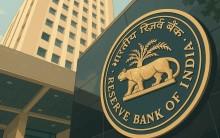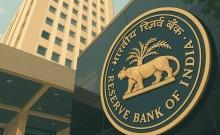

India's foreign exchange reserves, a cornerstone of its macroeconomic stability and a testament to decades of prudent policy, currently stand at approximately $690–697 billion as of mid-May 2026. This follows a peak near $728.5 billion earlier in February 2026. While still offering import cover of around 10–11 months and ranking among the world's largest buffers, these reserves face unrelenting pressure from a sophisticated, multi-channel exodus of capital.
Royalty repatriations by multinational corporations, IPO-driven capital recycling to foreign parents, collapsing or volatile net FDI, a sharp surge in outward investments by Indian firms, sustained FPI outflows, and documented misuse of the Liberalised Remittance Scheme (LRS) collectively paint a picture of "unplugged loot."
Cumulative leakages since 2015 likely run into several hundred billion dollars. This raises profound questions about regulatory oversight, transfer pricing enforcement, post-IPO fund utilisation, and the long-term resilience of India's external sector amid geopolitical volatility and global risk aversion.
Royalty Repatriations: The Persistent Silent Hemorrhage
Repatriation of profits through royalties, technical fees, brand licensing, patent payments, and R&D secondments constitutes one of the largest and most opaque drains on India's forex reserves. These payments often flow directly to overseas principals with limited transparent benchmarking against arm's-length principles or genuine value addition.
LG India owed roughly 73% of its contingent liabilities of ₹4,715 crore as royalty to its Korean parent in FY 2023-24, equating to approximately ₹3,442 crore.
Hyundai Motor India Ltd (HMIL) reported royalty outgo to Hyundai Motor Corporation (HMC) of ₹14,358.19 crore in the financial year ended March 31, 2023 a nearly 30% increase from ₹10,973.36 crore in FY22. During April–December FY24, HMIL paid an additional ₹8,088.80 crore.
Samsung India Ltd hiked its royalty payments by 50% in FY 2023-24 to ₹3,322 crore ($394 million).
Apple India Inc remitted ₹4,490 crore ($532 million) in the same period.
In FY 2024-25, other prominent remitters included Nestlé India (₹900 crore), ABB India (₹503 crore), Maruti Suzuki (₹5,038 crore), and Hindustan Unilever (₹1,239 crore).
Since 2015, over 5,000 foreign companies have collectively transferred royalties, patents, technical know-how, and ancillary payments running into three-figure billion USD. South Korean majors alone have repatriated nearly $4.7 billion in recent periods. Many MNCs extract combined dividend-plus-royalty payouts far exceeding their equity stakes, with royalties often claiming 20–50% or more of Indian subsidiary profits.
Analysis: Transfer pricing disputes frequently arise in these cases. Indian tax authorities have challenged royalty rates, arguing in some instances (e.g., contract manufacturing setups) that payments lack justification. Courts have occasionally upheld arm's-length deductions, but systemic concerns persist about aggressive profit shifting. Global experts note that while technology transfer justifies some payments, opaque "fine print" arrangements can erode the host country's forex position without commensurate local capacity building.
IPOs by Foreign Subsidiaries: Monetising Indian Markets for Overseas GainForeign-owned entities have aggressively accessed India's buoyant capital markets. HMIL raised ₹27,858 crore through its IPO in October 2024. LG Electronics India's October 2025 IPO was oversubscribed 54.02 times, with nearly ₹4.5 lakh crore ($52 billion) blocked against an issue size of ₹11,607 crore ($1.3 billion). It posted nearly 50% listing gains the highest ever for an Indian IPO above ₹10,000 crore, surpassing Coal India's 40% debut in 2010 after a 15-year gap.
Critical Gap: There is limited independent scrutiny to verify whether IPO proceeds are deployed strictly for stated purposes in India or whether a significant portion ultimately recycles back to overseas principals via enhanced royalties, dividends, or other mechanisms.
These IPOs effectively allow foreign parents to monetise Indian operations, raise low-cost domestic capital, and maintain strong forex implications.
From a governance perspective, this represents a sophisticated form of capital recycling that boosts headline inflows while facilitating outflows.
FDI Realities: Gross Strength Masking Net Weakness
Gross FDI inflows have demonstrated resilience, reaching $81.04 billion in FY 2024-25 (up 14%) and equity inflows of $47.87 billion in April–December 2025. However, net FDI tells a more sobering story. From annual peaks near $45 billion, net flows have frequently dipped below $1 billion and turned negative in multiple months for FY 2025-26 periods, among the lowest on record.
This net figure is heavily depressed by two factors: (1) increased outward direct investments by Indian corporations (FDI outflow), and (2) exits, sales, or profit repatriations by existing foreign investors, private equity, and venture capital funds amid buoyant public markets. India Direct Investment Abroad expanded by $7.5 billion in December 2025 (following $9.4 billion in the prior quarter).
According to Morgan Stanley, net FDI stood near historic lows at just $0.5 billion on a 12-month trailing basis as of early 2026, constrained by repatriation exceeding $50 billion annually and outward FDI surging. "The outlook for gross FDI remains constructive, even as net FDI may remain subdued in the near term," the report noted.
Outbound Investments: India's overseas commitments jumped 67.74% to $41.6 billion in FY 2024-25 from $24.8 billion the previous year, per EY's report "India Abroad: Navigating the Global Landscape for Overseas Investment 2025." Cumulative actual Outward Direct Investment (ODI) from April 2000 to June 2022 reached ~$263.3 billion. Average annual outward investment since 1993 stands at ~$3.9 billion. Indians invested over $2.2 billion in overseas equities and debt in the 11 months through February (60% YoY jump), while global feeder funds managed locally hit a record $4 billion in March 2025.
Notable examples include the Tata Group's transformative acquisitions (Tetley, Corus, Jaguar Land Rover, Daewoo, NatSteel, etc.), Wipro's 2019 purchase of International Techne Group (ITI) for product lifecycle management, ONGC Videsh Ltd's $121.8 million in Myanmar's Shwe project, and Lanka IOC's phased Sri Lankan investments.
Perspectives: Pro-globalisation analysts view outward FDI as strategic — building supply chain resilience, accessing new markets, and enhancing India's global corporate footprint. Sceptics argue it exacerbates the net capital account strain at a time when domestic investment needs remain high. Former RBI Deputy Governor Michael Patra has advocated building reserves toward a $1 trillion buffer for greater policy space
FPI Outflows: Geopolitical and Macro Pressures
Foreign Portfolio Investors have been net sellers. In the week ended May 15, 2026, they pulled out ₹13,740.89 crore. For 2026 so far, equity outflows have crossed ₹2.20 trillion ($26+ billion) surpassing the entire ₹1.66 trillion withdrawn in 2025. Drivers include West Asia tensions (Iran-related), crude oil spiking above $100/barrel, rupee weakness near ₹96/USD, and global risk-off sentiment.
Domestic Institutional Investors (DIIs) have stepped up, achieving a record 17.62% share of the Indian capital market by March 31, 2025 (up from 16.89%), with ₹1.89 lakh crore net investment in Q4 FY25. This has surpassed FIIs' 17.22% share but raises questions about the sustainability of filling the "void" left by foreign capital, especially regarding long-term earning capacity and valuation support.
LRS Misuse: Liberalisation's Regulatory Arbitrage Challenge
In one of his early decisions upon assuming office in 2014, Prime Minister Narendra Modi raised the annual LRS limit from $100,000 to $250,000 to facilitate legitimate personal outflows for education, medical treatment, family maintenance, travel, and gifting. Introduced by the RBI in 2004 under FEMA, it operates with minimal compliance (primarily Form A2).
Enforcement Directorate investigations have exposed misuse by HNIs. The 2024 raid on the Hiranandani Group uncovered an offshore trust exceeding $60 million, structured via opaque routes and disguised as permissible remittances, allegedly violating 180-day repatriation norms. In May 2023, the ED seized ₹41.64 crore in Mumbai properties linked to Zavareh Soli Poonawalla and family for alleged LRS-funded UK property investments through controlled offshore entities. The 2016 Panama Papers highlighted offshore structures in Panama, BVI, and Seychelles; a Multi-Agency Group (MAG) was formed, yet KYC bypass and treaty misuse concerns endure.
RBI data for February 2026 alone showed LRS utilisation for immovable property ($51.36 mn), equity & debt ($265.99 mn), foreign travel ($1.37 bn), maintenance of relatives ($266.18 mn), and overseas study ($175.68 mn) with minimal end-use verification.
Broader Analyses, Global Expert Perspectives, and Governance Imperatives
The aggregate of these channels aggressive royalty extraction, IPO recycling, net FDI drag, ODI surge, FPI exits, and LRS leakages suggests hundreds of billions in cumulative outflows since 2015. That reserves remain robust is "a miracle of management," yet questions abound: Are MNC subsidiary valuations for IPOs independently audited? Do royalty rates undergo rigorous transfer pricing scrutiny? Are LRS remittances randomly post-audited? What enforcement actions have RoC, ED, SEBI, or tax authorities taken?
Diverse Perspectives: Optimists highlight India's deepening global integration, technology inflows, and corporate globalisation as essential for Viksit Bharat. Gross FDI strength and DII maturation signal resilience.
Pessimists warn of asymmetric liberalisation: easy market access for MNCs with limited reciprocity in oversight, combined with weak monitoring, hollows out reserves.
A weaker rupee aids outbound investments but inflates oil and import bills.PM Modi's public appeals for conserving forex urging restraint on gold imports, fuel consumption, and foreign travel underscore the stakes, placing responsibility on citizens uninvolved in high-level flows. Economists like Anubhuti Sahay (Standard Chartered) and Madhavi Arora (Emkay) affirm reserves remain adequate but note elevated benchmarks for adequacy amid capital flow volatility.
timesofindia.indiatimes.com
Morgan Stanley warns that persistently weak net FDI could heighten reliance on volatile portfolio flows, with implications for currency stability. Former RBI officials advocate $1 trillion+ buffers for defence.
Way Forward: Enhanced transparency, random audits, stricter transfer pricing enforcement, better end-use verification for LRS and IPOs, and balanced policy recalibration are essential. Plugging these leaks is not about de-globalisation but ensuring liberalisation serves national interest, sustainable growth, and the 1.4 billion Indians who bear the ultimate cost of external vulnerabilities.
India's external position has demonstrated remarkable resilience, but in an era of geopolitical fragmentation and capital flow volatility, proactive governance is imperative to convert potential crisis into enduring strength.
(Data for the above has been drawn from RBI, DPIIT, EY, NSDL, ED, Morgan Stanley, and market filings as of May 2026.)
[Major General Dr. Dilawar Singh, IAV, is a distinguished strategist having held senior positions in technology, defence, and corporate governance. He serves on global boards and advises on leadership, emerging technologies, and strategic affairs, with a focus on aligning India's interests in the evolving global technological order.]