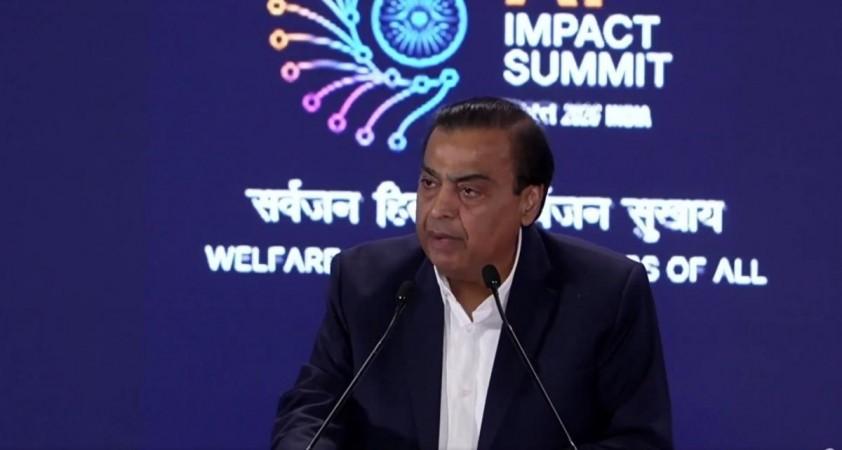
In mid-February 2026, at and around the India AI Impact Summit in New Delhi, three of India's most formidable conglomerates unveiled commitments that instantly catapulted the nation toward AI infrastructure superpower status, blending massive capital with strategic vision in a coordinated private-sector surge never before seen at this scale in the country. Mukesh Ambani's Reliance Industries and Jio pledged ₹10 trillion, or $110 billion, over seven years through 2033 to build multi-gigawatt AI data centers already under construction in Jamnagar, Gujarat, with the first 120 megawatts coming online in the second half of 2026, a nationwide edge-compute network layered on Jio's 5G and future 6G infrastructure for sub-10-millisecond latency delivery to 1.4 billion citizens, and up to 10 gigawatts of surplus green solar power from Kutch and Andhra Pradesh projects, explicitly aiming to slash the cost of intelligence as dramatically as Jio did for data in 2016 while ensuring India never has to "rent intelligence" from abroad.
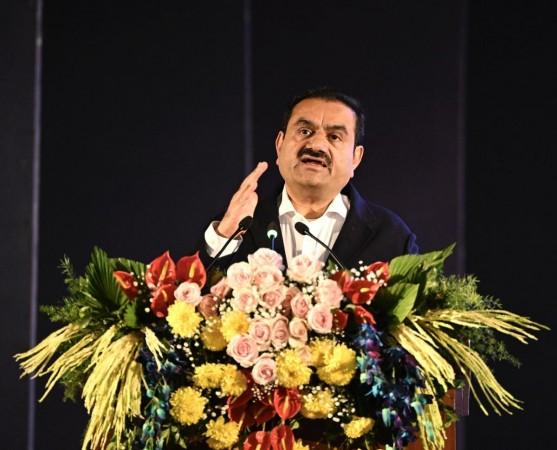
The Tata Group simultaneously signed a landmark multi-year partnership with OpenAI under the OpenAI for India banner, anchoring TCS's HyperVault data-center platform as the first customer for Sam Altman's global Stargate expansion with 100 megawatts of AI-ready capacity scaling to one gigawatt for full data residency and compliance, deploying ChatGPT Enterprise across hundreds of thousands of Tata employees including up to 600,000 at TCS, jointly crafting agentic AI solutions for manufacturing, healthcare, agriculture and finance, opening new OpenAI offices in Mumbai and Bengaluru, and committing to skill at least one million Indian youth with TCS as OpenAI's first non-United States certification partner. On February 17, the Adani Group announced a $100 billion direct investment by 2035 to expand its AdaniConnex platform from two gigawatts to five gigawatts of renewable-powered hyperscale AI-ready data centers as the world's largest integrated platform, backed by a $55 billion renewable energy expansion including the massive Khavda assets, while catalysing an additional $150 billion in ecosystem spending on server manufacturing, advanced electrical infrastructure, sovereign cloud platforms and supporting industries to forge a $250 billion overall AI infrastructure ecosystem, highlighted by India's largest gigawatt-scale facility in Visakhapatnam in partnership with Google and further sites in Noida, all driven by Chairman Gautam Adani's declaration that India will own the complete five-layer AI stack for total technological sovereignty.
Far-Reaching Implications: Sovereignty, Democratization and National Resilience
These synchronized announcements, exceeding $310 billion in direct capital plus powerful multiplier effects, deliver profound strategic advantages by securing sovereign control over AI compute in an era when intelligence infrastructure has become as vital as energy or defence, enabling unbreakable data residency, ironclad regulatory oversight and resilience against foreign sanctions or supply disruptions that have repeatedly exposed vulnerabilities in global tech dependencies. Reliance's affordability playbook promises to transform AI from an elite tool into a daily utility priced for India's masses, delivering multilingual, low-latency services that supercharge precision farming for millions of smallholders, enable instant regional-language diagnostics in rural clinics, provide personalised tutoring to 250 million schoolchildren, and optimise logistics across Adani's ports and energy networks fused with Jio's edge layer. Tata's enterprise-scale rollout inside one of the world's biggest conglomerates will accelerate internal productivity while exporting proven agentic solutions worldwide, creating a virtuous cycle of adoption that modernises India's $4 trillion economy sector by sector. Environmentally, the heavy reliance on green power across all three initiatives positions India as a global leader in sustainable AI, slashing carbon footprints compared with coal-dependent alternatives elsewhere and aligning perfectly with national net-zero goals while mitigating the projected 40-45 terawatt-hour surge in electricity demand from AI data centres by 2030.
Explosive Opportunities: Jobs, Innovation Ecosystems and Global South Leadership
The opportunities unlocked are immense and multifaceted, starting with the direct creation of hundreds of thousands of high-skill jobs in data-centre construction, liquid-cooling manufacturing, green hydrogen, semiconductor packaging and AI engineering, while spurring a vibrant domestic supply chain that could attract tens of billions in additional foreign direct investment from hyperscalers hungry for reliable, low-cost, democratically governed capacity. Reliance's edge network combined with Adani's integrated energy-logistics backbone and Tata's skilling depth will ignite an innovation explosion, enabling Indian startups to build foundation models tailored to 22 official languages, generate localised synthetic data sets, and deploy vertical agents that solve uniquely Indian problems in agriculture, healthcare and governance rather than relying on generic foreign imports. For the Global South, India emerges as the natural hub for affordable sovereign AI exports to Africa, Southeast Asia and Latin America, where similar infrastructure gaps exist, potentially generating tens of billions in new service revenues and forging geopolitical soft power through technology leadership. Economically, these moves could add 1-2 percentage points to annual GDP growth through widespread productivity gains across MSMEs and large industries alike, while the $250 billion Adani ecosystem alone will catalyse ancillary sectors from advanced materials to renewable equipment manufacturing, mirroring how Jio's earlier disruption added hundreds of billions in economic value and connected half a billion new users in record time.
The Global Benchmark: Closing the US-China Compute Abyss
Placed against the ferocious pace of the United States and China, India's announcements, while historic and game-changing domestically, still highlight a significant absolute gap that the country must close rapidly to move from contender to co-leader. American hyperscalers including Microsoft, Amazon, Alphabet, Meta and Oracle plan $660-690 billion in capital expenditure for 2026 alone, almost entirely AI-related, on top of an existing 54-gigawatt data-centre power base projected to triple by 2035 and roughly two-thirds of global frontier training clusters. China, operating with state-orchestrated speed despite export controls, poured over $125 billion into AI-related infrastructure in 2025 and targets another $70 billion for data centres in 2026, racing toward 300 exaflops of compute across more than 250 dedicated facilities with power capacity growing 30 percent year-on-year. India's current installed data-centre capacity stands at approximately 1.5 gigawatts, representing a low single-digit share of global compute despite generating nearly 20 percent of the world's data, meaning the combined Reliance, Adani and Tata pledges, though equating to roughly one-third of a single year's US hyperscaler outlay when spread over years, represent only the beginning of what is needed. Projections show India scaling to 8-10 gigawatts by 2030, a fivefold-plus jump, yet trillions in cumulative investment over the next decade will be essential to avoid perpetual dependence on rented foreign intelligence and truly compete at the frontier.
Execution Roadmap: Power, Talent and Policy Must Accelerate Dramatically
To translate this momentum into lasting dominance, India must execute with Jio-like urgency across three non-negotiable fronts: modernising the national power grid at unprecedented speed to handle gigawatt-scale loads with transmission losses cut well below current double-global-average levels, while integrating massive renewable inflows without compromising reliability. Talent retention and frontier research demand immediate action through domestic AI labs, generous R&D tax credits, competitive compensation packages and reverse-brain-drain incentives to keep the country's world-class engineers and researchers at home rather than losing them to Silicon Valley. Regulatory sandboxes must operate at startup velocity, fast-tracking innovation in advanced chip packaging, localised synthetic data for non-English languages and seamless public-private compute integration, all supported by policy frameworks that match the agility of these corporate giants instead of traditional bureaucratic timelines. With current capacity poised to more than quintuple by 2030 under these investments, flawless coordination between private ambition and enabling government action will determine whether India merely catches up or leapfrogs to define accessible, sovereign and sustainable AI for the world.
A Defining Watershed for the Intelligence Age
February 2026 will be remembered as the moment India's private sector giants declared they would no longer watch the AI revolution from the sidelines but would instead architect it on their own terms, fusing Ambani's nation-building scale and affordability DNA, Tata's enterprise credibility and skilling prowess with OpenAI, and Adani's renewable-energy mastery and ecosystem catalysis into a uniquely Indian model of inclusive, green and sovereign intelligence. The real work now begins, but if execution matches the ambition, these pledges will not only modernise the lives of 1.4 billion citizens and add trillions in long-term economic value; they will position India as the indispensable bridge and leader for the Global South in the intelligence century, proving that democratic capital, patient vision and technological self-reliance can reshape the global order. The giants have united with unprecedented force. India's AI destiny now rests on delivering at the speed the world demands.
[Major General Dr. Dilawar Singh, IAV, is a distinguished strategist having held senior positions in technology, defence, and corporate governance. He serves on global boards and advises on leadership, emerging technologies, and strategic affairs, with a focus on aligning India's interests in the evolving global technological order.]