Senior trade officials from India and the United States have begun a four-day round of negotiations in New Delhi aimed at finalising the details of an interim trade agreement while simultaneously advancing discussions on a broader Bilateral Trade Agreement (BTA).
The talks, which commenced on June 1 and will continue until June 4, are being led by US chief negotiator Brendan Lynch and India's Additional Secretary in the Department of Commerce, Darpan Jain.
The current round focuses on finalising the legal and operational aspects of the interim trade pact, the framework for which was agreed upon in February 2026. According to the Commerce Ministry, discussions are also covering market access, non-tariff barriers, customs procedures, trade facilitation, investment promotion and economic security cooperation.
India and the US had announced the first phase of the trade agreement on February 7. Under the proposed framework, Washington agreed to reduce tariffs on Indian products to 18 per cent from 50 per cent and remove an additional 25 per cent tariff imposed on certain Indian goods linked to purchases of Russian oil.
However, subsequent developments in the US legal and policy landscape altered the trajectory of negotiations.
On February 20, the US Supreme Court ruled against President Donald Trump's reciprocal tariff measures that had been imposed under emergency powers legislation. Following the ruling, the US administration introduced a temporary 10 per cent tariff on imports from all countries for 150 days beginning February 24.
The changes led to the postponement of a planned February meeting between negotiators. Discussions resumed in April when an Indian delegation travelled to Washington for further consultations.
Expanding trade and investment ties
As part of the proposed arrangement, India has offered to reduce or eliminate tariffs on several US industrial and agricultural products, including nuts, fruits, soybean oil, animal feed ingredients, wine and spirits.
India has also indicated plans to purchase nearly USD 500 billion worth of US goods over the next five years, including energy products, aircraft, technology equipment, precious metals and coking coal.
Officials believe the latest round of discussions will help both sides reassess the framework in light of recent policy developments and move closer to concluding the interim agreement.
Technology partnership moves into execution phase
Alongside trade negotiations, India and the United States are significantly expanding cooperation in strategic technologies, particularly semiconductors and artificial intelligence (AI).
The partnership, which received fresh momentum during US Secretary of State Marco Rubio's recent visit to India, has evolved from strategic dialogue to large-scale industrial execution.
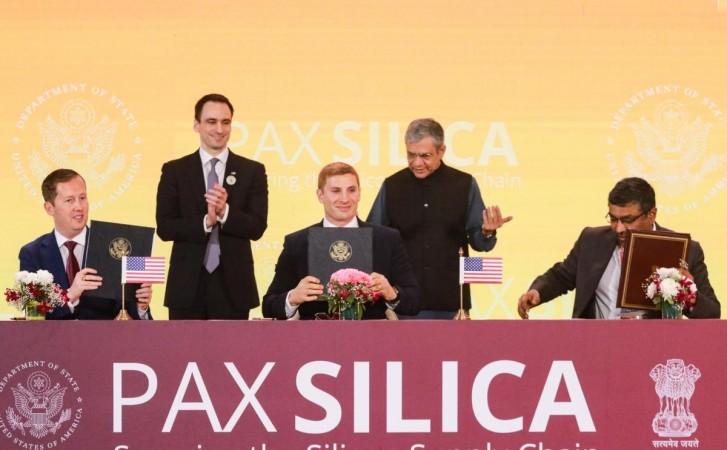
Anchored by the US-India TRUST (Transforming the Relationship Utilizing Strategic Technologies) Initiative and the PAX Silica Declaration, the two countries are collaborating to build trusted technology supply chains, expand computing infrastructure and establish joint research and development programmes.
The vision for deeper technology cooperation was outlined by Prime Minister Narendra Modi and US President Donald Trump in February 2025 under the TRUST framework, which seeks to leverage emerging technologies to drive innovation and economic growth.
Several semiconductor projects are already underway, including the Shakti Semiconductor Fab, which is developing compound semiconductors for electric vehicles and aerospace applications.
US firms such as General Atomics and Synopsys are partnering with Indian companies, including 3rdiTech, to validate semiconductor designs and train a skilled engineering workforce.
AI infrastructure and critical minerals cooperation
India's participation in the PAX Silica Declaration has strengthened its position within a strategic coalition focused on creating secure and resilient supply chains for semiconductors, artificial intelligence and critical minerals.
Officials said both countries are developing an AI Infrastructure Roadmap aimed at addressing challenges related to financing, power requirements and scaling large US-origin AI infrastructure projects in India.
American technology giants including Amazon, Microsoft and Google are also investing billions of dollars to expand cloud infrastructure and data centre capabilities across India.
The two governments are working toward reciprocal access to computing resources and common regulatory frameworks that would support startups, encourage innovation and avoid restrictive AI deployment policies.
The partnership is jointly overseen by the National Security Advisors of both countries, reflecting the growing convergence between economic, technological and national security priorities.
During Rubio's visit, India and the US also signed a strategic agreement to deepen cooperation in critical minerals and rare earth elements, which are essential for semiconductors, electric vehicles, solar panels and advanced defence technologies.
The agreement comes amid growing global concerns over China's dominance in critical mineral supply chains. The pact is expected to facilitate joint investments, financing arrangements and resource development projects to secure access to raw materials vital for future technology and defence manufacturing.
With trade negotiations progressing and technology collaboration entering an implementation phase, both countries appear to be laying the groundwork for a deeper economic and strategic partnership in the years ahead.