
"In systemic warfare, the side that controls the reliability of systems not territory determines the outcome."
The War Few Are Actually Seeing
The most consequential battles of the Iran conflict are not being fought on land, at sea, or in the air in the traditional sense. They are being waged in the invisible architecture of global systems, where energy flows, shipping routes, financial markets, and perceptions intersect to produce strategic effect. A delayed tanker can move global prices, a rumour can alter policy deliberations, and a transient disruption can cascade into macroeconomic consequences across continents. To interpret this conflict primarily through the language of strikes and counter-strikes is therefore to misread its centre of gravity. What is unfolding is not merely a regional war, but an early and highly visible instance of a deeper transformation in the nature of conflict itself.
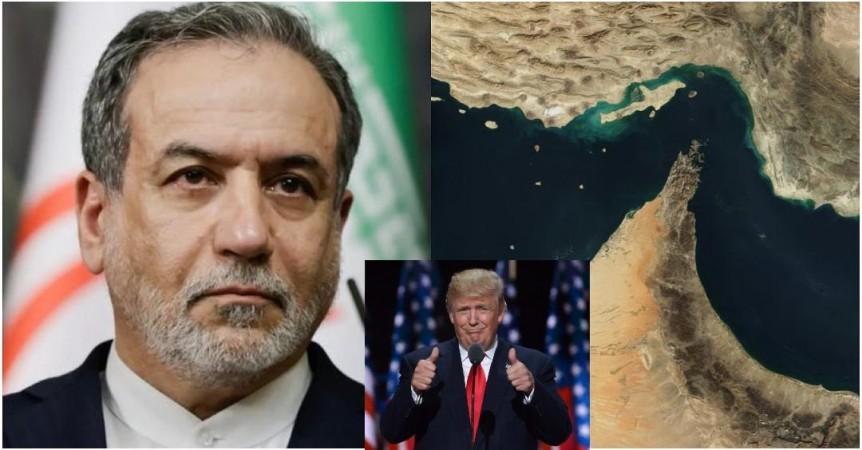
At the centre of this transformation lies the Strait of Hormuz, through which roughly 17–20 million barrels of oil per day transit close to one-fifth of global consumption, according to the International Energy Agency. In addition, a significant share of global liquefied natural gas flows through the same corridor. These figures are widely cited, yet insufficiently internalised in strategic terms. Hormuz is not simply a chokepoint; it is a systemic fulcrum, where localised disruption can propagate globally with extraordinary speed. The islands embedded within this geography are not valuable as territory to be held, but as control nodes in a tightly coupled system, capable of modulating the reliability of flows that underpin the global economy.
The Doctrine of Systemic Warfare
To understand this transformation, it is necessary to move beyond inherited frameworks of warfare and articulate a new conceptual lens. The Iran conflict suggests the emergence of what may be termed the Doctrine of Systemic Warfare (DSW).
Definition: Systemic warfare is a form of conflict in which the primary objective is not the occupation of territory or the destruction of forces, but the ability to shape, disrupt, and regulate interconnected systems energy, trade, finance, and cognition under conditions of continuous competition.
This doctrine rests on four interdependent pillars:
1. Disruption Superiority - the capacity to intermittently destabilise critical flows at scale.
2. Resilience Depth - the ability to absorb shocks and sustain functionality under pressure.
3. Cognitive Dominance - the shaping of perception, expectation, and narrative across societies and markets.
4. Escalation Calibration - the management of thresholds to impose costs without triggering uncontrollable conflict.
In this framework, power is no longer measured primarily by the ability to seize and hold, but by the ability to control the conditions under which systems operate. The decisive variable is not possession, but reliability who can assure it, and who can disrupt it.
From Clausewitz to Complexity
This doctrinal shift represents a structural departure from the classical foundations of strategic thought. The theories of Carl von Clausewitz emphasised decisive battle and the destruction of the enemy's centre of gravity, while maritime strategy, as articulated by Alfred Thayer Mahan, focused on command of sea lanes through physical dominance. Both frameworks assumed that control was continuous, territorial, and ultimately decisive.
The Hormuz theatre suggests a different logic. Control is now episodic, conditional, and often psychological. A tanker need not be destroyed to generate strategic effect; it need only be delayed or placed at risk. A port need not be occupied; it need only be rendered unreliable. Markets respond not only to events, but to expectations of instability, amplifying even minor disruptions into significant consequences. As the International Institute for Strategic Studies has observed, modern conflict is increasingly characterised by "persistent competition below the threshold of decisive war," where outcomes are cumulative rather than climactic.
The implication is clear: war has expanded into systems, and those systems have become the decisive terrain.
The Paradox of Control
Within this systemic battlespace, both principal actors are constrained by a paradox that defines the conflict's dynamics. The United States possesses the capability to assert control through superior military force, yet any attempt to translate that capability into sustained dominance risks triggering systemic disruption that would reverberate globally, including within its own economic and alliance structures. Iran, conversely, can disrupt with relative efficiency, but sustained disruption risks escalation that could exceed its capacity to manage.
This produces a condition in which control increases instability, while restraint reduces control. Both sides are therefore compelled to operate within a narrow band of calibrated action, seeking advantage without crossing thresholds that would produce uncontrollable consequences. Analysts at the Center for Strategic and International Studies have described this dynamic as one in which actors may retain escalation dominance in specific domains, but lack overall escalation control. The result is a conflict defined not by decisive manoeuvre, but by managed tension.
The American Approach: Influence Without Occupation
The United States' operational behaviour reflects this paradox. Its strategy combines precision strikes, maritime presence, and systemic pressure in an effort to shape conditions without incurring the liabilities of sustained occupation. This approach leverages technological superiority precision targeting, persistent surveillance, and networked command systems to degrade adversary capabilities while maintaining flexibility.
Yet this strategy is bounded by structural constraints. Escalation risks extend beyond the immediate theatre through proxy networks and broader geopolitical alignments. The global economy, deeply dependent on Hormuz, limits the utility of large-scale disruption. Domestic political considerations, shaped by the experience of prolonged conflicts, impose further restraint. The result is a doctrine of influence without permanence, capable of imposing costs but not easily translating into decisive outcomes.
Iran's Strategy: Denial as Power
Iran's response, often described as asymmetric, is better understood as a deliberate strategy of systemic denial. Its objective is not to dominate the battlespace, but to ensure that no adversary can exercise stable control over it. This is achieved through distributed missile and drone capabilities, fast-attack maritime tactics, and decentralised command structures that reduce vulnerability to concentrated strikes. Proxy networks extend operational reach, while economic adaptation under sanctions provides a degree of resilience.
According to the Stockholm International Peace Research Institute, Iran's approach reflects a model of "multi-domain cost imposition," where the aim is to raise the price of intervention across military, economic, and political dimensions simultaneously. In the context of systemic warfare, denial itself becomes a form of control by making reliability unattainable, it shapes the behaviour of all actors within the system.
The Economic Battlespace: Interdependence Weaponised
The Hormuz conflict demonstrates the extent to which economic systems have become integral to warfare. Periods of heightened tension have driven oil prices above $110–120 per barrel, while maritime insurance costs have risen significantly, reflecting elevated risk. Shipping routes have been altered, increasing transit times and costs, with ripple effects across global supply chains.
These immediate impacts are compounded by second-order effects. Energy price volatility feeds into inflation, complicates monetary policy, and strains fiscal systems. The International Monetary Fund has highlighted the sensitivity of global growth to energy shocks, noting that even modest disruptions can produce disproportionate consequences in a tightly coupled economy. Interdependence, once viewed primarily as a stabilising force, has thus become a mechanism of leverage, where the ability to disrupt flows translates directly into strategic power.
The Cognitive and Technological Layer: Time Compression and Perception
A defining feature of systemic warfare is the integration of cognitive and technological dynamics into the battlespace. Markets, media, and political narratives now operate as real-time actors, shaping and being shaped by events. Signals of escalation are rapidly incorporated into financial systems, triggering volatility that feeds back into policy decisions. This creates a compressed decision environment in which perception, reaction, and action are tightly coupled.
Technological advances intensify this dynamic. Artificial intelligence accelerates analysis and targeting; autonomous systems enable persistent, distributed operations; satellite networks provide continuous situational awareness; and algorithmic trading amplifies market responses to geopolitical signals. The World Economic Forum has identified this convergence as a key driver of contemporary risk, where geopolitical tensions are "transmitted and amplified through financial systems with unprecedented speed." The result is a battlespace in which time itself becomes a strategic variable, and the margin for error narrows significantly.
Hormuz in a Global Pattern
The dynamics observed in Hormuz are not isolated. They form part of a broader pattern visible across multiple theatres. In Ukraine, energy and grain flows have been weaponised, affecting global markets. In the Red Sea, maritime disruption by non-state actors has demonstrated the ability to influence global shipping without territorial control. In a potential Taiwan scenario, the centrality of semiconductor supply chains would create a similarly systemic battlespace.
Hormuz is thus not an exception, but a concentrated manifestation of an emerging global model of conflict, in which systems rather than territories become the primary arena of competition.
India's Strategic Moment: From Exposure to Architecture
For India, the implications of this transformation are profound. With a high dependence on imported energy, much of it transiting through Hormuz, the country is structurally exposed to disruptions in this corridor. Yet India also possesses the attributes necessary to move beyond vulnerability toward strategic agency.
This requires a shift from reactive management to proactive architecture. Energy security must be integrated into grand strategy through diversification, long-term contracting, and expanded strategic reserves. Maritime capability must be strengthened to ensure presence, protection, and domain awareness across critical sea lanes. Diplomatically, India is uniquely positioned to engage multiple actors, enabling it to contribute to stability and continuity of flows.
Beyond these measures lies a larger opportunity: to play a role in shaping a multi-aligned maritime stability framework for critical chokepoints, integrating security, energy, and commercial considerations. In this sense, Hormuz is not merely a risk to be mitigated; it is a domain in which India can emerge as a system-shaping power.
A Future Scenario: Control Through Disruption
Consider a plausible future escalation. No major naval battle is fought, and no territory is permanently occupied. Instead, a combination of cyber disruptions delays tanker clearances, autonomous systems create intermittent maritime risk, and insurance markets temporarily withdraw coverage. Within 72 hours, oil prices spike dramatically, supply chains adjust, and governments recalibrate policy. Control is not achieved through occupation, but through the orchestration of systemic disruption.
This scenario is not speculative fiction; it is an extrapolation of capabilities and behaviours already visible. It illustrates the central proposition of systemic warfare: that effects, not positions, define outcomes.
The Strategic Imperative
The Iran conflict, viewed through the lens of Hormuz, reveals a transformation that extends far beyond the region. War is no longer confined to battlefields; it is embedded in the systems that sustain modern life. Energy, trade, finance, and perception have become integral components of the battlespace, and the ability to shape these systems under conditions of competition defines power in the 21st century.
Strategic Law:
Power in systemic warfare lies not in controlling assets, but in controlling the reliability of systems.
Nations that continue to prepare for wars of territory alone will find themselves outmanoeuvred in conflicts defined by disruption, resilience, and perception. The future will belong to those who can integrate military capability with economic strength, technological innovation, and cognitive influence into a coherent strategy.
"The wars of the future will be decided not by who holds ground, but by who controls the systems that make the world function."
[Major General Dr. Dilawar Singh, IAV, is a distinguished strategist having held senior positions in technology, defence, and corporate governance. He serves on global boards and advises on leadership, emerging technologies, and strategic affairs, with a focus on aligning India's interests in the evolving global technological order.]