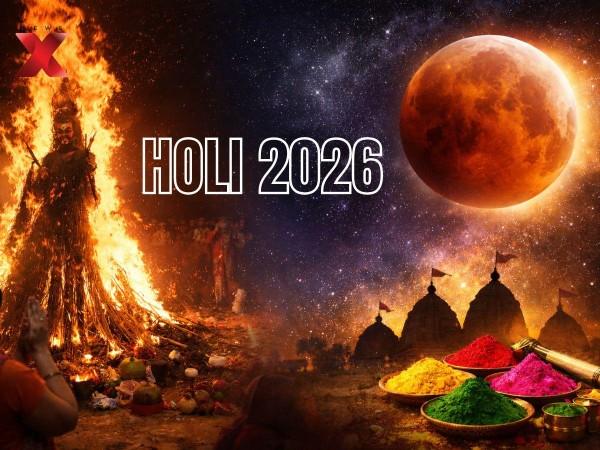
The festival of colours is here! Holi in 2026 will be celebrated on March 2 and March 3. This year, Holi is observed on March 3 in several states, including Maharashtra (excluding Nagpur) and Gujarat, while many other regions will celebrate it on March 4, reflecting regional traditions and variations in the lunar calendar.
The evening before Holi is called Choti Holi or Holika Dahan. Families gather around sacred fires, offering prayers and seeking protection from negativity. The ritual is deeply symbolic, representing the letting go of grudges, misunderstandings, and the heaviness of the past year. Choti Holi marks the triumph of good over evil, rooted in the mythological tale of Prahlad and Holika.
Many people are curious whether the Lunar Eclipse in March 2026 will affect Holika Dahan. In Hindu tradition, eclipse-related rules apply only if the eclipse is visible in a particular region and coincides with important ritual timings.
According to the Drik Panchang, a total lunar eclipse will occur on March 3, 2026, the first of the year. At maximum eclipse, the Moon will be completely covered by Earth's shadow. Both March 3 and 4 are correct dates, but refer to different parts of the festival.
Holika Dahan 2026 Shubh Muhurat:
Bhadra Kaal will be in effect from 5:18 pm on March 2 until 4:56 am on March 3. This means the entire night of March 2 coincides with both the full moon and the Bhadra period. Bhadra peaks at 12:50 am, considered an auspicious time for performing Holika Dahan.
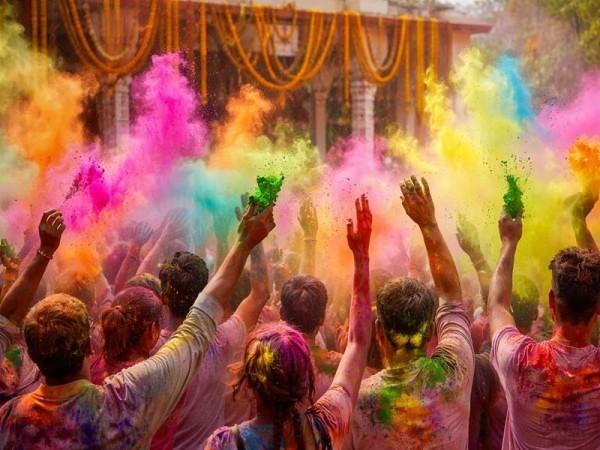
When is Rangwali Holi?
Rangwali Holi, also called Dhulandi or Dhulendi, will be celebrated on March 4, 2026. This is the main day when people apply and splash colours, enjoy festive food, and spend time with friends and family.
The most famous Holi story comes from Hindu mythology: the legend of Prahlad and Holika, which symbolises the victory of good over evil.
Who was Hiranyakashipu?
Long ago, a powerful demon king named Hiranyakashipu believed he was unstoppable. His ego grew so large that he demanded everyone worship him as a god.
Hiranyakashipu's own son, Prahlad, refused to comply. A devoted follower of Lord Vishnu, Prahlad believed true power comes from divine truth, not fear. His devotion angered Hiranyakashipu, who tried many ways to punish him. Yet Prahlad remained calm, faithful, and fearless, becoming a symbol of courage and inner strength. Hiranyakashipu's sister, Holika, had a boon that made her resistant to fire under certain conditions. The plan was to sit in a fire with Prahlad in her lap, expecting him to burn while she survived. But faith prevailed: Holika was burned, and Prahlad survived. This event is commemorated as Holika Dahan, symbolising the destruction of evil, arrogance, and negativity.
Wishing the readers of International Business Times, India, a very happy and colourful Holi!