

Placed in the "critically endangered" category by the International Union for Conservation of Nature (IUCN), the population of Jammu and Kashmir's iconic Hangul deer has increased to 323 in 2025.
This information was shared during the 6th meeting of the Wildlife Board for the Union Territory of Jammu and Kashmir, chaired here by Lieutenant Governor Manoj Sinha.
The meeting highlighted the efforts made by the Wildlife Department in operationalising the Hangul Breeding Centre at Tral. The Board expressed satisfaction over the steady rise in the Hangul population.
The meeting was attended by Javed Ahmed Rana, Minister for Forest, Ecology and Environment; Dr Devinder Kumar Manyal and Mian Mehar Ali, Members of the Legislative Assembly; Atal Dulloo, Chief Secretary; Dr Mandeep K. Bhandari, Principal Secretary to the Lieutenant Governor; Sheetal Nanda, Commissioner Secretary, Forest, Ecology and Environment; Suresh Kumar Gupta, Principal Chief Conservator of Forests and Head of Forest Force; Sarvesh Rai, PCCF and Chief Wildlife Warden, J&K; Sujit Kumar, IGP Security; along with eminent conservationists, ecologists, environmentalists, representatives of the Army, NGOs working in the field of wildlife conservation, and other Board members.
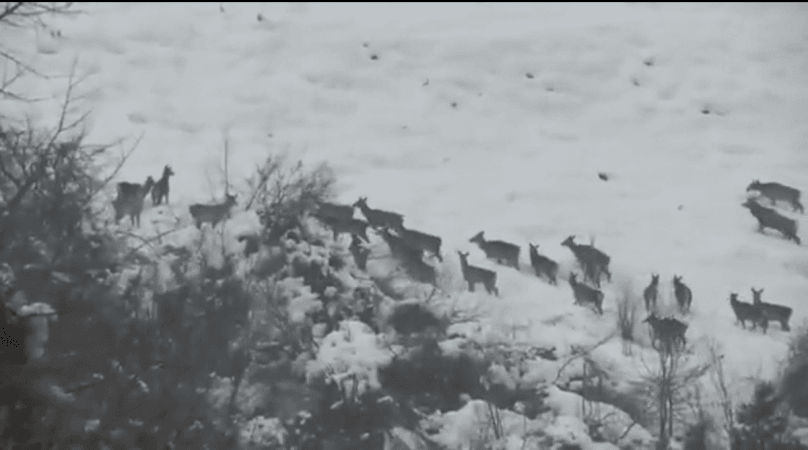
The Hangul, also known as the Kashmir stag, is the only surviving member of the red deer group in the Indian subcontinent.
Population of Hangul
- In the year 2017, the population was 214.
- In the year 2019, the number stood at 237.
- The population of Kashmir staged an improvement to 261 in 2021.
- The population of Hangul was 289 in the year 2023.
- According to the census of 2025, the number of Kashmir stag has risen to 323.
A population census of the species is conducted every two years. In 2023, the Hangul population had improved to 289 from 261 in 2021. In 2019, the number stood at 237, up from 214 in 2017.
The iconic Hangul deer — the State Animal of Jammu and Kashmir — has shown encouraging signs of recovery, with its population rising from 127 in 2008 to 323 in the 2025 census.

The Board, under the chairmanship of the Lieutenant Governor, accorded wildlife clearance to several projects and recommended certain proposals to the National Board for Wildlife for final approval. These included projects related to 4G saturation, the Jal Jeevan Mission, re-alignment of transmission lines, setting up of border security posts, development of horticulture nurseries, and installation of avalanche warning systems.
The Board was apprised of various conservation and habitat improvement activities undertaken by the department, including measures to address human–wildlife conflict, establishment of rescue centres, and wetland habitat restoration works.
Lieutenant Governor Manoj Sinha called for prioritising the sustainable management of biodiversity and conservation of wildlife habitats. He emphasised promotional and awareness activities, particularly among school children, for major conservation projects such as Jambu Zoo, Hokersar, and Gharana Wetland. He also directed that public transport facilities be provided to these destinations to promote eco-tourism.
The meeting also discussed damage to agricultural crops caused by wild boars, blue bulls, and monkeys. The Board expressed the need to explore mechanisms for compensating farmers for losses caused by wild animals.
Documentaries showcasing restoration works in Hokersar and Gharana Wetland Conservation Reserves and the operationalisation of the Hangul Breeding Centre were screened during the meeting.
Several publications of the department were also released, including the Wildlife Calendar 2026, a coffee-table book titled Wildlife of J&K: A Journey Through Protected Wilderness, a book titled The Bounty of Pir Panjal: A Journey Through Its Flora and Fauna, and a report on the first-ever discovery of a hedgehog in Jammu and Kashmir.
Census details
The census of the critically endangered Hangul was conducted in March this year, from March 18 to 22, in Dachigam National Park and its adjoining areas, involving around 400 wildlife personnel.
The biennial census was last conducted in 2023, when the elusive animal showed a marginal increase, reaching a population of 289. Before the 1990s, hundreds of Hangul once roamed the forests of the Valley.
The last viable population of Hangul (Cervus hanglu hanglu) in the Indian subcontinent now exists only in the protected Dachigam National Park, a vast mountainous sanctuary spread over 141 sq km on the outskirts of Srinagar. While there have been occasional sightings in connected areas outside the park in south Kashmir, their numbers remain negligible.