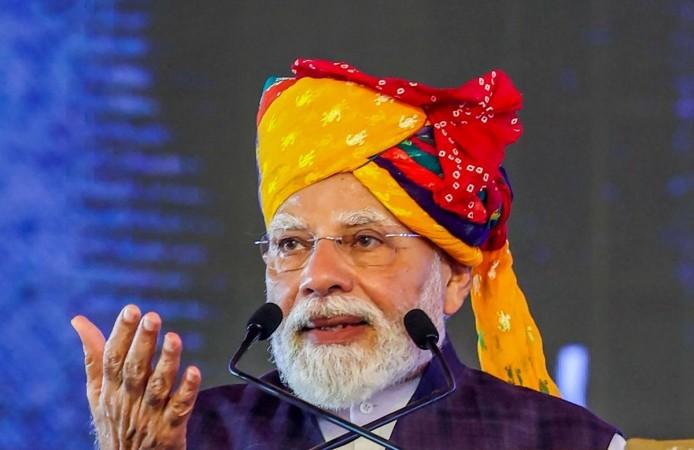
Prime Minister Narendra Modi has flagged off India's first hydrogen fuel cell-powered passenger train, running between Jind and Sonipat in Haryana. The launch marks the country's entry into a select group of nations, including Germany, Japan, China and the US, that operate hydrogen-powered trains. Indian officials say the 10-coach configuration makes it the largest-capacity hydrogen trainset running anywhere in the world.
Which route will India's first hydrogen train run on?
The train was flagged off by PM Modi at Jind railway station, with the debut service running on the Jind-Sonipat section of Northern Railway. Modi described the launch as setting a new global benchmark for clean rail technology, noting that India's 10-coach formation surpasses the smaller hydrogen trainsets currently being tested in other countries.
The service will initially operate as a pilot project, with Indian Railways using the run to study real-world performance before deciding whether to expand hydrogen trains to additional routes.
The train has been designed, engineered and integrated entirely in India under the guidance of the Research Design and Standards Organisation (RDSO). It consists of two hydrogen-powered Driving Power Cars positioned at either end of the train, along with eight passenger coaches, giving it a total capacity of nearly 2,600 passengers.
The train runs on a propulsion system rated at approximately 3,200 horsepower, translating to roughly 2,400 kilowatts of power, and has been approved to operate at a maximum speed of 75 kmph during this initial phase. The only by-product of its operation is water vapour, as the fuel cell system converts hydrogen into electricity without any combustion emissions.
India's first hydrogen train: The technology behind it
The train draws its power from hydrogen fuel cells, which generate electricity through a chemical reaction between hydrogen and oxygen rather than by burning fuel. The electricity produced is stored in onboard batteries and routed through rectifiers and other electrical systems to the traction motors mounted on the train's axles, which drive the wheels. This is fundamentally different from diesel or electric traction, as there is no direct combustion and no need for overhead electrification along the route.
To fuel the train, Indian Railways has built its largest railway hydrogen storage and refuelling facility at Jind, capable of storing around 3,000 kg of hydrogen. The hydrogen at this facility is produced through electrolysis, a process considered central to green hydrogen generation. The plant is supported by a dedicated power supply to ensure uninterrupted operations.
Both the train and the refuelling station are fitted with multiple safety systems, including hydrogen leak detectors, flame and smoke sensors, automatic shut-off mechanisms and continuous ventilation. Real-time monitoring is also in place, with technical experts accompanying the train during its initial phase of operation.
India's first hydrogen train: Hybrid power system and safety features
The train's fuel cell generates electricity continuously, and any surplus power that is not immediately required is stored in the onboard battery. During periods of higher power demand, the fuel cell and battery work together to drive the train, a hybrid arrangement that officials say improves overall efficiency.
On safety, Indian Railways has built in a wide margin around hydrogen's known flammability range. While hydrogen is scientifically flammable at concentrations between 4 per cent and 75 per cent, the railway has set its automatic shutdown threshold far more conservatively, triggering a complete shutdown of the hydrogen system if a leak of just 0.25 per cent is detected.
Even in the event of such a shutdown, the train will not be stranded, as the battery retains enough charge to move it to a safe location before power is fully lost.
India's first hydrogen train: Deployment plans
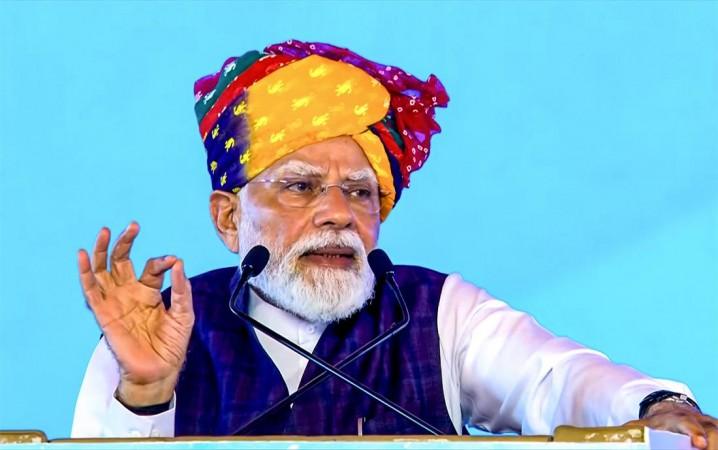
The Jind-Sonipat train is the first unit under Indian Railways' broader 'Hydrogen for Heritage' initiative, under which the government has proposed rolling out 35 hydrogen trains on heritage and hill routes across the country.
Each trainset is estimated to cost around Rs 80 crore, while an additional Rs 70 crore has been earmarked for route-specific infrastructure such as hydrogen refuelling plants. Officials acknowledged that operating costs are likely to be higher in the initial phase but expect them to decline as the fleet expands and the hydrogen ecosystem matures.
Why does it matter?
Beyond the immediate rollout, officials say the hydrogen fuel cell technology developed for this project could also be used to power heavy vehicles such as trucks and tugboats. For Indian Railways, the Jind-Sonipat pilot is being positioned as a technology demonstrator that will help determine real-world operational requirements before hydrogen trains are introduced on a larger scale. The government has described the project as a significant step towards reducing the railway network's dependence on fossil fuels.
'Had Gulf war happened before 2014, Railways would've been paralysed': PM Modi
Prime Minister Narendra Modi on Friday said Haryana's Jind has become a "sushasan model" (good governance model) owing to the BJP's "double-engine government", as he flagged off the country's first hydrogen-powered train.
He also said that had the Gulf war happened before 2014, Indian Railways would have been paralysed because a large part of the railway fleet used to run on diesel.
Speaking at the launch of the country's first 10-coach hydrogen-powered train, NaMo Green Rail, which will initially run between Jind and Sonipat, along with inaugurating and laying the foundation stone for projects worth Rs 14,700 crore, PM Modi said these initiatives would improve ease of living and accelerate Haryana's development.
Calling the train a successful outcome of the 'Make in India' initiative, Modi said it was entirely designed indigenously.
"This is the strongest as well as the longest hydrogen-powered train anywhere in the world. There are only three-four countries around the world that have the capacity to operate a hydrogen-powered train," he said.
Congratulating the country on this major milestone in railway modernisation, PM Modi added that whenever hydrogen-powered trains are discussed in the future, Jind, Sonipat and Haryana will also be remembered.
The zero-emission train will cover the 89-km Jind-Sonipat route in around two hours, stopping at 12 stations. With its launch, India has joined a select group of countries operating hydrogen-powered trains.
Referring to the conflict in the Gulf region and the Strait of Hormuz, PM Modi said:
"Had this situation arisen before 2014, our railways would have been completely paralysed. A large part of Indian Railways' fleet used to run on diesel."
Recalling his earlier visits to Jind, PM Modi said while the city's famous ghee and ghevar remain unchanged, its development has transformed significantly over the years.
He added that Haryana has moved on to a new track of development and that the day's projects would further strengthen the state's growth under the BJP-led government.
Railway Minister Ashwini Vaishnaw, Haryana Governor Ashim Kumar Ghosh and Chief Minister Nayab Singh Saini were present during the launch.
Vaishnaw described the launch as a historic technological achievement and said testing beyond Sonipat is already underway. He added that the hydrogen-powered train will eventually operate between Jind and Delhi.
Apart from flagging off the train, PM Modi inaugurated and laid the foundation stone for several major infrastructure projects, including the 157.92-km Delhi-Amritsar-Katra Expressway, the Ambala-Kala Amb Highway, the Jind-Gohana Greenfield Highway and the Hansi-Barwala Highway project.
He also dedicated the elevated railway track in Kurukshetra, two government medical colleges and hospitals in Bhiwani and Narnaul, and laid the foundation stone for a Sikh Museum in Kurukshetra, aimed at showcasing the history, teachings and contributions of the Sikh community through modern technology.