The US Treasury has issued General License 13A, granting a 30-day waiver for transactions involving Russian crude and petroleum products loaded before March 12, 2026. The move aims to allow a wind-down of existing deals, while explicitly excluding transactions linked to Cuba, North Korea and Crimea.
Kuwait is confronting a second round of "hostile missile and drone attacks," the military confirmed, with air defence systems actively intercepting incoming threats. Authorities said the explosions heard are due to these interceptions. Residents have been urged to follow official safety instructions, just over an hour after an earlier wave of attacks.
The United Kingdom, France, Germany, Italy, the Netherlands and Japan are considering a joint mission to counter Iran's blockade of the Strait of Hormuz, a key global oil route.
Bahrain's Interior Ministry said a warehouse fire broke out after falling shrapnel from an Iranian attack. Civil defence teams brought the blaze under control, with no injuries reported. Authorities have not confirmed whether the strike involved drones or missiles. No timeline has been announced so far. Germany and the Netherlands have indicated they will only participate if a ceasefire or pause in hostilities is in place.
Kuwait's military again confirmed it is actively confronting "hostile missile and drone attacks," with air defence systems intercepting incoming threats. Authorities reiterated that any explosions heard are due to these interceptions. Residents have been urged to remain calm and strictly follow safety and security instructions issued by officials.
Israel launched airstrikes on Tehran on Friday as Iran marked Nowruz, with multiple explosions reported across the capital. The escalation comes amid an ongoing war impacting global markets. Blasts were also heard in Dubai during Eid prayers as air defences intercepted incoming threats. Meanwhile, Iran fired fresh missiles at Israel, triggering sirens across northern regions.
The Iran–Israel–US conflict is rapidly escalating into a wider geopolitical and economic crisis, with direct attacks on critical energy infrastructure and expanding regional involvement. What began as targeted strikes on Iran's military and nuclear sites has now evolved into missile exchanges, proxy battles and global supply disruptions.
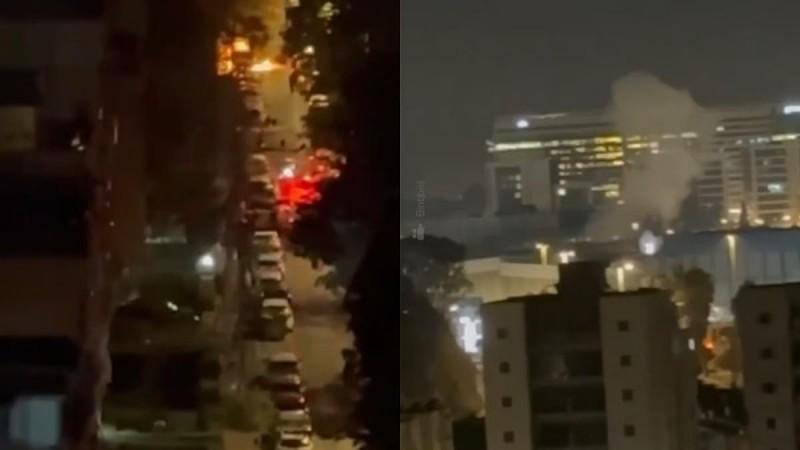
Iran has intensified attacks on Gulf oil and gas facilities in retaliation, while the US has warned of massive counterstrikes. Israel continues operations in Tehran as Iran launches fresh missile barrages, triggering sirens across Israeli cities. Fighting has also intensified in Lebanon, worsening the humanitarian toll.
The Strait of Hormuz remains a key flashpoint, with tanker movement disrupted and oil prices surging past $110 per barrel, raising global inflation concerns. As international pressure mounts, strategic differences between the US and Israel are also beginning to surface.
External Affairs Minister S. Jaishankar on Thursday spoke to his Israeli counterpart Gideon Sa'ar amid escalating tensions in the Middle East. Both leaders discussed the ongoing West Asia conflict and its wider repercussions.
A terrifying video shows a missile striking just behind a Russia Today reporter while he was reporting in southern Lebanon amid West Asia tensions. The reporter ducked and ran as smoke and debris filled the area but remained safe. Journalist Steve Sweeney and cameraman Ali Rida, who were covering Israeli strikes on Hezbollah, were reportedly injured and are currently in hospital.
(With inputs from IANS)