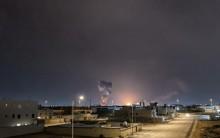
The present confrontation across West Asia is no longer a discrete conflict between Israel and Iran. It is evolving into a layered contest of power, legitimacy, and global order. What appears, at first glance, as a regional war is in fact a multi-domain strategic collision, where military force, economic coercion, energy chokepoints, and leadership rhetoric are converging into a single, unstable geometry.
At the center of this transformation lies a profound shift: wars are no longer merely fought; they are signalled, shaped, and accelerated through leadership intent articulated in public view. Statements by leaders today are not rhetoric alone; they are instruments of deterrence, mobilisation, and pre-alignment. The result is a rapidly crystallising global structure that resembles not a bipolar Cold War, but a far more fluid and dangerous multi-polar contest with asymmetric thresholds of escalation.
The War Beneath the War
The kinetic exchanges between Benjamin Netanyahu and Iranian-backed networks represent only the visible layer. Beneath it, three deeper wars are underway.
First, an energy war. Control over the Strait of Hormuz is no longer a maritime issue; it is a lever over the global economy. Any attempt by the United States to impose a blockade, and Iran's counter-threat to disrupt flows, transforms the conflict into a direct contest over the arteries of global capitalism.
Second, a legitimacy war. Recep Tayyip Erdoğan and segments of leadership in Pakistan are framing the conflict within a broader civilisational narrative, invoking solidarity across the Muslim world. This is not merely ideological; it is a bid for leadership of a fractured geopolitical constituency.
Third, a systemic power contest. The United States seeks to reassert coercive primacy, while China and Russia position themselves as balancers, subtly enabling Iran while avoiding direct entanglement.
These three layers intersect in a volatile manner. Each escalation in one domain amplifies instability in the others.
Leadership Signalling as Strategic Weapon
The statements of leaders now constitute a parallel battlespace.
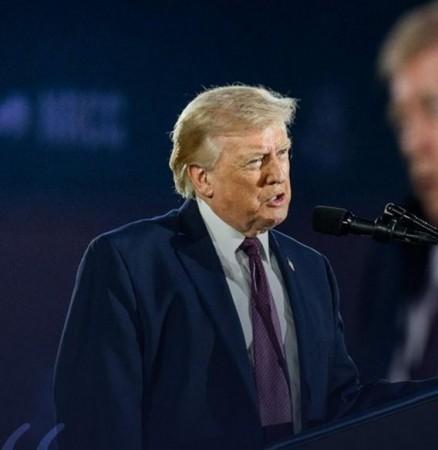
Donald Trump articulates a doctrine of compellence: total compliance enforced through economic strangulation and the credible threat of force.
Ebrahim Raisi signals strategic endurance, framing resistance as sovereignty.
Benjamin Netanyahuc reinforces a preemptive doctrine, where delay is existential risk.
Recep Tayyip Erdoğan adopts rhetorically escalatory positions, recasting the conflict within a wider civilisational frame.
Vladimir Putin and Xi Jinping maintain calibrated ambiguity, opposing escalation while quietly benefiting from the diffusion of American focus.
Narendra Modi practices strategic restraint, preserving maneuverability in an increasingly polarised environment.
This is not random. It is the early stage of coalition signalling, where words prepare the ground for alignment before commitments are formalised.
The Emerging Global Alignment Matrix
If the conflict expands, the world is likely to align along three broad, though fluid, axes:
1. The Coercive Stabilisation Bloc
Core: United States, Israel
Secondary Support: Select European partners
Objective: Prevent Iranian nuclear breakout, maintain control over maritime and energy systems
2. The Resistance–Revisionist Axis
Core: Iran
Political/Rhetorical Support: Türkiye, Pakistan
Strategic Enablers: Russia, China
Objective: Resist Western coercion, reshape regional and global balance
3. The Strategic Autonomy Bloc
Core Actors: India, Gulf states, parts of Southeast Asia
Objective: Avoid entanglement, preserve economic stability, maintain multi-alignment
This matrix is not rigid. It is dynamic, interest-driven, and situational. Yet, its contours are increasingly visible.
The Escalation Ladder: From Crisis to Systemic War
The current trajectory can be understood through a stepwise escalation ladder, each rung carrying exponentially higher risk.
Stage 1: Controlled Kinetic Engagement
Israel–Iran proxy and direct strikes remain geographically contained.
Stage 2: Economic Warfare Intensification
Sanctions, maritime harassment, and threats to the Strait of Hormuz.
Stage 3: Maritime Confrontation
Naval interception, mining, or blockade attempts trigger direct US–Iran engagement.
Stage 4: Regional Expansion
Activation of multiple fronts: Lebanon, Syria, Red Sea, potentially involving Turkish or Gulf theatres.
Stage 5: Coalition Entrenchment
Russia and China deepen logistical and intelligence support; NATO cohesion is tested.
Stage 6: Strategic Infrastructure Targeting
Attacks on energy grids, ports, and critical infrastructure across regions.
Stage 7: Threshold Breach
Potential use or credible preparation for unconventional capabilities, including nuclear signalling.
At present, the conflict oscillates between Stages 2 and 3, but the velocity of movement upward is increasing.
The Grand Chessboard: Strategic Moves of a Master Game
To understand where this may lead, one must think not in tactical increments but in grand strategy, akin to a high-level chess match where each move shapes the endgame several turns ahead.
The United States
A grandmaster move would involve controlled escalation without overextension:
Enforce limited maritime control without full blockade
Split Iran from its external supporters through selective diplomatic openings
Maintain alliance cohesion while avoiding a two-front global distraction
Iran
Its optimal play lies in asymmetric equilibrium:
Avoid direct conventional confrontation
Sustain pressure through proxies and maritime ambiguity
Convert endurance into negotiating leverage
Israel
The strategic objective remains time compression:
Accelerate degradation of Iranian capabilities
Prevent diplomatic pauses that allow adversary recovery
Türkiye
A sophisticated play would balance:
Rhetorical leadership of the Muslim world
Avoidance of direct military entanglement
Positioning as indispensable intermediary
Russia
The grand design is clear:
Prolong the conflict at sub-critical intensity
Drain Western resources
Expand influence without direct confrontation
China
Beijing's optimal strategy is strategic patience:
Ensure energy flows
Avoid visible alignment
Capitalise on systemic instability to expand economic and geopolitical leverage
India
For India, the grandmaster move is perhaps the most delicate:
Preserve energy security amid Hormuz volatility
Maintain relations across all blocs
Quietly enhance strategic reserves, maritime security, and diplomatic leverage
Position itself as a stabilising, credible voice without premature alignment
The Deeper Reality: A Pre-Systemic Moment
What we are witnessing is not yet a world war, but it is no longer a contained conflict. It is a pre-systemic moment, where:
Alliances are being tested but not fully activated
Rhetoric is escalating faster than military commitments
Economic and energy vulnerabilities are becoming strategic weapons
History suggests that such moments are inherently unstable. Miscalculation, rather than intent, often becomes the trigger.
Standing at the Edge
The world today stands at a precarious intersection where power, perception, and pressure are converging. The danger does not lie merely in what states are doing, but in what they are preparing to justify.
The most consequential decisions will not be made on the battlefield alone, but in the minds of leaders calculating risk, prestige, and survival. In such an environment, restraint is not weakness; it is strategic wisdom. Yet, restraint requires alignment of perception across adversaries, and that is precisely what is eroding.
The geometry of escalation is tightening. Whether it culminates in controlled recalibration or cascades into systemic conflict will depend on whether the principal actors choose to play for advantage or for survival.
At this moment, the board is still in play. But the moves ahead will determine not just the outcome of a war, but the shape of the world order that follows.
[Major General Dr. Dilawar Singh, IAV, is a distinguished strategist having held senior positions in technology, defence, and corporate governance. He serves on global boards and advises on leadership, emerging technologies, and strategic affairs, with a focus on aligning India's interests in the evolving global technological order.]